Business Models Resurface to Shape AI Risk Management
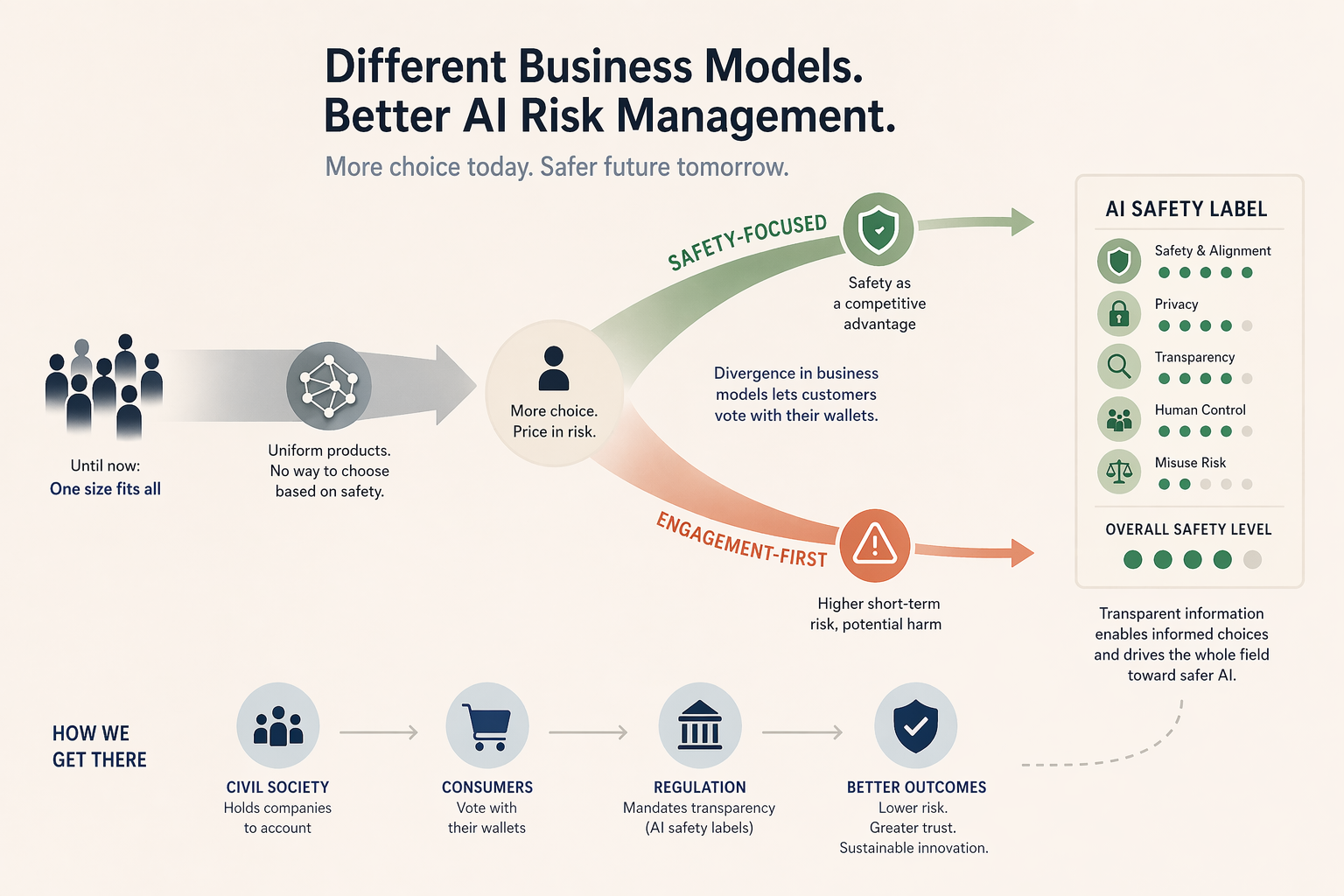
According to Malcolm Murray at 3quarksdaily, recent industry moves include Anthropic withholding its model Mythos, OpenAI experimenting with ads, and Meta acquiring a "social network for AIs". Murray argues the AI market has so far followed a largely uniform playbook-closed hosted models vs open-source releases have been the main axis of difference, with companies like Meta and OpenAI oscillating between those approaches. The author contends that renewed divergence in business models would let customers "price in" risk the way consumers use energy or safety ratings in other markets. Industry-wide differentiation of business models can create market demand for external assurance, audits, and contractual risk allocation, which may help manage societal harms over time.
What happened
According to Malcolm Murray at 3quarksdaily, recent developments include Anthropic withholding its model Mythos, OpenAI experimenting with ad-based monetization, and Meta acquiring what Murray describes as a "social network for AIs". Murray characterizes the AI market as having been "one size fits all," with rapid copycat product cycles following major model releases and a primary distinction between hosted closed-source models and open-source releases.
Editorial analysis - technical context
Murray frames the closed-hosted versus open-source distinction as a business-model axis: closed hosting monetizes through subscriptions and in-platform products, while open-source releases drive revenue through hosting, consulting, and partnerships. Industry-pattern observations note that these distribution choices affect who controls deployment, patching cadence, and the ease of third-party auditing; open-source models permit local modification and inspection, while hosted models centralize control and observability.
Industry context
Industry observers have long debated whether market structure can help internalize externalities from AI systems. Editorial analysis: Comparable markets use product differentiation and third-party ratings to make safety and risk visible to buyers, which can shift incentives toward vendors offering provable safeguards or contractual terms that limit misuse. Murray argues that a return to business-model diversity could enable such market mechanisms for AI.
What to watch
Editorial analysis: observers should track:
- •whether vendors publicly adopt distinct monetization and distribution models tied to safety features
- •growth of third-party assurance services and standards for model audits
- •contractual terms that allocate liability or usage constraints. These indicators will show whether business-model divergence translates into measurable risk-management practices
Key Points
- 1Diverging business models, such as hosted subscriptions versus open-source monetization, change who controls deployment and observability.
- 2Market differentiation enables customers and intermediaries to "price in" safety via certifications, audits, and contractual terms.
- 3If firms adopt distinct commercial paths, demand for third-party assurance and deployment controls is likely to rise, affecting practitioners' compliance and integration work.
Scoring Rationale
The piece connects business-model divergence to AI risk-management mechanisms, which is notable for practitioners designing deployments and compliance. It is not breaking technical news but frames commercially relevant incentives; timeliness modestly increases relevance.
Practice interview problems based on real data
1,625 SQL & Python problems across 15 industry datasets — the exact type of data you work with.
Try 250 free problems