BlueRock Adds AMD DMA Isolation to NOVA
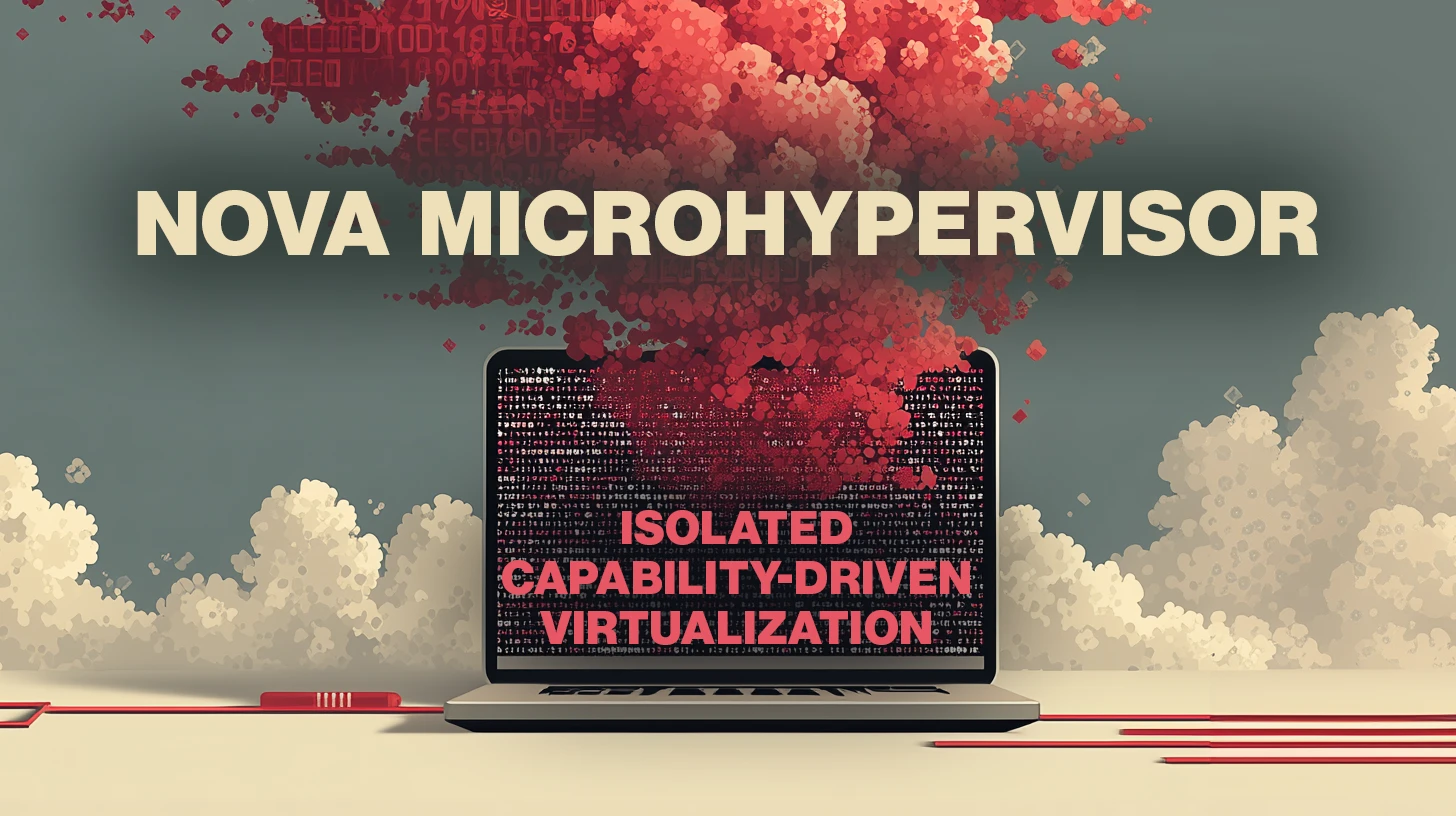
BlueRock released an open-source update to the NOVA Microhypervisor that adds AMD DMA remapping support for platforms with IOMMU hardware virtualization, according to a BusinessWire press release distributed June 9, 2026. Help Net Security reports the AMD IOMMU integration is enabled by default and lets NOVA enforce per-device and per-page memory access controls, abort unauthorized DMA transactions, and optionally record DMA remapping faults for diagnostics. The release paper and press materials state NOVA supports virtual machines with up to 256TB of physical memory and 128 petabytes of virtual address space per workload. BusinessWire includes a direct quote from BlueRock CEO Harold Byun on the need for trusted isolation in next-generation AI infrastructure.
What happened
BlueRock published an open-source release of the NOVA Microhypervisor that introduces DMA remapping support for AMD platforms with IOMMU capabilities, according to a BusinessWire press release dated June 9, 2026. Help Net Security reports the AMD IOMMU integration is enabled by default and extends hardware-enforced memory protection across virtual machines, devices, and memory in shared execution environments. BusinessWire and Help Net Security state NOVA can support fully isolated virtual machines with up to 256TB of physical memory and 128 petabytes of virtual address space per workload. The press release includes a direct quote from Harold Byun, CEO of BlueRock: "We believe the next generation of AI infrastructure will prioritize trusted isolation, execution efficiency, reduced complexity, and secure shared-service operation at massive scale."
Technical details
Help Net Security documents that NOVA combines microkernel and hypervisor responsibilities in a small trusted computing base, uses a capability-based authorization model, and implements virtualization, spatial and temporal separation, scheduling, and platform resource management. The codebase is described as written primarily in C++ with roughly 3.7% assembly and supports both aarch64 and x86_64 builds, including Intel VT-x with VMX and EPT and AMD-V with SVM and NPT, per Help Net Security. The AMD DMA protections described in the coverage rely on IOMMU-based DMA remapping to prevent devices assigned to one VM from accessing other workloads' memory, enforce per-device and per-page access controls, abort unauthorized transactions, and optionally log remapping faults for diagnostics.
Industry context
Implications for infrastructure teams
What to watch
Editorial analysis
Companies operating shared AI infrastructure increasingly face sustained concurrency and continuous workloads that raise isolation, predictability, and operational-efficiency requirements. Industry reporting frames NOVA's addition of AMD DMA remapping as one response to a broader pattern where hardware-enforced device isolation is becoming central to multi-tenant AI platforms that share accelerators and peripheral devices.
For practitioners designing multi-tenant AI clusters, stronger IOMMU integration reduces a class of risks tied to device drivers and DMA-capable peripherals. Observed patterns in comparable systems show that enabling DMA remapping by default simplifies secure device assignment but typically increases integration work for device passthrough, driver certification, and performance testing under high-throughput inference workloads.
Observers should track upstream adoption and kernel/device-driver changes required to operate NOVA with AMD IOMMU in production, including support for accelerator passthrough (GPUs, DPUs), latency and throughput measurements under continuous inference, and community uptake of NOVA in existing orchestration stacks. Also monitor whether downstream vendors publish integration guides or performance baselines addressing page-table maintenance overhead for the large address spaces NOVA advertises.
Bottom line
BlueRock's NOVA release adds a concrete hardware-backed isolation mechanism for AMD-equipped machines and provides explicit technical artifacts and limits for large-memory VMs. Industry observers and platform engineers will evaluate whether the tradeoffs of a microhypervisor with default DMA remapping align with operational goals for secure, shared AI execution.
Key Points
- 1NOVA adds AMD IOMMU-based DMA remapping, extending hardware isolation across VMs and devices, improving memory protection for shared AI hosts.
- 2Default-enabled DMA protections reduce DMA-based attack surface from faulty drivers, but they increase integration work for device passthrough and performance validation.
- 3Support for very large address spaces (256TB physical, 128PB virtual) targets continuous, high-memory AI workloads and shifts operational focus to page-table scalability.
Scoring Rationale
This is a notable infrastructure development for multi-tenant AI platforms because it applies hardware-backed DMA isolation to real-world microhypervisor deployments. It matters to platform engineers and security teams, but it is not a general-purpose paradigm shift for ML model development.
Sources
Public references used for this report.
View 6 more sources
- Beyond Brute Force: BlueRock's Bid to Fix AI's Architectural Crisisbriefglance.com
- BlueRock unveils NOVA Microhypervisor with AMD DMA isolation for secure AI infrastructureapp.dealroom.co
- BlueRock announces latest open-source release of NOVA Microhypervisortipranks.com
- AMD Enhances AI Infrastructure with NOVA Microhypervisor Updategurufocus.com
- AMD (AMD) Stock Declines as BlueRock NOVA Introduces DMA Isolationmexc.com
- Advanced Micro Devices (AMD) Stock Newsstocktitan.net
Practice with real Ride-Hailing data
90 SQL & Python problems · 15 industry datasets
250 free problems · No credit card
See all Ride-Hailing problems