Blue Energy Advances Gas-to-Nuclear Model for AI Power
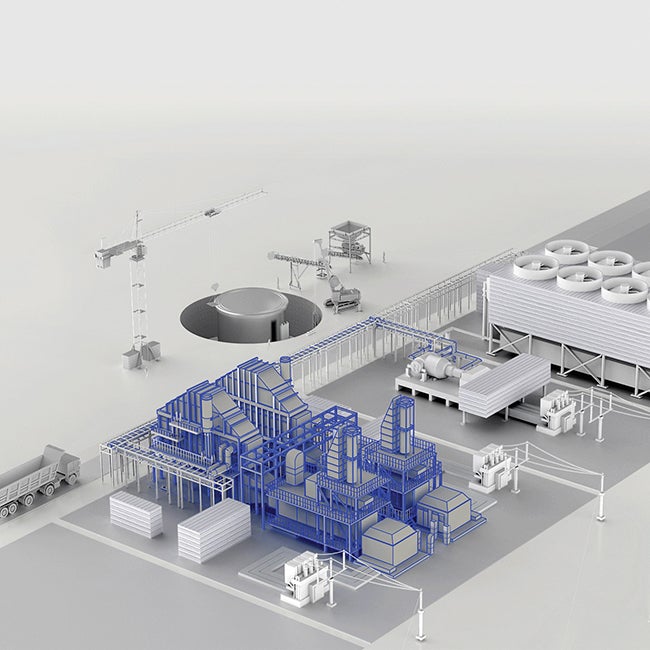
For AI infrastructure teams, Blue Energy's gas-to-nuclear model addresses nuclear's financing gridlock directly: natural gas turbines deliver firm power and early revenue while BWRX-300 SMRs move through a parallel licensing and construction track, compressing the nuclear timeline from over a decade to roughly 48 months. Per POWER's July 2026 report, Blue Energy and GE Vernova are advancing a 2.5 GW phased project at the Port of Victoria, Texas -- two GE Vernova 7HA.02 turbines (~1 GW gas power as early as 2030) transitioning to up to five BWRX-300 SMRs (~1.5 GW nuclear as early as 2032), with FID targeted for 2027 and turbine slot reserved for 2029 delivery (World Nuclear News; Nuclear Engineering International). Crusoe -- developer of the Stargate Abilene campus for Oracle and a 900 MW Microsoft campus -- is the anchor AI customer, with a data center campus adjacent to the Blue Energy site (Data Center Dynamics; POWER). The NRC approved a topical report in January 2026 enabling non-nuclear balance-of-plant construction before nuclear licensing, the regulatory unlock the model depends on (World Nuclear News; POWER).
The financing problem Blue Energy is solving Nuclear power's cost crisis stems less from the reactor -- which POWER reports accounts for about 7% of historical project costs -- and more from capitalized interest, field construction overhead, and schedule uncertainty. Blue Energy CEO Jake Jurewicz framed the gridlock in March: "Right now, everyone's excited about nuclear power, but the hyperscalers aren't willing to take cost overrun risk, the utilities aren't willing to take cost overrun risk, the government's not willing to take cost overrun risk. Somebody has to figure out where you can actually allocate risk." Blue Energy's answer: separate early power delivery from nuclear licensing so revenue flows before the reactor breaks ground, using the gas phase's contracted cash flow to underwrite debt on a meaningful portion of the nuclear capex.
What happened
Per POWER's July 1, 2026 report, Blue Energy and GE Vernova announced in May 2026 a 2.5 GW phased "gas-plus-nuclear" project at the Port of Victoria, Texas. The plan pairs two GE Vernova 7HA.02 gas turbines (~1 GW power as early as 2030) with up to five GE Vernova Hitachi BWRX-300 SMRs (~1.5 GW nuclear as early as 2032). The companies signed a slot reservation for 2029 delivery of the turbines; FID is targeted for 2027, with early site work planned for later in 2026 (World Nuclear News; Nuclear Engineering International).
The Port of Victoria site was previously the subject of Exelon Nuclear Texas Holdings' license applications for two ESBWRs -- the design from which the BWRX-300 derives -- leaving behind roughly $100 million of prior site investment and an advanced early-site-permit record before the effort was abandoned in 2012 (POWER). Blue Energy selected the site in part for barge-canal access suited to heavy-module delivery.
Crusoe as the anchor AI customer Crusoe -- whose contracted AI infrastructure capacity reached 4.9 GW as of mid-2026, spanning the 1.2 GW Stargate Abilene campus for Oracle, a 900 MW Microsoft campus, and further Texas and Missouri projects -- is Blue Energy's first named customer. The companies announced their strategic partnership in October 2025 to develop a nuclear-powered AI factory campus adjacent to the Blue Energy site in Calhoun County (Data Center Dynamics; World Nuclear News). Crusoe CSO Chase Lochmiller said in March that if Blue Energy can deliver power in a "commercially acceptable envelope, meeting operational requirements," Crusoe would commit to buying "a lot of that power" for clean baseload access (POWER). For AI infrastructure teams, this is a working proof-of-concept for an offtake structure that bridges gas-era and nuclear-era pricing in a single long-term agreement.
Cost targets and the prefabrication model
Blue Energy was founded in 2023 out of MIT's Nuclear Science & Engineering Department and raised a $45 million Series A co-led by Engine Ventures and At One Ventures. Its core model shifts nuclear construction from field assembly to centralized fabrication yards and shipyards -- borrowing from LNG, offshore oil and gas, and offshore wind -- aiming to reduce plant costs from more than $10,000/kW to roughly $2,000/kW, though current near-term targets are more conservative: gas phase in the $2,500-$3,000/kW range, nuclear phase with "a path to below $8,000/kW" against the current industry run-rate of roughly $15,000/kW for large nuclear (POWER). Capitalized interest is a key lever; Jurewicz noted that "a third of it is just the capitalized interest on debt, because these projects have historically taken 10 years to build before they generate any revenue at all" (POWER).
GE Vernova CEO Scott Strazik tied the BWRX-300 cost trajectory to order volume: "As we execute on those things and with that size backlog, you then have an opportunity to start to cut down the cost curve. Because ultimately, what I say every day is style points don't build infrastructure, economics do" (POWER). GE Vernova currently carries a $163 billion total backlog -- up from $116 billion at its April 2024 spinout -- with data centers representing roughly 20-25% of that book.
NRC regulatory sequencing In January 2026, the NRC approved a topical report providing a methodology to separate non-nuclear balance-of-plant construction from NRC-regulated nuclear island construction. Under the framework, balance-of-plant components not credited for accident mitigation, security, fire protection, or emergency planning can be fabricated and installed before a construction permit (World Nuclear News; POWER). Blue Energy would still need an operating license before the nuclear plant can be fueled; the Part 50 licensing track runs in parallel with gas-phase construction and operations.
What to watch
- •NRC construction permit application: planned for 2027; public docket activity will carry scheduling signal.
- •Turbine delivery: 2029 slot reservation for the 7HA.02 turbines is the first logistical milestone; any rescheduling would shift the stated 2030 gas-power target.
- •Offtake and financing disclosures: whether future announcements reveal blended pricing structures bridging gas-era and nuclear-era costs, or infrastructure-fund debt structures for the nuclear capex.
Key Points
- 1Gas-to-nuclear phased delivery solves nuclear's financing problem: near-term gas revenues reduce capitalized interest, the dominant historical cost driver.
- 2Crusoe's AI factory campus is the anchor offtake customer, signaling hyperscalers will commit to clean firm power under two-phase contract structures.
- 3NRC's January 2026 topical report enables non-nuclear balance-of-plant construction before nuclear licensing, the key regulatory unlock for this model.
Scoring Rationale
Blue Energy's gas-to-nuclear model addresses nuclear's core financing problem -- capitalized interest and schedule risk -- with a staged delivery mechanism that generates early revenue before the reactor breaks ground. The combination of a named anchor AI customer (Crusoe, 4.9 GW contracted), a real Texas site with prior NRC work, NRC regulatory clearance for the separation model, and GE Vernova's $163B backlog confirms this is a credible commercial project. Score reflects solid infrastructure significance for AI data center power planning; not yet at FID stage.
Sources
Public references used for this report.
Practice interview problems based on real data
1,625 SQL & Python problems across 15 industry datasets — the exact type of data you work with.
Try 250 free problems