Bessent Warns of AI-Powered Bank Account Hacks
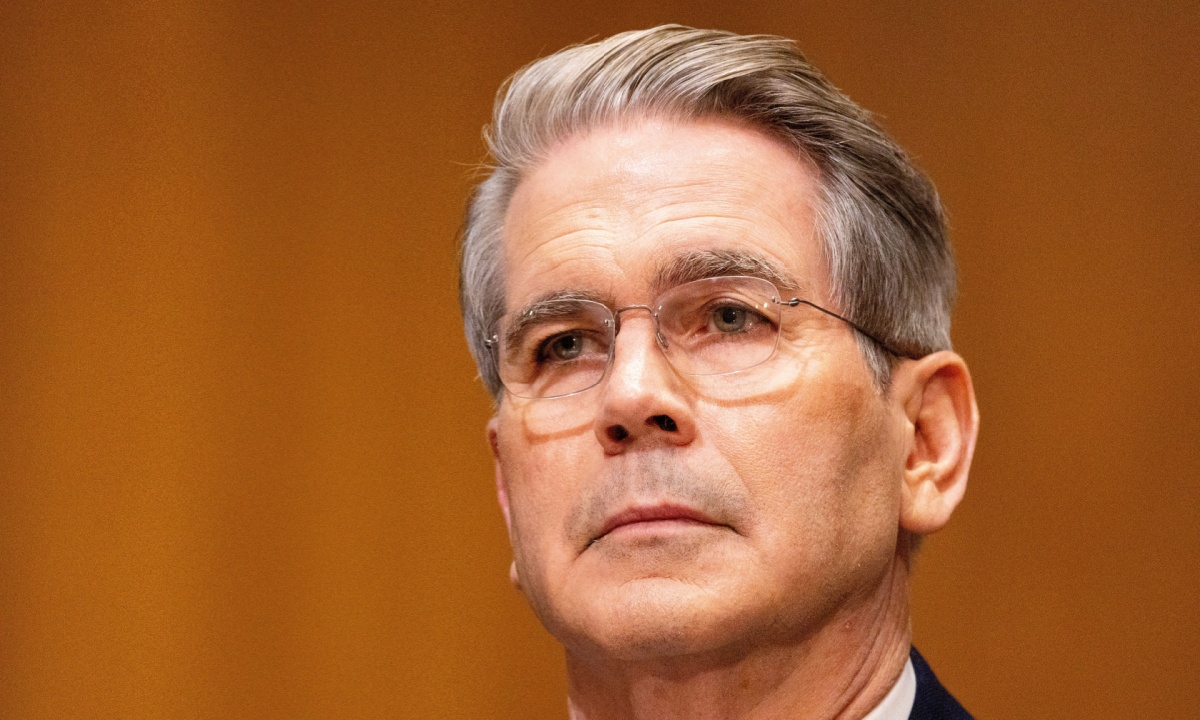
Treasury Secretary Scott Bessent warned on Fox News that Americans should be concerned about AI-enabled hacks of bank accounts, saying "You should," during an appearance on May 3, 2026, according to Bloomberg Law and PYMNTS. Bessent and Federal Reserve Chair Jerome Powell held short-notice talks with major U.S. bank CEOs in April to discuss cyber risks tied to Anthropic PBC's new model Mythos, CNBC and Bloomberg reported. Several outlets report that Anthropic's security team has told researchers and partner firms that Mythos has identified thousands of high-severity vulnerabilities, a capability regulators say could be used by defenders or abused by attackers, per PYMNTS and AOL reporting.
What happened
Treasury Secretary Scott Bessent warned about the risk of AI-enabled attacks on bank accounts during an appearance on Fox News' _Sunday Morning Futures_ on May 3, 2026, saying "You should," when asked whether Americans need to be worried, according to reporting in Bloomberg Law and PYMNTS. Earlier in April, Bessent and Federal Reserve Chair Jerome Powell convened short-notice discussions with CEOs of major U.S. banks to discuss potential cyber risks raised by Anthropic PBC's latest model, Mythos, according to CNBC, Bloomberg, and Yahoo/ Bloomberg reporting.
Technical details
Anthropic's newest model, Mythos, has been reported by multiple outlets to have strong code-auditing and vulnerability-discovery capabilities. According to reporting in PYMNTS and AOL, Anthropic's security team has said Mythos identified thousands of previously unknown, high-severity vulnerabilities across major operating systems and web browsers. Regulators and bank officials discussed both defensive uses, for example, employing advanced models to find and patch weaknesses, and the risk that similar capabilities could accelerate attackers' ability to discover and exploit zero-day flaws, per PYMNTS and Bloomberg.
Industry context
Regulatory and market reaction
Reporting by CNBC and Bloomberg says the April convening gathered executives from systemically important banks, including representatives from Bank of America, Citigroup, Morgan Stanley, Wells Fargo, and Goldman Sachs, while JPMorgan CEO Jamie Dimon was reported as unable to attend. Sources told outlets the meeting was arranged on short notice during a Financial Services Forum week in Washington, reflecting heightened concern among monetary authorities about potential systemic cyber risk.
Implications for security operations
What to watch
- •Whether Anthropic or other model developers publish technical mitigation guidance or restrict model access further; outlets reported Anthropic limited Mythos's rollout after initial disclosures, per Bloomberg and AOL.
- •Statements or guidance from the Treasury Department or Federal Reserve clarifying expected coordination with banks; several reports note the agencies have discussed resiliency but have not released detailed public directives, per CNBC and Bloomberg Law.
- •How major financial institutions operationalize AI-assisted vulnerability discovery into patch management and third-party risk assessments; industry observers will monitor whether adoption concentrates among larger, systemically important firms first.
Editorial analysis
Companies and regulators have increasingly flagged advanced generative models as dual-use tools. Industry reporting on Mythos frames the situation as an inflection point where automated discovery materially changes the attacker-defender calculus. Observed patterns in comparable technology shifts show rapid capability changes often force short-term coordination between private-sector operators and regulators to manage systemic exposure.
For practitioners, the Mythos episode underscores two operational pressures. First, defenders may need to integrate advanced automated code-review and red-team outputs into existing vulnerability management workflows to keep pace with scale. Second, organizations will likely need to revisit threat-detection and incident-response playbooks for attacks that can be prototyped and weaponized at machine speed. Industry experience suggests governance, testing, and staged rollouts of AI-assisted security tooling are common risk-mitigation approaches when capabilities accelerate quickly.
Observers should track disclosures of newly found vulnerabilities that are attributed to AI-assisted discovery and whether those findings accelerate exploit development in the wild. Clear, timely coordination between vendors, banks, and regulators will be central to whether the net effect is improved resilience or increased exploitation risk.
Key Points
- 1Regulators convened bank CEOs after Anthropic's Mythos raised cyberconcerns, highlighting systemic risk awareness among authorities.
- 2Anthropic reported Mythos found thousands of high-severity vulnerabilities, creating both defensive opportunities and abuse risk for attackers.
- 3Industry response will likely prioritize integrating AI-assisted discovery into vulnerability management while monitoring disclosure and access controls.
Scoring Rationale
The story links advanced generative-model capabilities to systemic cyber risk in financial services and shows coordinated regulator attention. That makes it notable for security teams and infrastructure leaders, but it is not an immediate industry-transforming release.
Sources
Public references used for this report.
Practice interview problems based on real data
1,625 SQL & Python problems across 15 industry datasets — the exact type of data you work with.
Try 250 free problems