Bank of England Warns AI Agents Could Disrupt Markets
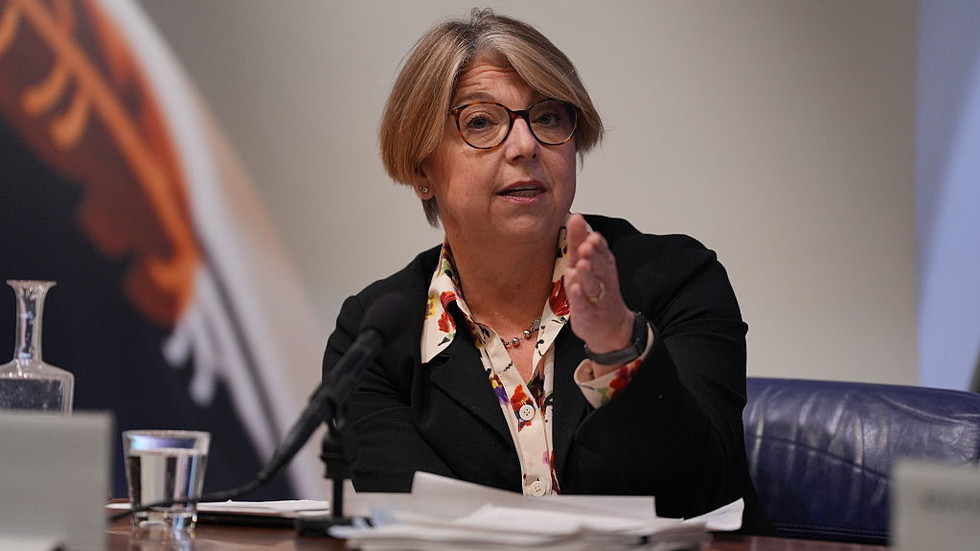
Bank of England Deputy Governor Sarah Breeden warned at the ECB's Sintra Forum on June 30, 2026 that autonomous AI agents could "amplify volatility in stress" and trigger a "market meltdown," and said existing financial regulation was not built for agentic AI, according to the Bank's published speech, Reuters, and Bloomberg. For teams deploying agentic systems in trading, payments, or other market-facing automation, the speech signals concrete new supervisory attention: Reuters reports the BoE is exploring "enhanced recovery" arrangements that would let one bank take over another's core functions during a disruption, plus market-wide circuit breakers or "kill switches" to halt trading if faulty AI models cause correlated failures. The Financial Times and The Times both quote Breeden on the risk of "herding behaviour" among trading agents. No binding rules have been published yet; the speech sets out risks and signals the BoE is moving toward concrete resilience tools.
For data scientists and ML engineers building or supplying models for payments, trading, or other market-facing automation, this is less a theoretical AI-safety debate than an early signal of concrete supervisory demands: expect sharper scrutiny of model behavior under stress, of action-level observability, and of coordinated-failure modes once agentic systems can act without human mediation.
What happened
The Bank of England published the text of a speech by Deputy Governor Sarah Breeden, delivered at the European Central Bank's Sintra Forum on June 30, 2026, describing how agentic AI is transforming finance by enabling systems that chain actions autonomously and operate at machine speed. Bloomberg and Reuters both report Breeden warned that autonomous AI agents "could amplify volatility in stress" and risk causing a "market meltdown," and that existing regulatory frameworks were not designed for autonomous agents. Reuters reports the BoE is weighing new measures, including "enhanced recovery" capabilities that would let one bank take over another's basic functions during a disruption, and market-wide circuit breakers or "kill switches" to limit trading if faulty models trigger correlated failures. The Financial Times and The Times both quote Breeden on the risk that trading agents could increase volatility through "herding behaviour."
Technical context
Agentic systems differ from traditional predictive models in that they can execute multi-step action plans and interact with other services without human mediation, which is why regulators are focused less on individual model accuracy and more on systemic behavior under stress. Three control points are already familiar to teams building safety-critical automation: intent alignment under distributional shift, deterministic and auditable action logs, and rate-limiting or throttling across multiple venues or accounts.
Regulatory context
Reuters and Bloomberg describe two specific tools under discussion:
- •Enhanced recovery: arrangements that would allow one bank to take over another's basic functions during a disruption - a systemic-resilience measure rather than a model-level control.
- •Circuit breakers / kill switches: market-wide stops that would limit or halt trading if agentic models produce correlated failures.
The BoE speech does not prescribe specific technical standards; Reuters frames the discussion as a shift from general AI principles toward bespoke rules for agentic systems specifically.
For practitioners
The measures under discussion map to practices engineering teams already build for safety-critical systems: robust fallback modes, isolating autonomous agents from direct market access, and fast human-in-the-loop escalation. The near-term implications are in testing (adversarial and stress testing for correlated agent behavior), monitoring (real-time behavior telemetry), and governance (clear escalation playbooks with accountable owners) - particularly for any system that can act across liquidity venues or customer accounts without a human in the loop.
What to watch
Whether the BoE or other regulators publish formal consultations specifying live-trading constraints, whether industry standards emerge for agent auditing and explainability in trading contexts, and whether pilot frameworks for market-wide circuit breakers reference automated-agent failure modes specifically. No binding rules exist yet - Breeden's remarks lay out risks and possible interventions rather than final policy.
Key Points
- 1Bank of England Deputy Governor Sarah Breeden warned autonomous AI trading agents could amplify volatility and cause a market meltdown.
- 2The BoE is weighing enhanced-recovery rules and market-wide circuit breakers or kill switches to contain correlated failures from agentic trading systems.
- 3For practitioners deploying agentic systems in finance, expect new scrutiny of stress-testing, action-level logging, and human-in-the-loop escalation.
Scoring Rationale
A major central bank official (BoE Deputy Governor) publicly warning of systemic market risk from agentic AI and floating concrete tools (kill switches, enhanced recovery) is a significant regulatory signal, strongly corroborated across 8 independent outlets including the BoE's own speech text, Reuters, Bloomberg, FT, and The Times. Held at the top of the notable band rather than higher since no binding rules have been proposed yet.
Sources
Public references used for this report.
View 6 more sources
- 'Kill switches' could be needed for AI-powered trading, BoE official saysft.com
- Bank of England worries AI agents could cause market meltdownthetimes.com
- Bank of England's Breeden warns AI agents could trigger market ...thenextweb.com
- Bank of England's Breeden warns AI agents risk triggering market meltdownsbusinesstimes.com.sg
- Bank of England considers AI 'kill switch' to stop market meltdowntelegraph.co.uk
- Agentic AI May Require Regulatory Reform - BoE's Breedenmoney.usnews.com
Practice with real Banking data
90 SQL & Python problems · 15 industry datasets
250 free problems · No credit card
See all Banking problems