Augmodo Raises $21M to Expand Physical AI Beyond Retail
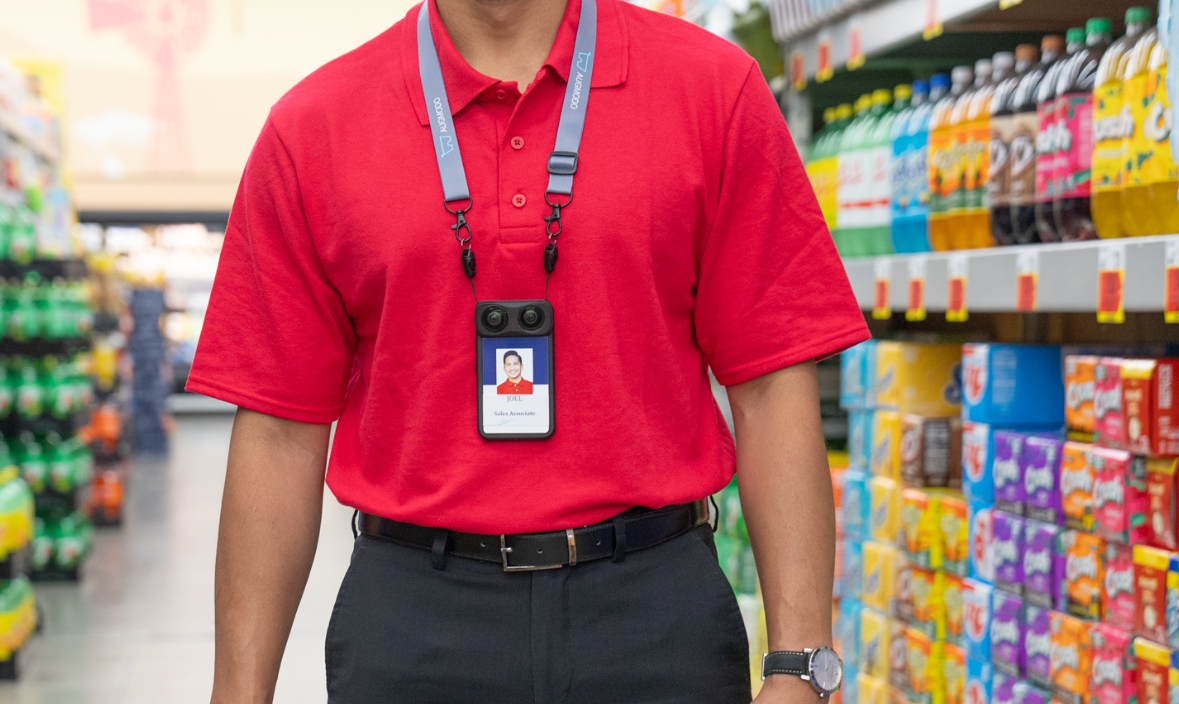
Augmodo raised $21 million in new financing at a $350 million valuation, with existing backer TQ Ventures leading the round. The Seattle startup says the capital will broaden its Smartbadge-based spatial AI platform from grocery inventory into warehouses, manufacturing, automotive operations, maintenance, and other physical workplaces. Its core approach combines wearable computer vision with continuously updated spatial maps, allowing routine employee movement to create operational data without separate manual scans. For AI and data teams, the important signal is that vision models trained around retail objects are being pushed into less controlled industrial environments, where object diversity, workflow context, privacy, and reliability become harder. The funding supports model development, engineering hiring, and a wider enterprise rollout, according to Augmodo and independent reporting by SiliconANGLE.
Augmodo's expansion is a practical test of whether a perception system refined around retail shelves can transfer into the messier physical environments of factories, warehouses, automotive sites, and maintenance operations. The opportunity is broader than inventory counting: wearable cameras can turn ordinary worker movement into continuously refreshed spatial data. The harder part is preserving accuracy, privacy, and useful context as the objects and workflows become less standardized.
For AI teams, that makes the financing relevant as an execution milestone rather than only a startup valuation story. More enterprise environments mean more varied visual data, more edge cases, and a larger burden for monitoring model behavior in places where a bad observation can affect real operational decisions.
What happened
Augmodo raised $21 million in new financing at a $350 million valuation, with existing backer TQ Ventures leading the round. The company announcement and SiliconANGLE's report both describe the financing as support for expansion beyond the company's initial retail focus. The funding supports model development, engineering hiring, and a wider enterprise rollout, according to Augmodo and independent reporting by SiliconANGLE. Other participating investors named in the reporting include Lerer Hippeau, Jefferson River Capital, Arena Holdings, Chemist Warehouse, New Fare, Interlace, and Webb Investment Network. The event is a fresh financing round, distinct from Augmodo's earlier funding and retail partnership announcements.
Technical context
Augmodo's Smartbadge is worn during normal work and passively captures visual information that the platform converts into spatial maps. In grocery deployments, that process is used to observe shelves and help keep inventory records current without a separate manual scanning workflow. The company says the same perception approach can identify products, tools, equipment, and their locations in other physical settings with limited changes to the underlying system. SiliconANGLE separately reports deployments or intended use across warehouses, manufacturing plants, hospitals, automotive environments, maintenance, and operational audits. The technical challenge shifts from recognizing relatively structured shelf layouts to handling broader object classes, more variable lighting and movement, and workflows whose operational meaning differs by site.
For practitioners
The expansion raises familiar deployment questions for computer-vision and data-platform teams. A model that performs well in one store format still needs validation against each new environment's objects, camera angles, occlusion patterns, and acceptable error rates. Data governance also becomes more important because wearable capture occurs around employees and potentially other people in active workplaces. Teams evaluating this category should separate the quality of the spatial map from the quality of any recommendation layered on top of it, then measure both against site-specific operating outcomes. A useful pilot would define what is observed, how quickly the map updates, how errors are surfaced, and who can inspect or correct the underlying data.
What to watch
The next signal is whether broader deployments produce repeatable performance outside retail rather than isolated demonstrations. Augmodo says the capital will deepen its core AI models, enlarge the engineering team, and expand its global enterprise footprint. Evidence of durable transfer would include clear validation methods for new environments, transparent privacy controls, and customer-reported operating results that distinguish perception accuracy from downstream workflow gains. The financing gives the company resources to pursue that expansion, but the strength of the physical-AI thesis will depend on how reliably its system generalizes across workplaces with very different objects, tasks, and risk tolerances.
Key Points
- 1Augmodo's new financing backs a shift from retail inventory mapping toward broader physical-workplace computer vision and spatial intelligence.
- 2Wearable Smartbadges turn routine employee movement into continuously refreshed maps, reducing the need for separate manual inventory scans.
- 3Broader deployments will test model transfer, data governance, privacy controls, and reliability across less predictable industrial environments.
Scoring Rationale
The financing is notable because it funds an established spatial-computing product's move from retail into broader physical-workplace AI. Its wider significance depends on whether the system can generalize reliably across varied enterprise environments.
Sources
Primary source and supporting public references used for this report.
Practice with real Retail & eCommerce data
90 SQL & Python problems · 15 industry datasets
250 free problems · No credit card
See all Retail & eCommerce problems