
AP Chief Minister Orders AI Task Force to Monitor Economy
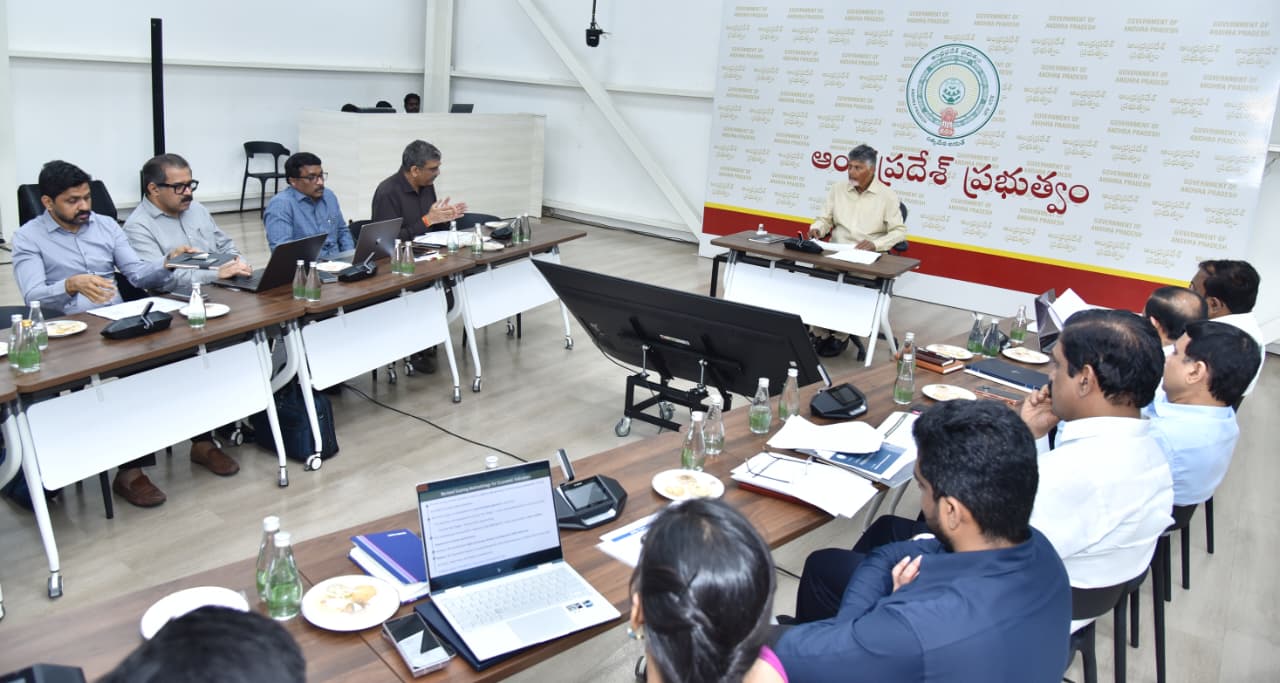
Reporting by The Hindu and ThePrint says Andhra Pradesh Chief Minister N. Chandrababu Naidu ordered formation of an AI task force and monthly economic reports to monitor GSDP growth and strengthen revenue administration. ThePrint quotes Naidu urging officials to "Fully utilise technology and artificial intelligence (AI) to improve GST and other tax collections, as well as overall revenue administration." Taxtmi and Deccan Chronicle report the state has set an own-revenue target of Rs 1.27 lakh crore for 2026-27. Outlook Business reports Andhra Pradesh recorded total tax collections of Rs 5,542.7 crore in April 2026, the highest-ever monthly revenue since GST implementation, and quotes Chief Commissioner A Babu on the strong administrative performance and the estimated Rs 8,000 crore annual impact from GST 2.0 rate rationalisation.
What happened
Reporting by The Hindu and ThePrint says Andhra Pradesh Chief Minister N. Chandrababu Naidu directed officials to create an AI task force and produce monthly economic reports to track GSDP growth and improve revenue administration. According to ThePrint, Naidu told officials, "Fully utilise technology and artificial intelligence (AI) to improve GST and other tax collections, as well as overall revenue administration." Separately, a May 13 Planning department review (The Hans India, fetched) confirmed that AI-based economic analysis systems are being developed for agriculture, industrial, and services sectors, and that monthly district-level GSDP tracking is a stated goal. Taxtmi and Deccan Chronicle report the state has set an own-revenue target of Rs 1.27 lakh crore for 2026-27. Outlook Business reports Andhra Pradesh recorded total tax collections of Rs 5,542.7 crore in April 2026, calling it the "highest-ever" monthly collection since GST implementation, and quotes Chief Commissioner of State Tax A Babu; the piece also cites an estimated Rs 8,000 crore annual revenue impact from GST 2.0 rate rationalisation.
Technical context
Governments applying AI to tax administration typically deploy anomaly detection, risk-scoring classifiers, and audit-prioritisation pipelines built on GST return data, IGST settlement records, and cross-department datasets. Naidu also directed use of GIS mapping, drone surveys, and satellite imagery to detect unlawful constructions and improve property tax assessments. For practitioners, key integration points include ingesting structured filings from the GST portal, reconciling cross-department data, and building explainability and audit-trail tooling for compliance use cases.
What to watch
Look for published scope and membership of the AI task force, procurement notices for analytics platforms, pilot results on GST scrutiny or fraud detection, and any technical specifications or vendor selections that would indicate how transferable the approach is to other states.
Key Points
- 1AP has ordered an AI task force and monthly economic reports to tighten revenue oversight, building on a May 2026 Planning review that confirmed AI-based GSDP analysis systems are in development.
- 2April tax receipts reached Rs 5,542.7 crore, the highest-ever monthly figure since GST implementation, even as GST 2.0 rationalisation is estimated to cost Rs 8,000 crore annually.
- 3Public-sector AI for tax work typically raises demand for cross-department data consolidation, risk-scoring pipelines, explainable models, and audit-capable infrastructure.
Scoring Rationale
State-level policy directive to deploy AI for tax administration and economic monitoring in Andhra Pradesh. Relevant to public-sector AI practitioners in India but limited global AI/DS/ML impact; well-corroborated but falls in the solid vertical-deployment tier rather than a notable global strategy shift.
Sources
Public references used for this report.
View 7 more sources
- Implement AI-driven GST scrutiny, Andhra Pradesh CM directs officialsnewindianexpress.com
- Andhra Pradesh Records Highest-Ever Monthly Tax Revenue of Rs 5,542.7 Croreoutlookbusiness.com
- Andhra Pradesh Eyes Rs 1.27 Lakh Crore Revenue Pushdeccanchronicle.com
- Andhra Pradesh turns to technology and sustainable growth to close fiscal gapthesouthfirst.com
- Andhra Pradesh CM Directs Tax Officials to Use AI in GST Scrutinyblog.saginfotech.com
- AP Targets Rs.1.27 Lakh Crore Revenue; CM Naidu calls for AI-driven Tax Reformsthenewstrust.in
- Andhra govt targets Rs 1.27 lakh crore own revenue for 2026-27taxtmi.com
Practice with real Ad Tech data
90 SQL & Python problems · 15 industry datasets
250 free problems · No credit card
See all Ad Tech problems