Anthropic Co-Founder Declares AI Most Powerful Technology
Anthropic co-founder Jack Clark called AI "the most powerful technology developed in the modern industrial era" in a wide-ranging interview with Reason magazine, covering Anthropic's export-control dispute with the Trump administration over its frontier models, the case for shared AI governance standards, and his prediction that recursive self-improvement could arrive by around 2028.
What this is
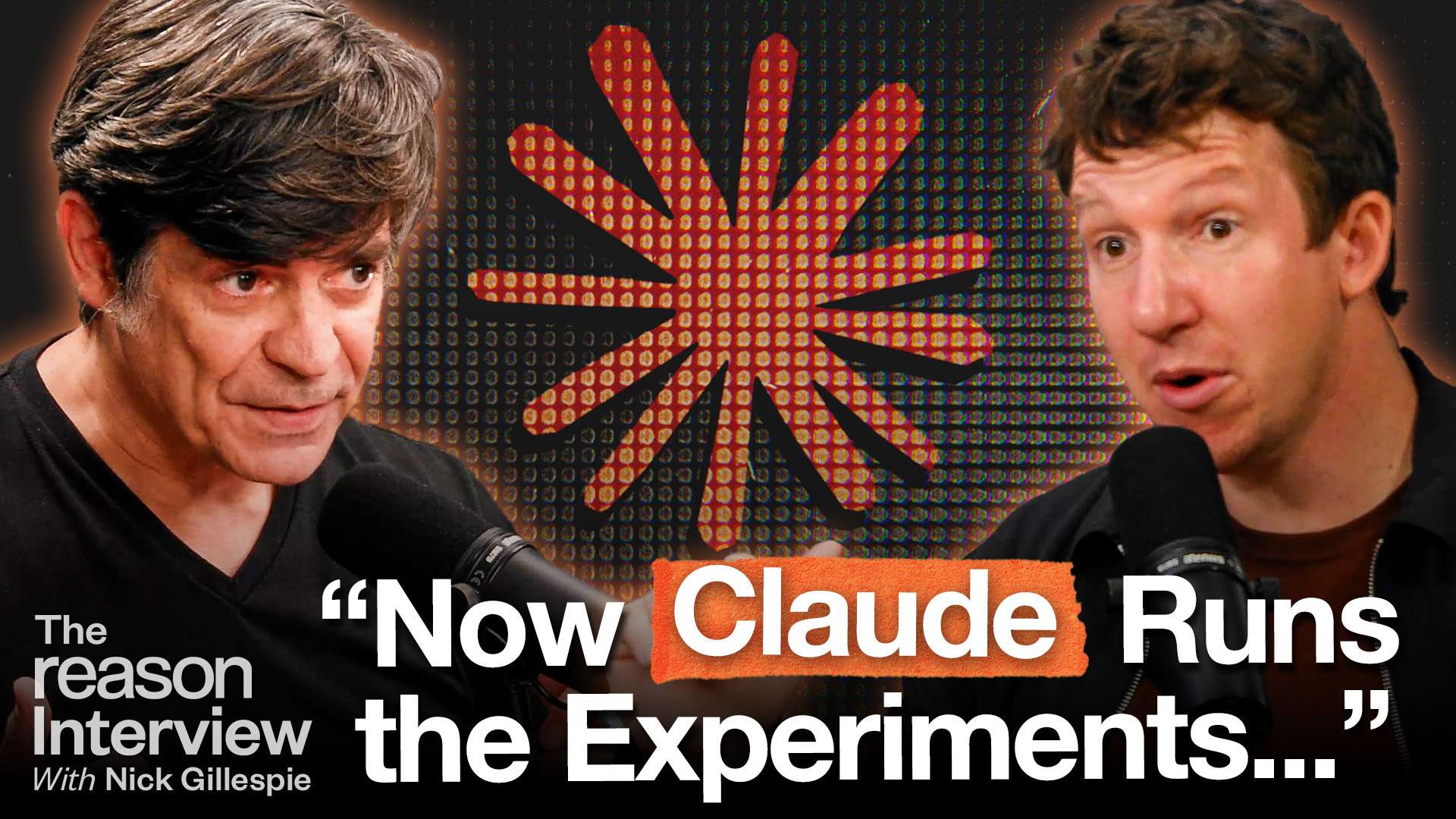
Jack Clark, co-founder of Anthropic and head of its newly launched Anthropic Institute, spoke at length with Nick Gillespie on *The Reason Interview* podcast (reason.com, June 24, 2026), covering AI governance, Anthropic's ongoing regulatory conflict with the Trump administration, frontier-model release decisions, recursive self-improvement (RSI), and AI's potential employment effects.
On AI's promise
Clark framed AI's impact at three layers: individual (a universal teacher available for $0-$20/month), economy (automating back-office and bureaucratic work - he cited reducing Ozempic clinical-trial processing from two months to one week), and science (AI systems co-authoring research papers at the frontier of biology, mathematics, physics, and medicine alongside world expert scientists, per Clark in the interview).
Regulatory conflict with the Trump administration
Clark described Anthropic's standoff as resulting from frontier models developing "cyber and bio" capabilities that the national security community recognizes as nationally significant. Anthropic chose to withhold its most capable model - Mythos 5 - from general release, instead releasing a reduced version called Fable. The Trump administration subsequently applied export controls that Clark said effectively restrict Fable's international distribution. Clark said he has "huge empathy" for administration officials who see AI systems "popping out things that look like the things we work on in intelligence," framing it as a genuinely hard coordination problem rather than a punitive act.
Red lines
Clark confirmed Anthropic has drawn two firm limits: AI used for domestic mass surveillance on Americans, and fully automated lethal weapons systems. He said these are areas requiring "wider societal debate," not positions Anthropic alone can define (reason.com).
Recursive self-improvement
Clark described RSI as AI systems that could autonomously conduct AI research and development - building successor models without human input. He said he believes RSI could arrive "certainly this decade," with 2028 as his personal best estimate, based on reading the scientific literature and internal work at the Anthropic Institute. He said the Institute is developing measures to detect RSI onset and plans to share them with policymakers, drawing an analogy to how thresholds for cyber and bio capabilities are managed (reason.com).
Employment
Clark said current economic data does not clearly show AI-driven labor displacement, partly because COVID introduced large confounders. He noted possible softening in early-career software engineering hiring and said Anthropic is prioritizing senior researchers with strong intuitions because Claude handles experiment execution. He announced Claude Corps: 1,000 recent U.S. college graduates embedded in nonprofits to develop AI skills and demonstrate AI's benefits to organizations that would not otherwise access them (reason.com).
AI governance framework
Clark endorsed a standards-and-reciprocity model similar to aviation and automotive safety - shared testing frameworks across jurisdictions rather than a global governance body. He cited the Obernolte/Trahan AI transparency and testing bill and bipartisan export-control compute bills as "broadly sensible." He described the EU approach as "regulations ahead of their own capacity to have the thing itself." He called for mandated transparency and third-party validation as a starting point, with specific thresholds for cyber and bio capabilities developed through public evidence accumulation.
Editorial note
This is a long-form podcast interview on a libertarian publication; views expressed are Clark's own and should be read as his personal framing of Anthropic's positions, not as formal company statements or policy filings. The claims about RSI timing (2028) and autonomous model development are speculative predictions, not confirmed research results.
Key Points
- 1Anthropic co-founder Jack Clark predicted recursive self-improvement could arrive around 2028, with direct implications for AI governance timelines.
- 2Clark detailed Anthropic's standoff with the Trump administration over Mythos 5 export controls and the company's red lines on automated weapons.
- 3He endorsed shared international AI testing standards and announced Claude Corps, embedding 1,000 graduates in nonprofits to build AI skills.
Scoring Rationale
A long-form podcast interview with an Anthropic co-founder covering governance, export controls, and RSI predictions is substantive background for AI practitioners and policy observers. However, it is primarily an opinion and interview format - not a factual announcement, product launch, or regulatory action - which places it in the solid-but-not-notable tier. The RSI timing prediction (2028) and Claude Corps announcement add factual hooks above a pure opinion piece.
Sources
Public references used for this report.
Practice interview problems based on real data
1,625 SQL & Python problems across 15 industry datasets — the exact type of data you work with.
Try 250 free problems