AMD Ships Ryzen AI Halo Local AI Appliance
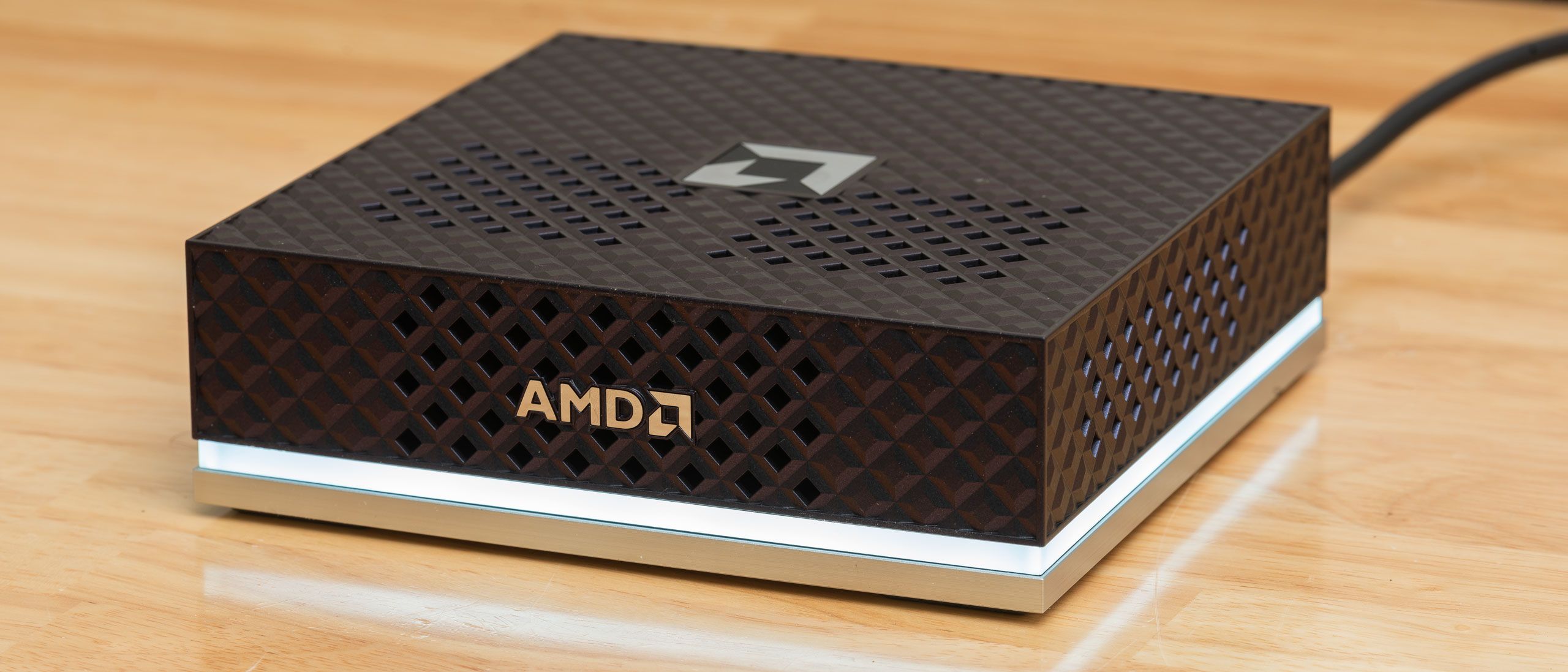
AMD's Ryzen AI Halo Developer Platform is now being reviewed as a $3,999 local AI workstation with 128GB of unified memory and Ryzen AI Max+ 395 silicon. Tom's Hardware found that the appliance lowers setup friction with AMD's software stack and Windows/Linux options, but it does not erase the performance and compatibility advantages of Nvidia's DGX Spark/GB10 ecosystem for some inference workloads. For practitioners, the useful frame is a developer sandbox: it can reduce cloud dependency and support local prototyping, but teams should benchmark their own models, context lengths, ROCm paths, and toolchains before treating it as production inference infrastructure.
The useful way to read Ryzen AI Halo is as a local developer platform, not a simple replacement for a tuned data-center inference stack. AMD is lowering the setup burden for local AI experimentation, but the decision still comes down to model compatibility, runtime maturity, memory behavior, and team-specific benchmarks.
What happened
Tom's Hardware reviewed AMD's Ryzen AI Halo Developer Platform, a compact workstation built around the Ryzen AI Max+ 395 processor. AMD's own product page describes a system with 128GB of unified LPDDR5x memory, up to 50 TOPS of NPU performance, ROCm support, and Windows or Linux operating-system options. Micro Center lists the platform at $3,999.99 with 2TB storage, 10GbE, Wi-Fi 7, and Radeon 8060S graphics.
Technical context
The architecture is attractive for local experimentation because unified memory can host larger models than many consumer GPUs, and x86 plus Windows/Linux support fits existing developer workflows. The limitation is ecosystem maturity: Tom's Hardware found acceptable throughput in some tests but warned that long-context latency and compatibility can trail Nvidia's DGX Spark or GB10-class stack.
For practitioners
Treat the box as a sandbox for local agents, evaluation loops, data privacy experiments, and Windows-centric tooling. Before production use, benchmark the actual model family, context length, quantization path, ROCm support, and serving stack you plan to run.
What to watch
The important follow-up is software cadence: AMD playbooks, ROCm updates, vLLM and PyTorch support, and independent benchmarks across popular open models. If those improve, Ryzen AI Halo becomes more compelling as a local AI development tier; if not, it remains a convenient prototype box with workload-specific limits.
Key Points
- 1AMD's Ryzen AI Halo Developer Platform pairs Ryzen AI Max+ 395 silicon with 128GB unified memory.
- 2Tom's Hardware found easier setup but workload-dependent latency and compatibility limits versus Nvidia's ecosystem.
- 3Teams should benchmark their own models, context lengths, ROCm paths, and serving stack before production deployment.
Scoring Rationale
This is a notable local-AI hardware release because it broadens developer options for on-device model experimentation and Windows/Linux workflows. It remains a practical tooling story rather than a market shift because performance and compatibility are workload-dependent.
Sources
Public references used for this report.
View 4 more sources
- We Found the AMD Ryzen AI Halo AI Developer PCservethehome.com
- Powerful Strix Halo-powered gaming mini PC from AMD listed for $3,999 ahead of launchnotebookcheck.net
- Pre-Orders for $4000 AMD Ryzen AI Halo Mini PC Dev Kits Go Livetechpowerup.com
- AMD Strix Halo Mini PCs: Specs, Benchmarks, and Top Ryzen AI Max Buildsacemagic.com
Practice interview problems based on real data
1,625 SQL & Python problems across 15 industry datasets — the exact type of data you work with.
Try 250 free problems