AMD Captures Surge in Data Center CPU Demand
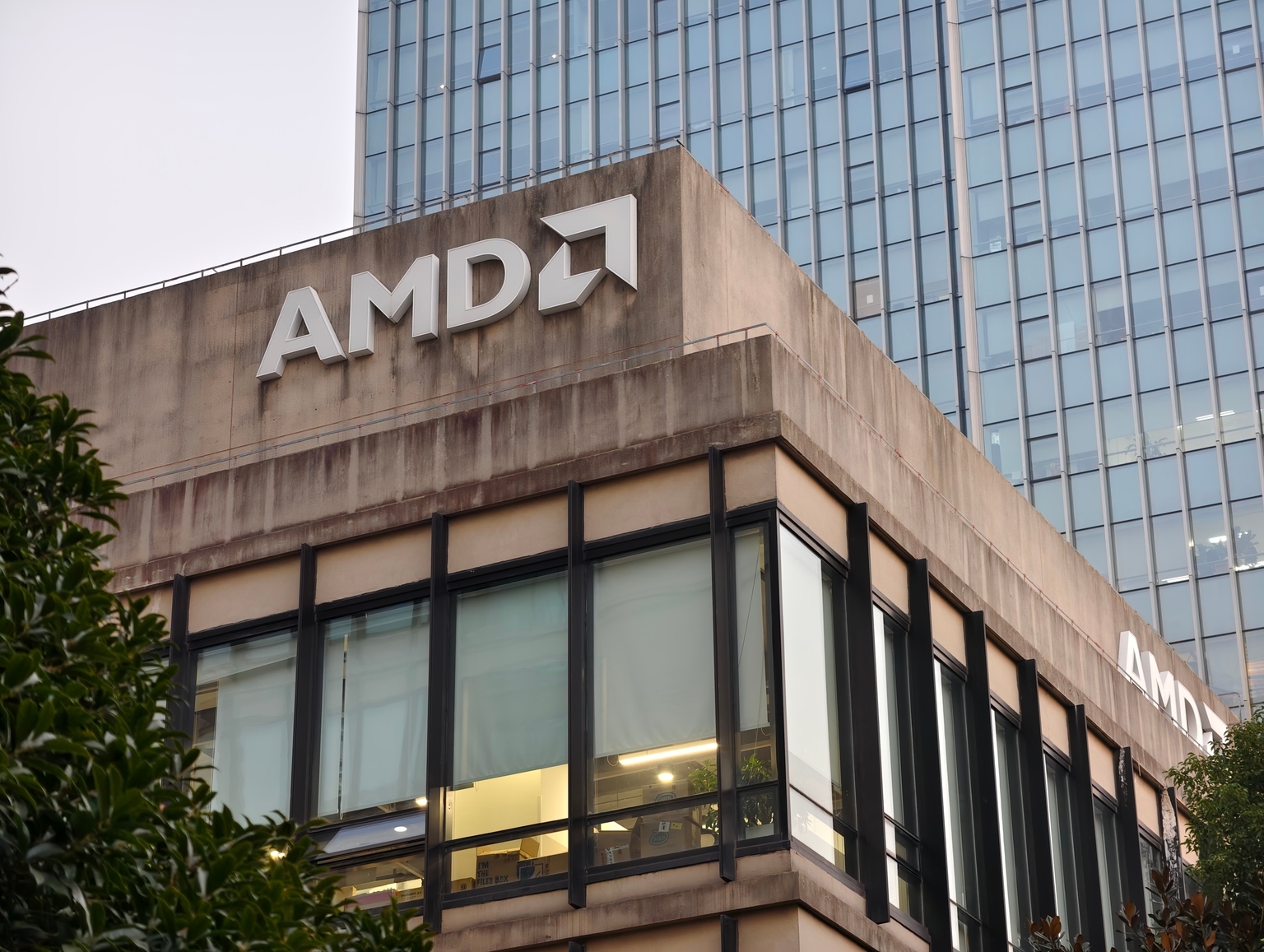
Per Seeking Alpha, Advanced Micro Devices' stock is up roughly 100% year-to-date after a strong Q1 FY26, with Seeking Alpha reporting 38% revenue growth and a 57% increase in Data Center revenue. Per an AMD blog post (May 7, 2026), AMD revised its server CPU total addressable market to more than $120 billion by 2030 and now expects greater than 35% annual growth. Multiple outlets including Motley Fool and Seeking Alpha report that the rise of "agentic AI" is changing workload balance and moving the GPU-to-CPU ratio toward parity, increasing demand for high-core server CPUs such as EPYC. CNBC reports TD Cowen analyst Joshua Buchalter reiterated a buy and raised his price target, citing stronger CPU guidance.
What happened
Per Seeking Alpha, Advanced Micro Devices' stock is up close to 100% year-to-date following a blowout Q1 FY26, with Seeking Alpha reporting 38% overall revenue growth and a 57% surge in Data Center revenue. Per an AMD blog post published May 7, 2026, AMD revised its server CPU total addressable market to more than $120 billion by 2030 and states it now expects greater than 35% annual growth for that TAM. Multiple outlets including Motley Fool and Seeking Alpha report commentators and analysts describing a shift in data center design, with several sources citing a move from GPU-heavy ratios toward roughly 1:1 GPU-to-CPU configurations.
Technical details
Editorial analysis - technical context
Public commentary from AMD and industry press frames "agentic AI" workloads as materially different from earlier chatbot-style inference. Per AMD's blog post, agentic workloads increase CPU responsibilities for orchestration, tool calls, I/O and state handling. Reported CPU roles commonly listed across sources include:
- •orchestration and task scheduling
- •agent execution and API/tool integration
- •memory and retrieval management
- •policy, validation and control-plane logic
These workload descriptions imply heavier, more parallelized CPU utilization alongside GPUs that continue to handle model inference.
Market data and positioning
Per Tom's Hardware citing Mercury Research data, AMD reached 46.2% of x86 server CPU revenue in the period covered by that report. Seeking Alpha and Motley Fool note that vendors and cloud customers are reporting elevated demand for high-core server CPUs, and CNBC reports TD Cowen analyst Joshua Buchalter reiterated a buy and raised his price target after the Q1 print. AMD's public materials and multiple analytics outlets connect the TAM revision and increased guidance to stronger traction in server CPU and data center GPU engagements.
Context and significance
The combination of published TAM revisions, independent share data and analyst commentary creates a coherent signal that demand patterns in data centers are shifting. For practitioners, that matters for capacity planning, procurement and benchmarking: reported market shifts increase the importance of evaluating CPU-based orchestration throughput, end-to-end latency under multi-model agent workloads, and system-level thermal and networking trade-offs in CPU-heavy racks. From a vendor-competition perspective, revenue-share gains become relevant for ecosystem support, compiler/tooling optimization and multi-socket system availability.
What to watch
For practitioners and infrastructure teams, watch these indicators in coming quarters:
- •published cloud provider instance-type announcements that increase high-core CPU options or new CPU-focused rack designs (tracks adoption)
- •supply and lead-time signals for high-core server CPUs and for data center GPUs (tracks capacity bottlenecks)
- •independent telemetry or benchmark reports that measure orchestration throughput and end-to-end latency for multi-model agentic pipelines (measures real workload impact)
- •vendor software and runtime updates that optimize CPU-GPU coordination for agentic workloads (tracks ecosystem readiness)
Editorial analysis
While vendor statements and analyst notes quantify a substantial market re-rating, observers should treat TAM and growth projections as company-provided estimates unless corroborated by independent market research. Reported share gains from Mercury Research and analyst upgrades are actionable signals for infrastructure teams but do not, by themselves, prove universal demand patterns across all cloud or enterprise deployments.
Key Points
- 1Agentic AI workloads increase CPU-side orchestration, shifting design toward more CPU capacity alongside GPUs and raising server-CPU demand.
- 2AMD publicly elevated its server CPU TAM to $120 billion and projects >35% annual growth, a material reassessment for data center vendors.
- 3Independent data (Mercury Research) and analyst upgrades together indicate AMD has materially grown server CPU revenue share, affecting procurement and benchmarking choices.
Scoring Rationale
Reported TAM revisions, share gains and analyst upgrades materially affect data center procurement and benchmarking decisions for practitioners. The story is significant for infrastructure planning but is not a new model or paradigm shift on the scale of major frontier AI releases.
Sources
Public references used for this report.
View 8 more sources
- The Agentic AI Supercycle Is Here. This Stock Could Be Its Biggest Winner.fool.com
- If Lisa Su Is Right, AMD Could Be as Big as Nvidia247wallst.com
- AMD Doubles Server CPU Forecast to $120 Billion as Agentic AI ...wccftech.com
- Analysis: AMD overtakes Intel in data center revenue as agentic AI ...digitimes.com
- AMD Server CPU Share Climbs As AI Infrastructure Role Expandssimplywall.st
- AMD Q1 FY 2026: Data Center Momentum Builds as AI Scalefuturumgroup.com
- Agentic AI-Driven CPU Renaissance Helps AMD Outpace Intel in Q1 ...counterpointresearch.com
- CPUs are Back: The Datacenter CPU Landscape in 2026newsletter.semianalysis.com
Practice interview problems based on real data
1,625 SQL & Python problems across 15 industry datasets — the exact type of data you work with.
Try 250 free problems