AMD Advances Rack-Scale AI Systems With Helios
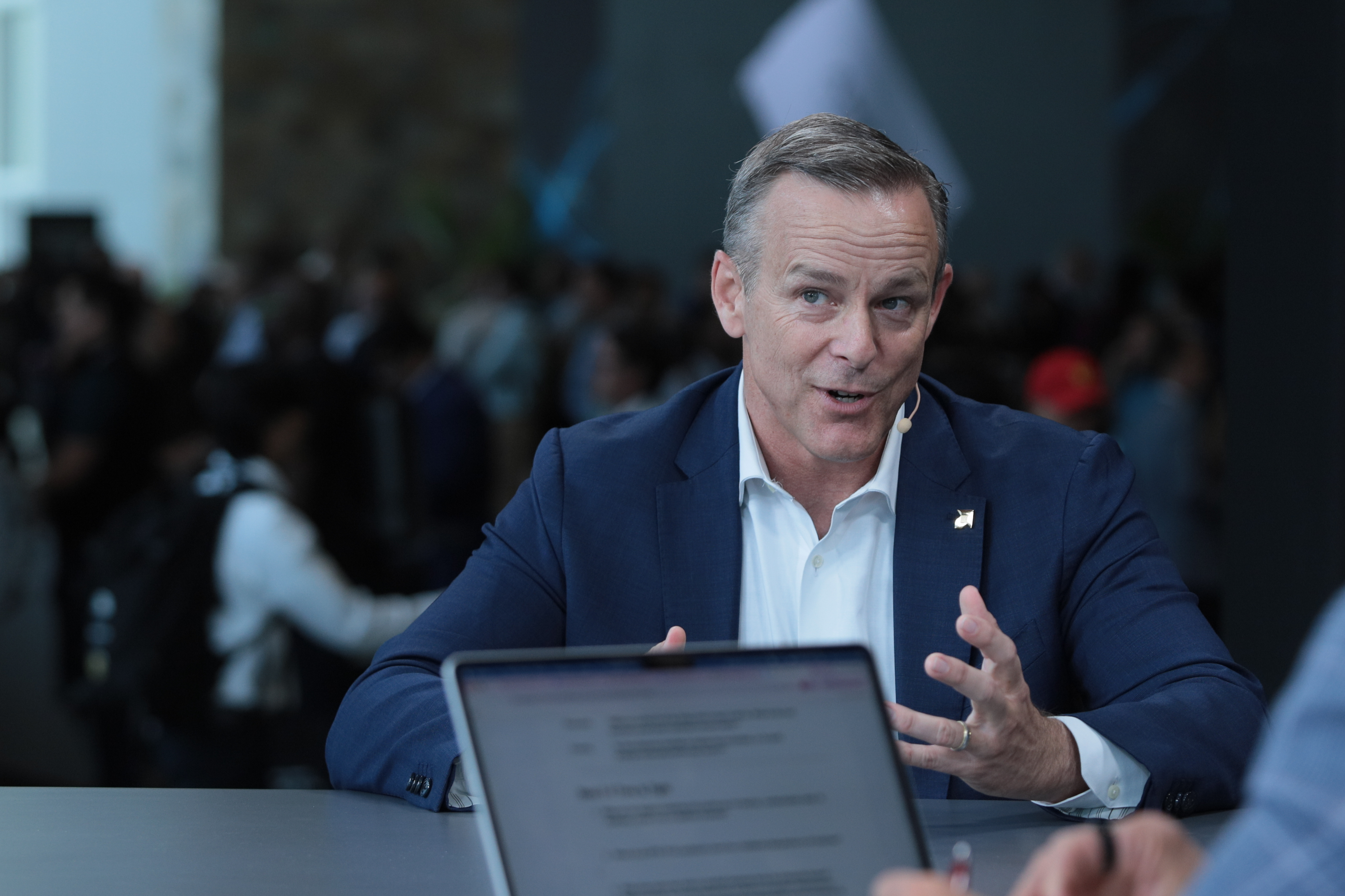
As AI deployments shift from individual accelerators to rack-level systems, infrastructure teams increasingly need to evaluate CPUs, GPUs, networking, software maturity, power, and token economics together. AMD launched its Helios rack-scale AI system and, according to CNBC, will begin shipping it to customers later this year. Microsoft announced it will deploy Helios in Azure data centers, joining Meta, OpenAI, and Oracle as early customers, CNBC reports. Microsoft also announced new Azure compute instances based on AMD's EPYC "Venice" CPUs for agentic AI, data pipelines, and semiconductor design workloads. At AMD Advancing AI, corporate vice president Brian Dicker told SiliconANGLE that agentic workloads have increased the importance of CPU compute alongside GPUs.
The infrastructure decision is moving to the rack
Microsoft adds Azure capacity
According to CNBC, Microsoft described Helios as an addition to its Azure infrastructure portfolio and said the racks are intended to provide customers performance, scale, and choice for AI applications. CNBC also reports that Helios will support frontier-model inference, Microsoft's AI customers, and Azure AI services.
Microsoft also announced two compute instances powered by AMD's latest EPYC "Venice" CPUs, CNBC reports. One is targeted at agentic AI and data pipelines, and the other at semiconductor design. These workload labels matter because they pair accelerator capacity with CPU-intensive stages that often surround model execution, including data movement, preprocessing, tool invocation, and pipeline coordination.
SiliconANGLE's coverage of AMD Advancing AI places the announcement in a broader enterprise infrastructure discussion. Brian Dicker, AMD corporate vice president of the enterprise business group, said that as agentic AI has unfolded, workloads are "as much a CPU workload as it is a GPU workload." He also described customer conversations as centered on business outcomes rather than buying a CPU in isolation.
What practitioners should measure
For practitioners
Similar rack-scale transitions make end-to-end measurement more important than comparing peak accelerator figures alone. Teams assessing cloud or on-premises AI capacity commonly need to benchmark the full serving and data path, including model latency, tokens per second, tail latency, CPU saturation, interconnect behavior, storage access, and failure recovery.
The reporting does not provide Helios pricing, total Microsoft capacity, or service availability dates. Those omissions limit direct comparisons with alternative AI infrastructure offerings. They also leave several practical questions open for Azure users, including instance configuration, quota mechanics, regional availability, supported frameworks, and the performance characteristics of AMD's ROCm software stack for specific models.
Industry context
AI infrastructure procurement increasingly evaluates a system rather than a standalone accelerator. Training, inference, data preparation, retrieval, orchestration, networking, and storage can all shape delivered throughput and cost. For ML platform teams, that makes hardware selection a workload-engineering exercise involving software support, deployment topology, utilization, and operational constraints, not just accelerator specifications.
AMD has introduced Helios, its first rack-scale AI system. CNBC reports that the system is scheduled to ship to customers later this year and that Microsoft will deploy Helios racks in Azure data centers. The same report identifies Meta, OpenAI, and Oracle as other early customers, although financial terms and the amount of compute capacity were not disclosed.
AMD's July 20 announcement states that Microsoft will deploy next-generation AMD Instinct and AMD EPYC processors as the companies expand their long-term partnership. Tom's Hardware reports that Microsoft committed to add Helios systems in volume for its own data centers, Azure AI infrastructure customers, and Microsoft Foundry workloads, while noting that neither company disclosed the deployment's size in watts or dollars.
The cited deployments show that hyperscale buyers are expanding their supplier options while AI capacity remains constrained. For engineering teams, multi-vendor capacity can improve procurement flexibility, but it can also increase the value of portable software layers, reproducible benchmark suites, and deployment automation that can validate performance across hardware backends.
Helios therefore represents a material product milestone for AMD, while the operational significance for customers will depend on details not yet disclosed publicly: delivered capacity, cloud instance specifications, software tooling, pricing, and measured workload performance.
Key Points
- 1AMD's Helios shifts evaluation toward integrated rack-scale AI systems, where deployment performance depends on CPUs, GPUs, software, networking, and data pipelines.
- 2Microsoft's Azure deployment adds a major cloud channel for AMD hardware, though capacity, pricing, regions, and instance specifications remain undisclosed.
- 3Agentic AI workloads can increase CPU and orchestration demands, making end-to-end benchmarks more informative than accelerator peak-performance comparisons alone.
Scoring Rationale
Helios is AMD's first rack-scale AI system, and Microsoft's Azure deployment makes the launch materially relevant to cloud AI capacity and hardware choice. The story is significant for ML infrastructure teams, although disclosed deployment scale, pricing, availability, and measured performance remain limited.
Sources
Public references used for this report.
Practice interview problems based on real data
1,625 SQL & Python problems across 15 industry datasets — the exact type of data you work with.
Try 250 free problems