AI Drives Surge in Data-Centre Electricity Demand
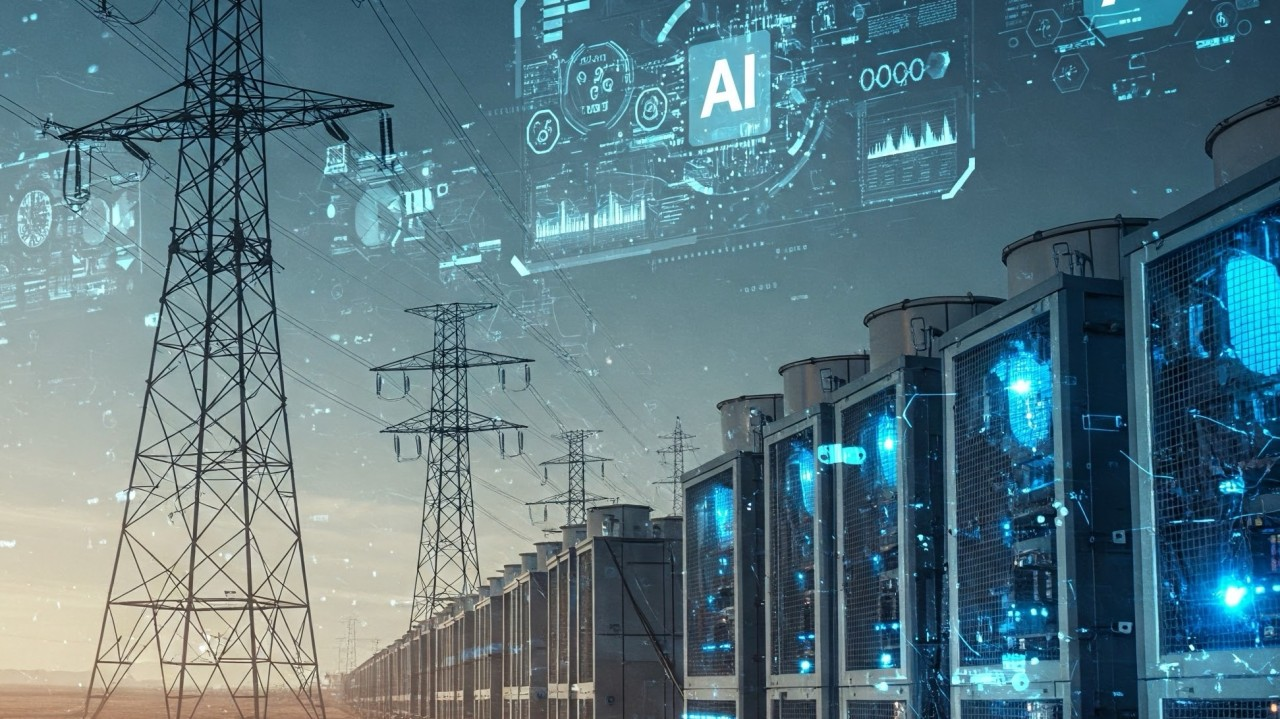
The International Energy Agency's 'Energy and AI' modelling projects global data-centre electricity use could reach about 945 terawatt-hours (TWh) per year by 2030, up from roughly 485 TWh in 2025, according to the IEA report. Reporting in Nature and S&P Global echoes the IEA projection that AI-related workloads are the principal driver of much of the growth. Per the IEA, inference already accounts for roughly 80-90% of AI computing today and is expected to represent approximately 75% of total AI energy demand by 2030 as AI features are embedded in everyday products and services. Analysts and business outlets including Harvard Business Review highlight that electricity access and power procurement are becoming strategic constraints for firms adopting large-scale AI.
What happened
According to the International Energy Agency's Energy and AI analysis, global data-centre electricity consumption could reach about 945 terawatt-hours (TWh) annually by 2030, up from roughly 485 TWh in 2025, per the IEA report. Nature's coverage of the IEA analysis framed that rise as roughly a doubling of data-centre energy use by 2030, and S&P Global notes the 945 TWh figure is equivalent to Japan's current total power consumption. Per the IEA executive summary, 945 TWh by 2030 represents just under 3% of projected total global electricity consumption that year.
Technical details
Editorial analysis - technical context
The IEA report breaks down data-centre electricity demand by equipment and functions, estimating that servers account for around 60% of modern data-centre electricity use, with storage and networking contributing smaller shares and cooling varying widely by facility efficiency. Per the IEA, inference already accounts for roughly 80-90% of AI computing today and is expected to represent approximately 75% of total AI energy demand by 2030 in the base case, as AI features are embedded into everyday products and services. The dynamic reflects an industry pattern where per-query cost reductions and broader deployment increase aggregate compute demand even as hardware and cooling efficiency improve.
Context and significance
Implications for infrastructure and sustainability
What to watch
- •Regional grid and permitting signals where new data centres can be sited without triggering long lead times for power upgrades.
- •Cloud and hyperscaler disclosures on power purchase agreements (PPAs) and onsite generation capacity, which will indicate how providers plan to match compute demand with contracted supply.
- •Advances in inference efficiency (model distillation, quantization, specialized accelerators) and software-level throttling or scheduling that change per-request energy footprints.
Editorial analysis
For practitioners, the projections shift where operational risk and cost pressure sit in the stack. Harvard Business Review notes that executives are beginning to treat electricity and power contracts as strategic inputs, and HBR references CBRE's warning about power shortages constraining data-centre growth. Industry-pattern observations show that as compute scales, constraints migrate from access to models and GPUs toward site-level power availability, grid permitting, interconnection capacity, and cooling water supplies. That creates cross-disciplinary requirements spanning ML ops, site selection, procurement, and sustainability teams.
The IEA-backed projections imply rising demand for high-density power delivery, expanded cooling capacity, and potentially new grid investments. The coverage highlights three technical pressure points:
- •rising peak power at hyperscale facilities
- •water use for evaporative and closed-loop cooling
- •land and transmission footprints for new generation and substations. The coverage also invokes the Jevons paradox - improvements in efficiency can lower unit costs and thereby expand total consumption - as a plausible mechanism that could counteract efficiency gains
Observers should also track regulatory and market responses that could reshape costs, including capacity markets, prioritized transmission for data-centre clusters, and water-use restrictions in stressed regions. Public reporting from the IEA, academic analyses in venues such as Nature, and business commentary in outlets like HBR together create a consistent picture: accelerating AI deployment scales energy and resource needs in ways that matter to ML engineers, infra teams, and sustainability officers.
Key Points
- 1IEA modelling projects global data-centre electricity use could reach about 945 TWh by 2030, driven largely by AI workloads.
- 2Routine inference (chatbots, image/video generation) may account for most future energy demand, meaning per-query efficiency gains do not guarantee lower total consumption.
- 3Practitioners will increasingly treat power access, cooling water, and grid interconnection as operational constraints alongside GPUs and models.
Scoring Rationale
IEA modelling projects data-centre electricity use could nearly double by 2030, driven primarily by AI inference workloads, corroborated by S&P Global and Nature coverage and given renewed business urgency by Harvard Business Review's June 2026 analysis on energy strategy. The projections document a significant ongoing structural shift in AI infrastructure economics now materializing in power procurement strategies at major firms. Score reflects an important continuing trend; the core IEA data was first published in April 2025, with the HBR piece adding fresh practitioner relevance.
Sources
Public references used for this report.
Practice interview problems based on real data
1,625 SQL & Python problems across 15 industry datasets — the exact type of data you work with.
Try 250 free problems