AI Drives Progress Toward General-Purpose Robot Autonomy
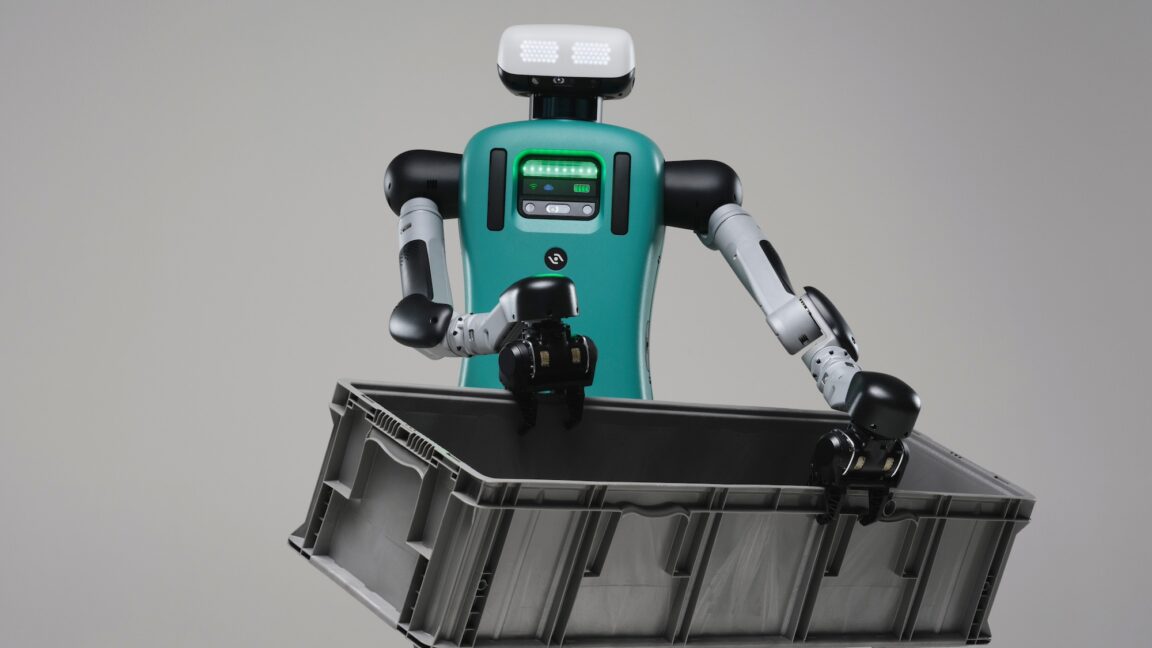
Ars Technica reported on July 7, 2026 that advances in AI perception and large-scale learning are making general-purpose, multi-task robot autonomy more achievable, based on interviews with robotics researchers and startup founders. The feature highlights Agility Robotics's Digit humanoid working in warehouses and on factory floors, and quotes a Boston Dynamics vice president of software saying autonomy has expanded far beyond simple point-to-point navigation. Ars Technica also reports that the push toward more capable, general-purpose robots has attracted billions of dollars in investment. For practitioners, the shift signals that engineering effort is moving from bespoke motion control toward data, simulation, and foundation-model integration.
For AI and robotics teams, the signal in this story is that the bottleneck for broader robot autonomy is shifting away from basic mobility and toward scalable perception, generalization, and data engineering, a reframing that should influence where engineering investment goes next: simulation infrastructure, dataset curation, and foundation-model integration rather than only control-system work.
What happened
Ars Technica published a feature on July 7, 2026 compiling interviews with robotics researchers and startup founders about progress toward general-purpose robot autonomy. The article highlights real-world deployments such as Agility Robotics's Digit humanoid operating in warehouses and factory floors, and cites a quote from a Boston Dynamics vice president of software: "When I started maybe about 15 years ago, I led a project team that was focused on autonomy, but in that era, the goal of that team was to just get a robot to navigate from point A to point B," according to Ars Technica. The report also says the push toward more autonomous, multi-task robots has attracted billions of dollars in investment, per Ars Technica.
Technical context
Current advances driving this shift include improvements in learned perception, large multimodal models, and simulation-to-reality workflows. As an industry pattern, teams building broadly capable robots increasingly combine pre-trained visual and language models with task-specific fine-tuning and large-scale synthetic data, reducing per-task engineering while raising new demands for dataset management, sim-to-real verification, and runtime robustness.
For practitioners
Organizations productizing multi-task robots typically invest in three areas in parallel: simulation and synthetic-data pipelines, perception stacks built on foundation models, and operational tooling for continual data collection and retraining. These are generic patterns observed across recent robotics startups and labs, not confirmed specifics of any single company named in the article.
What to watch
Watch for deployments that move beyond constrained pick-and-place tasks into unscripted human environments, publicly documented failure modes from real operations, and standardized benchmarks for multi-task robot competence. Ars Technica's piece is a single-source synthesis of interviews rather than an exhaustive technical roadmap, so the specific figures and quotes above should be read as attributed to that reporting; Agility's Digit deployment in warehouse settings is independently corroborated by the company's own case studies.
Key Points
- 1Ars Technica's July 7 feature finds foundation-model perception and multimodal learning are lowering the engineering cost of building multi-task robots.
- 2Simulation-to-reality pipelines and synthetic-data scaling are becoming the main bottleneck for teams trying to productize general-purpose robot autonomy.
- 3Warehouse and factory deployments like Agility's Digit serve as near-term proving grounds before broader, unscripted real-world autonomy becomes feasible.
Scoring Rationale
A well-known outlet's practitioner-relevant synthesis of industry trends in robot autonomy, not a single breakthrough, product launch, or hard benchmark. Score is held in the solid range rather than notable because the story is currently single-sourced (the Ars Technica feature could not be independently corroborated via fetch or search at audit time, likely due to its recency) and reports on general trends via interview quotes rather than new data.
Sources
Public references used for this report.
Practice interview problems based on real data
1,625 SQL & Python problems across 15 industry datasets — the exact type of data you work with.
Try 250 free problems