Acer launches two AR smart glasses, one AI-focused
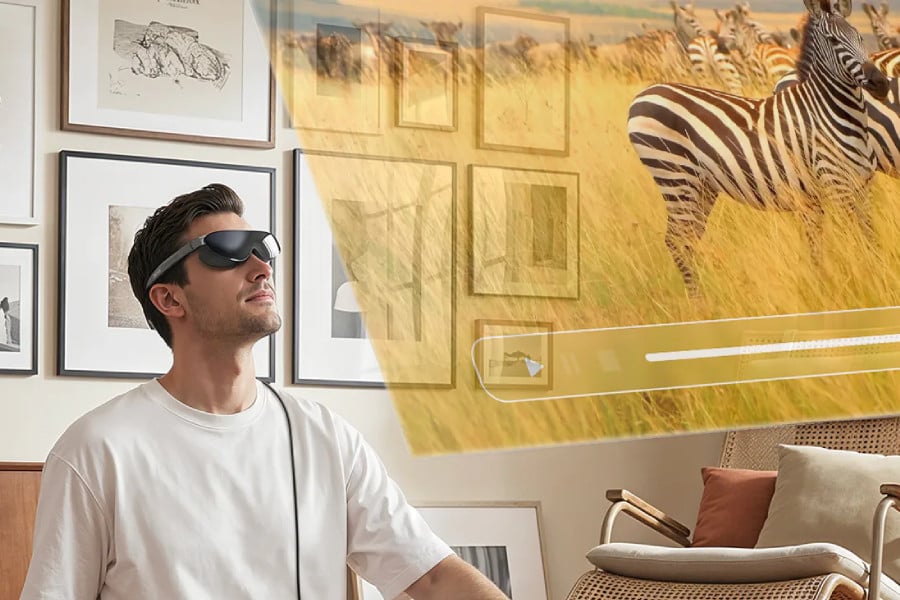
Acer announced two new wearable devices: the Acer AR Vision GR0 and the Acer GI0. Acer's press release, distributed via PR Newswire and posted on news.acer.com, describes the GR0 as a tethered augmented reality headset that connects to phones, laptops, or PCs for a high-quality visual experience. Gizmochina reports the GR0 uses dual Micro OLED displays at 1920×1080 per eye, 60Hz, weighs 69 grams, and targets late 2026 availability. Multiple outlets including Gizmochina and FoneArena report the GI0 is a lighter, wireless frame weighing 46 grams with an onboard 12MP camera, 217mAh battery, 32GB storage, and integrated Google Gemini voice AI. Gizmochina lists US starting prices: $499.99 for the GR0 and $299.99 for the GI0, with Europe and Australia prices reported by regional outlets.
What happened
Acer announced two new wearable devices, the Acer AR Vision GR0 and the Acer GI0, as part of a wider product reveal that also included new Iconia tablets, according to Acer's press release distributed via PR Newswire and the company blog (news.acer.com). Reporting from Gizmochina and other outlets provides detailed specifications and pricing for both units.
Technical details
Gizmochina reports the GR0 uses dual Micro OLED panels, each at 1920×1080 resolution with a 60Hz refresh rate, producing a combined experience Acer describes as equivalent to a 172-inch screen viewed from six meters, per Gizmochina's coverage of Acer's announcement. Display characteristics reported include 95% DCI-P3 color coverage and a 50,000:1 contrast ratio. The GR0 is a wired device that requires a host device to drive content and weighs 69 grams, with support for near-ear speakers, 3DoF head tracking, and magnetic prescription lenses, according to Gizmochina and Phandroid.
Gizmochina and FoneArena report the GI0 is a lighter, wireless frame weighing 46 grams (frames only) that integrates Google Gemini for hands-free voice queries, translation, and live captions. Reported onboard hardware includes a 12MP camera (still capture up to 4032×3024), 1080p video at 30fps, three microphones, 32GB internal storage, Wi-Fi 5 and Bluetooth 5.0 connectivity, and a 217mAh battery. Gizmochina and regional outlets list US pricing at $499.99 for the GR0 and $299.99 for the GI0, with Europe and Australia price points reported by Stuff and regional press coverage. Acer's announcement and consumer coverage indicate both models target availability in North America, Europe, and Australia in late 2026.
Industry context
For practitioners
What to watch
Editorial analysis
Companies releasing dual-form-factor wearables often split user scenarios between tethered high-fidelity displays and lightweight, AI-first frames. Observed patterns in the wearable market show tradeoffs between visual fidelity and untethered convenience; higher-resolution micro OLED panels typically require external processing to control weight, while AI-integrated frames prioritize connectivity and local sensors.
Hardware choices reported for the GR0 and GI0 illustrate familiar engineering tradeoffs practitioners will encounter when prototyping AR/AI eyewear: display resolution, thermal and weight budgets, and host-device offload versus on-device compute. Integration with Google Gemini on the GI0 highlights ongoing ecosystem plays where cloud-linked LLM assistants are embedded into lightweight form factors, increasing reliance on low-latency networking and privacy-aware audio/video pipelines.
Observers should track real-world battery life and thermal behavior for the GI0 given its modest 217mAh cell, host-device compatibility and latency for the tethered GR0 workflow across Android, iOS, and Windows, and developer access to the Google Gemini capabilities on wearable hardware. Market reception and software ecosystem support will determine whether these two divergent approaches attract distinct user segments or converge around a single dominant design.
Key Points
- 1Acer announced two distinct smart glasses: the GR0 prioritizes display fidelity while the GI0 targets light, AI-driven hands-free use.
- 2Reported specs show the GR0 uses dual Micro OLED panels at 1920×1080 per eye; the GI0 pairs a 12MP camera with Google Gemini for assistant features.
- 3Industry context: Wearables typically trade off visual quality for untethered convenience; integrating cloud LLMs raises networking and privacy engineering needs.
Scoring Rationale
Notable product launches for AR and AI wearables that illustrate two competing form-factor approaches. Useful signal for practitioners building AR/assistant integrations, but not a paradigm shift.
Sources
Public references used for this report.
View 7 more sources
- New Acer Tablets Plus AI and AR Glasses Expand On-the-Go Capabilitiesplataformamedia.com
- Acer Iconia Duo Tablets Go 3:2 as AI and AR Glasses Join Intechmymoney.com
- New Acer Tablets Plus AI and AR Glasses Expand On-the-Go ...cxotoday.com
- Acer Unveils its New Smart Eyewear Lineup - Phandroidphandroid.com
- Acer expands wearable lineup with AR Vision GR0 and GI0 AI Smart ...fonearena.com
- Can't decide between AR or AI glasses? Acer has a pair of each - Stuffstuff.tv
- New Acer Tablets Plus AI and AR Glasses Expand On-the-Go ...fidelity.com
Practice interview problems based on real data
1,625 SQL & Python problems across 15 industry datasets — the exact type of data you work with.
Try 250 free problems