1X ships NEO humanoid robots to US homes
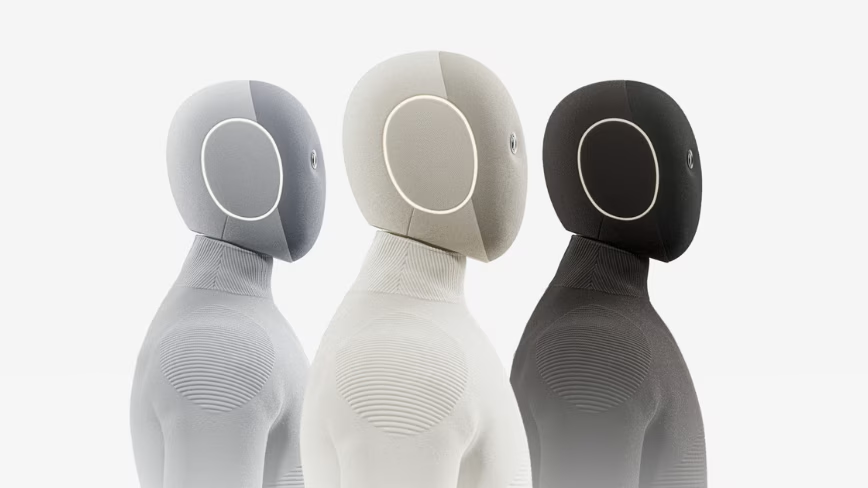
The Next Web reports that 1X Technologies, a Norway-founded company backed by OpenAI, has opened a 58,000-square-foot manufacturing facility in Hayward, California to produce its NEO humanoid robot at consumer scale. The Next Web reports the plant has capacity for 10,000 units in year one and a target of more than 100,000 units annually by the end of 2027, with first customer shipments planned for 2026. The article says the factory employs more than 200 staff and builds critical components in-house, including motors, batteries, structures, transmission systems, soft goods, and sensors. The Next Web reports pricing as an Early Access purchase at $20,000 or a subscription at $499 per month, and notes the company claims first-year production capacity sold out within five days of preorders opening in October 2025. CEO Bernt Børnich is quoted in the announcement.
What happened
The Next Web reports that 1X Technologies, which the article identifies as Norway-founded and backed by OpenAI, opened a 58,000-square-foot manufacturing facility in Hayward, California to produce its NEO humanoid robot. The Next Web reports the plant has capacity for 10,000 units in year one and a target of more than 100,000 units annually by the end of 2027. The article says first customer shipments are planned for 2026, the facility currently employs more than 200 staff, and a larger plant is under construction in San Carlos, California. The Next Web reports the company describes the factory as vertically integrated and building critical components in-house, including motors, batteries, structures, transmission systems, soft goods, and sensors.
Technical details
The Next Web reports NEO is designed as a general-purpose home robot and is available in three colours (Tan, Gray, Dark Brown). The article states commercial options include an Early Access purchase at $20,000 with priority 2026 delivery or a subscription at $499 per month. The Next Web reports the robot uses Nvidia hardware and software, citing the Jetson Thor onboard computing platform and training via Nvidia's Isaac robotics simulation framework. The piece also notes safety design choices described by the company: a light, soft form factor with no pinch-points.
Editorial analysis - technical context
Industry-pattern observations: vertically integrated manufacturing plus on-device compute (here reported as Jetson Thor) is a common approach for companies trying to deliver predictable physical safety and product reliability in domestic robotics. Combining hardware production with in-house subassembly can lower iteration latency for mechanical changes but raises capital intensity and supply-chain complexity, based on precedents in robotics and consumer electronics.
Context and significance
Editorial analysis: consumer-priced humanoid robots with both purchase and subscription options, if delivered at scale, would shift product support, maintenance, and software update responsibilities to vendors and service providers. The Next Web's report that first-year capacity sold out within days (as reported by the company) suggests initial demand, but broader adoption depends on long-term reliability, after-sales service, and ecosystem support-factors that have determined success in past consumer-robotics attempts.
What to watch
Editorial analysis: observers should track reported delivery timelines and actual shipment confirmations, post-delivery reliability and safety reports from early customers, inventory and ramp metrics from the San Carlos facility under construction, and the company's dependency on Nvidia Jetson Thor and Isaac for compute and simulation. Independent third-party testing and regulatory safety assessments will also be key signals for practitioners evaluating deployment and integration risk.
Key Points
- 11X reports a US factory with 10,000 unit capacity year one and 100,000+ by 2027, showing aggressive manufacturing targets.
- 2Combining purchase and subscription pricing at $20,000 or $499/month follows an industry pattern to lower adoption friction while creating recurring revenue.
- 3Reliance on Nvidia Jetson Thor and Isaac highlights the common coupling of robotics hardware to vendor compute and simulation stacks, affecting portability.
Scoring Rationale
A consumer-scale humanoid robot factory and planned shipments represent a notable step for commercial robotics. The story matters for practitioners tracking hardware-software integration, supply-chain scale, and service models.
Practice interview problems based on real data
1,625 SQL & Python problems across 15 industry datasets — the exact type of data you work with.
Try 250 free problems