ZTE Reorients Strategy Toward AI Infrastructure Growth
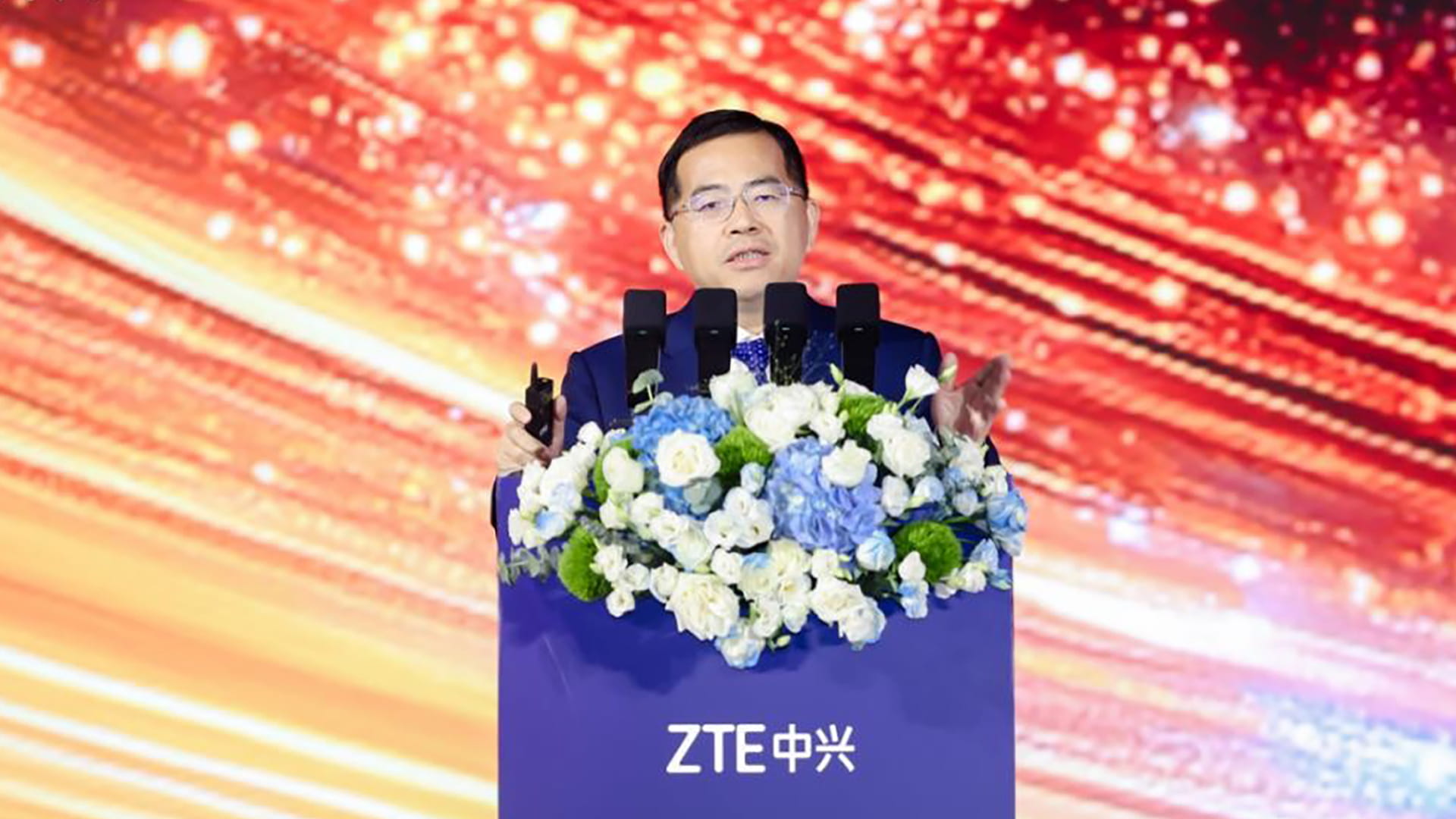
ZTE is repositioning from a telecom equipment vendor into a full-stack AI infrastructure provider, leveraging its telecom engineering strengths to capture rising compute demand. The company reported 2025 computing revenue growth of about 150%, with computing now representing 24.6% of total revenue, and unveiled a commercialized full-stack AI Factory including servers, hyper-nodes, a lossless network, an AI operating system, and development and digital twin platforms. ZTE is also pushing an AI-driven telco platform, Telco Service Agent, that enables intent-based service delivery integrated with the 5G core. The shift aims to offset shrinking traditional operator capex and rising hardware costs, while targeting operators, hyperscalers, and data center customers with co-design optimizations to improve compute density, latency, and TCO.
What happened
ZTE is executing an explicit strategic shift to make AI infrastructure a primary growth engine, moving beyond its historical telecom equipment focus. The company reported 2025 operating revenue of 133.896 billion yuan, with computing power revenue rising by about 150% year-on-year and now accounting for 24.6% of total revenue. At MWC Barcelona and in product announcements, ZTE unveiled a commercial AI Factory full-stack solution and an AI-driven telco platform, Telco Service Agent, aimed at operators and data center customers.
Technical details
ZTE frames the transition around end-to-end engineering co-design across hardware, interconnect, networking, and software. The AI Factory package bundles:
- •AI servers and hyper-nodes using an OEX (Orthogonal Electrical eXchange) style vertical interconnect
- •A lossless, high-capacity network fabric and ZTE-designed switching silicon claiming TB-level bandwidth and sub-100-nanosecond latency
- •An AI Booster operating system and AI Agent Studio development tools
- •AI Factory Twin for lifecycle simulation and IDC infrastructure integration
ZTE emphasizes compute-network co-design and software-hardware co-design to reduce cable complexity, raise compute density, and optimize total cost of ownership. On the telco side, Telco Service Agent implements intent-based service delivery integrated with the 5G core, translating natural-language or policy intents into real-time resource allocation for guaranteed performance in streaming, gaming, and enterprise applications.
Context and significance
The timing is strategic. Telecom operator capex in China is shifting from pure connectivity to compute, with the three major carriers prioritizing computing infrastructure spending in 2026. Global hyperscalers and cloud providers continue large-scale investment in data centers; public estimates show cloud capex above USD 383 billion in 2025 with projections rising. ZTE leverages its systems engineering experience in telecoms to attack AI infrastructure, arguing that both domains require complex, multidisciplinary system optimization across chips, hardware, software, schedulers, and applications. This positions ZTE to compete for operator deals migrating from network rollouts to on-premises and edge compute, and to offer differentiated integration against hyperscalers and rack-level OEMs.
Business trade-offs and risks
Financials show the pain points. While computing revenue surged, ZTEs net profit fell by 33.3% in 2025, pressured by operator capex contraction and rising component costs for DRAM and NAND. The shift to compute means heavier exposure to volatile chip markets and competition from established server and switch vendors and hyperscaler custom designs. The technical promises, such as TB-level interconnect and sub-100-nanosecond latency, are plausible but will require customer validation at scale.
What to watch
Monitor early commercial deployments and performance telemetry for AI Factory hyper-nodes, adoption of Telco Service Agent by major operators, and margin recovery as supply-chain and scale effects play out. Also watch partnerships or customer wins with hyperscalers and large cloud builders that would validate ZTEs co-design claims.
Key Points
- 1ZTE is pivoting from network equipment to full-stack AI infrastructure, using telecom engineering strengths to target compute demand.
- 2AI Factory bundles co-designed servers, interconnect, OS, and digital twin tools to raise density and reduce TCO for large models.
- 3The strategy balances rapid computing revenue growth against margin pressure from operator capex contraction and rising component costs.
Scoring Rationale
The shift is a notable industry development: a major telecom vendor is commercializing full-stack AI infrastructure and intent-based telco services. It matters for operators, data center architects, and competing OEMs, but it is not a frontier-model or regulatory milestone, so the impact is significant but not industry-shaking.
Sources
Public references used for this report.
Practice interview problems based on real data
1,625 SQL & Python problems across 15 industry datasets — the exact type of data you work with.
Try 250 free problems