Yuvi Lab launches AI creation platform for children
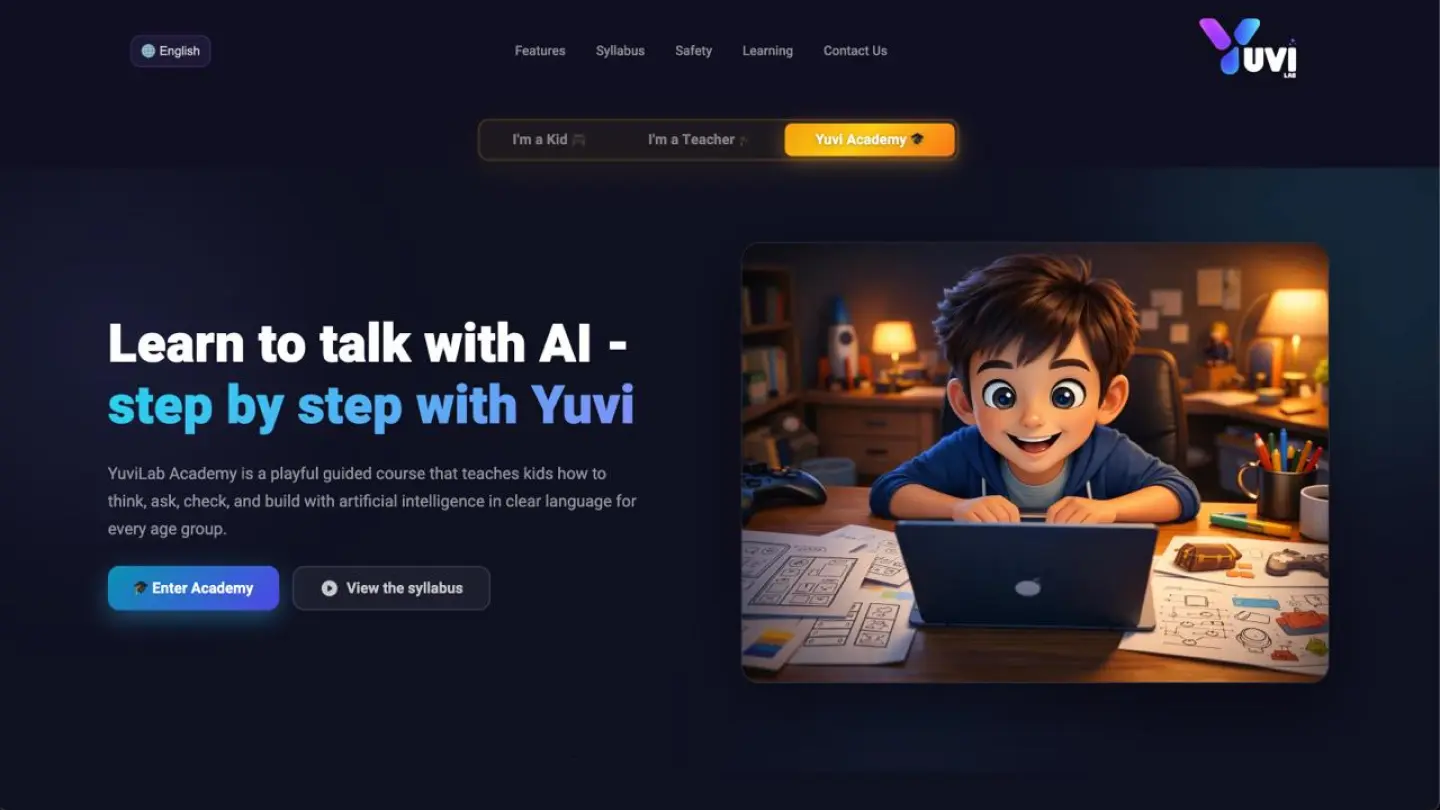
Yuvi Lab, an Israeli startup founded by IDF reservist Moti Malka, has launched a free, web-based AI environment that lets children aged six and up build games, apps and learning modules, according to The Jerusalem Post and JNS. The platform requires no login, runs in Hebrew, English, Russian and Arabic, and applies content-safety filtering before showing AI-generated output to children. JNS reports Israel's Education Ministry approved it for the "Summer Preparatory 2026" catalog under the national "Realistic Israel" AI initiative administered by the Israel Innovation Authority. Malka says he built the first version while helping his 10-year-old son study; since the March 2026 launch the company reports more than 2,000 active users and over 6,000 projects created. The Jerusalem Post describes a multi-agent design that routes each request to a language or code-optimized model, with adaptive personalization and a privacy-by-design approach the company says stores no identifying information about children.
What happened
Yuvi Lab, an Israeli startup founded by Home Front Command reservist Moti Malka, has launched a free, web-based AI platform that lets children aged six and up create games, apps and educational projects, as reported by The Jerusalem Post and JNS. Malka says the idea began when he used AI to build a study game for his 10-year-old son. JNS reports the platform was approved for Israel's "Summer Preparatory 2026" catalog under the national "Realistic Israel" AI initiative administered by the Israel Innovation Authority. The company says that since its March 2026 launch it has drawn more than 2,000 active users who have created over 6,000 projects.
How it works
The Jerusalem Post reports the system uses a multi-agent design that pairs general language models with code-optimized models, routing each interaction to the model best suited to the task. An adaptive personalization layer is described as learning a user's preferences and skill level over time. The environment requires no login, supports Hebrew, English, Russian and Arabic, and applies content-safety filtering before AI-generated content is shown to children. The company states it follows privacy-by-design principles and stores no identifying information about children; new users can start with a 20-module guided course, Yuvi Lab Academy.
Why it matters
What to watch
Editorial analysis
the launch sits where three EdTech trends meet, no-code generative creation for young users, age-appropriate safety controls, and national efforts to fold AI literacy into curricula. Pairing smaller task-specific models with a larger language model and routing between them is an established pattern for balancing capability, cost and safety, so the product is a useful concrete example for education-technology and model-deployment practitioners rather than a research advance.
the open questions are independent evaluation of content-safety effectiveness, how personalization is reconciled with the no-identifying-data claim, and whether adoption extends beyond early cohorts into supervised school settings. Documented retention and anonymization practices, plus measurable learning outcomes, will matter most for institutional uptake.
Caveats
Usage figures and product and safety descriptions come from the company via JNS and The Jerusalem Post; the available reporting does not cite independent safety audits, adversarial testing, or pedagogical assessment data.
Key Points
- 1Yuvi Lab is a free, accountless AI creation tool for children aged six and up, available in four languages and approved for Israel's Summer Preparatory 2026 education catalog.
- 2Per The Jerusalem Post, it uses multi-agent routing between language and code models plus adaptive personalization, with company-stated content filtering and privacy-by-design.
- 3Reported traction is early and company-supplied (2,000+ users, 6,000+ projects since March 2026); independent safety audits and learning-outcome data are not yet available.
Scoring Rationale
A solid EdTech product launch that illustrates multi-agent model routing and child-focused safety design, of practical interest to education-technology and deployment engineers, and lifted slightly by a real institutional signal in the Education Ministry catalog approval. It remains an early-stage, regional, niche tool with company-reported traction and no independent evaluation, which keeps it in the solid-but-niche band rather than the broadly notable range.
Sources
Public references used for this report.
Practice interview problems based on real data
1,625 SQL & Python problems across 15 industry datasets — the exact type of data you work with.
Try 250 free problems