XSmart launches Sleepal lamp for contactless sleep monitoring
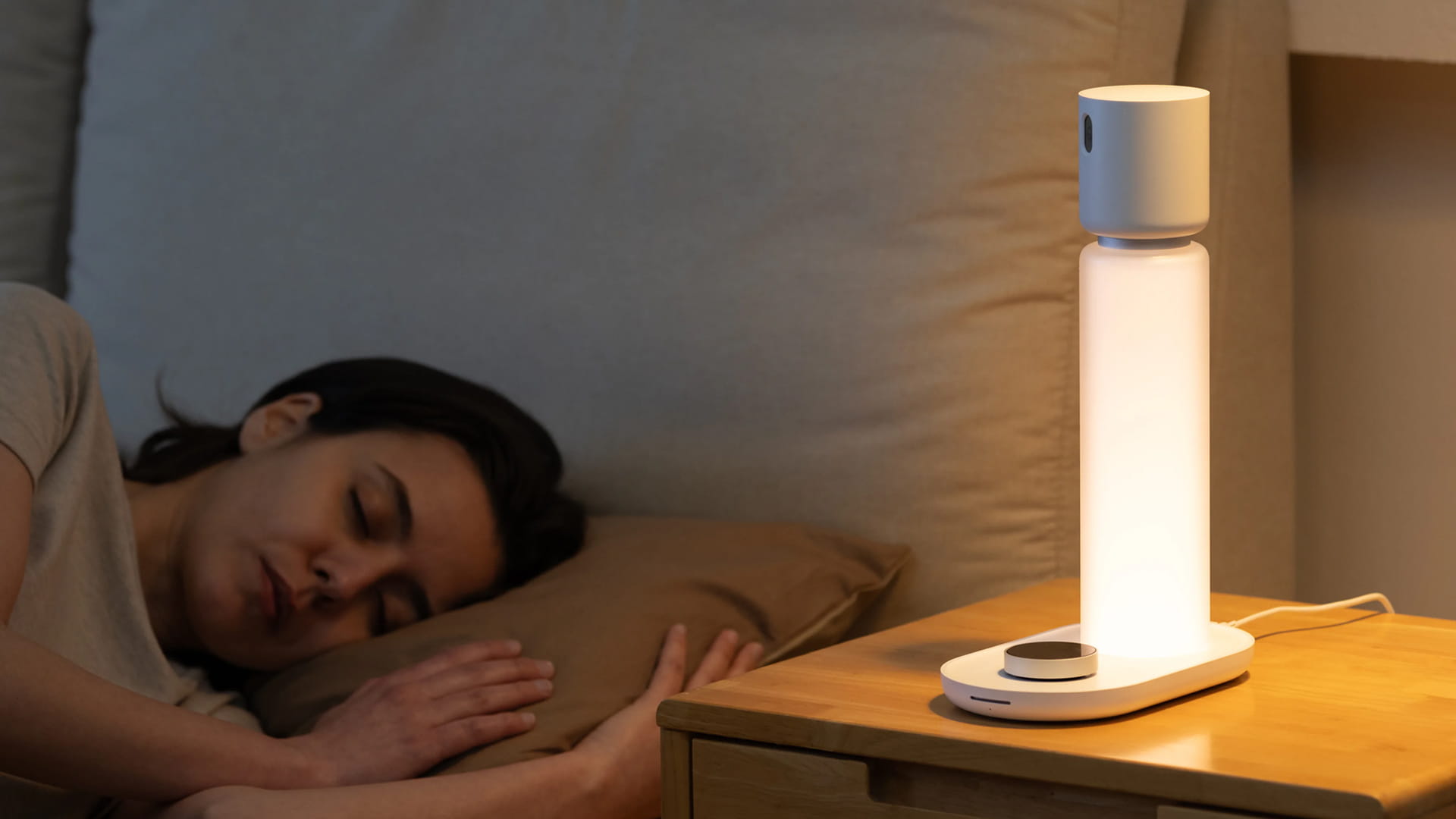
XSmart Technology launched the Sleepal bedside lamp on Kickstarter on May 19, priced at USD 449, combining 60 GHz millimeter-wave radar, thermal sensing, and environmental monitoring to track sleep without a wearable device. XSmart claims PSG validation and the product won three CES 2026 Innovation Awards (Accessibility, Smart Home, Digital Health), per XSmart's press release. KR-Asia profiles founder Fan Dian, a former Xiaomi IoT executive, who spent three years building the product. The startup has disclosed one angel round backed by Xiaomi and FutureX Capital, per KR-Asia.
What happened
KR-Asia reports that XSmart Technology launched the Sleepal bedside lamp on May 19 via Kickstarter, priced at USD 449. KR-Asia reports the product pairs millimeter-wave radar with other on-device sensors to monitor sleep without requiring users to wear a device. KR-Asia says founder Fan Dian, formerly a Xiaomi IoT executive, spent three years developing the product and that the startup has disclosed one angel funding round backed by Xiaomi and FutureX Capital. KR-Asia reports that Fan told 36Kr he has obstructive sleep apnea and that he cited prevalence figures of about 15% of adults and 30% among people over 40. KR-Asia notes media questions about the lamp's price and whether it overlaps with users' existing smartwatches.
Technical details
KR-Asia reports the lamp's primary sensor is millimeter-wave radar, combined with other unspecified sensors and on-device processing for sleep monitoring. The article does not publish signal-level data, validation numbers, or detailed model descriptions.
Editorial analysis - technical context
Non-contact millimeter-wave radar is increasingly used to detect respiration, heart-rate-related micro-movements, and gross body motion without skin contact. Companies and research groups typically fuse radar with microphones, infrared, or accelerometer data and apply signal processing plus machine learning to infer sleep stages and breathing irregularities. Industry-pattern observations note that achieving clinically meaningful accuracy requires careful calibration, labeled training data, and external validation against polysomnography; privacy and RF-emission considerations are also common technical and regulatory concerns.
Industry context
The Sleepal launch sits at the intersection of two trends: growing interest in passive, non-wearable health sensing, and consumer hardware startups using crowdfunding to test demand. Coverage frames the product against established categories-AI-driven wearables and smart mattresses-that already have market validation. Premium pricing on early hardware generally narrows initial uptake to early adopters, while mainstream adoption often follows only after published validation and price reductions.
What to watch
Observers will look for independent validation data or peer-reviewed comparisons to polysomnography, any disclosed performance metrics for apnea detection or sleep-stage accuracy, whether signal-level access or APIs are provided for researchers, Kickstarter traction and shipping timelines, and explicit privacy disclosures about radar data handling and storage. KR-Asia does not report clinical claims backed by published studies in the launch coverage.
Key Points
- 1Non-contact millimeter-wave radar can capture respiration and micro-movements, offering passive sleep data but requiring independent validation and privacy safeguards.
- 2Premium-priced hardware launched on Kickstarter tests niche demand; mainstream adoption usually follows demonstrated accuracy and lower unit costs.
- 3Clinical or diagnostic claims hinge on published validation and access to signal-level data, which practitioners should require to assess measurement quality.
Scoring Rationale
Consumer hardware applying mmWave radar and on-device ML to contactless sleep monitoring, with CES 2026 recognition and claimed PSG validation. Relevant to practitioners tracking passive health data sources, but limited impact pending independent validation and broader adoption.
Sources
Public references used for this report.
Practice with real Ad Tech data
90 SQL & Python problems · 15 industry datasets
250 free problems · No credit card
See all Ad Tech problems