
Women in Tech Advocate Inclusive AI Development
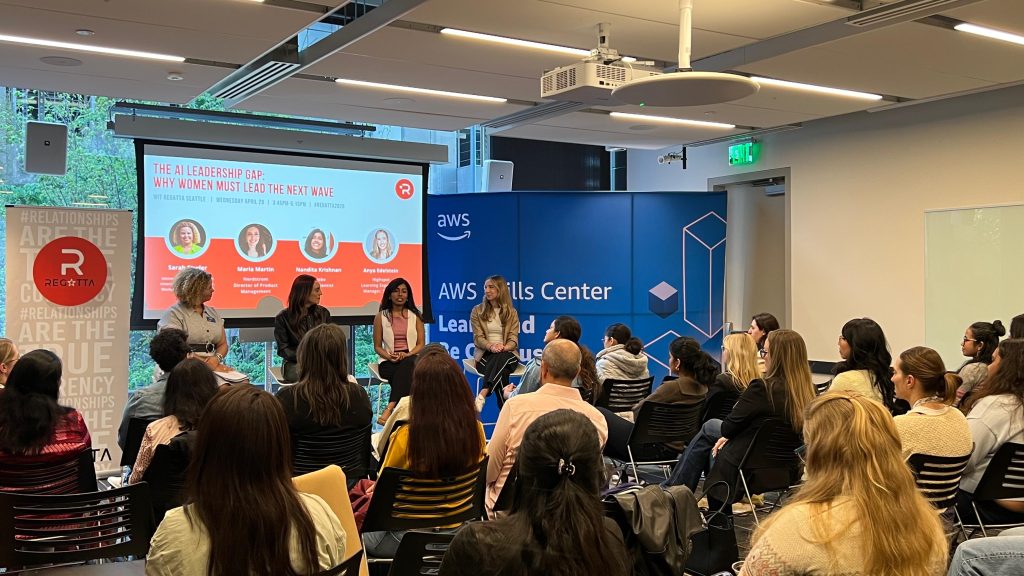
Speakers at the Women in Tech Regatta in Seattle urged earlier, broader participation in AI development to avoid repeating historic exclusion, GeekWire reports. Panelists included moderator Sarah Studer (University of Washington), Maria Martin (Nordstrom), Nandita Krishnan (Adobe) and Anya Edelstein (Highspot). Anya Edelstein warned, "If your perspective isn't taken into account in the room when those decisions are initially made, it's harder to make a change later down the road," a quote published by GeekWire. Commstrader reports a poll from Chief that surveyed over 1,700 experts and found 80% of senior women are driving AI strategy at their organizations. Reporters and attendees described a mix of concern and momentum: speakers highlighted failures from biased datasets in domains including car safety and medical diagnosis, and urged practical inclusion at design and data stages.
What happened
Speakers at the Women in Tech Regatta in Seattle gathered for an AI leadership panel reported by GeekWire and Commstrader. Panelists named in coverage included moderator Sarah Studer of the University of Washington, Maria Martin of Nordstrom, Nandita Krishnan of Adobe and Anya Edelstein of Highspot. GeekWire reported that the panel centered on a warning that "exclusion compounds over time," and published a direct quote from Anya Edelstein: "If your perspective isn't taken into account in the room when those decisions are initially made, it's harder to make a change later down the road." Commstrader cites a poll from Chief that surveyed over 1,700 experts and found 80% of senior women are driving AI strategy in their workplaces.
Technical details
Editorial analysis - technical context
The event coverage emphasized dataset and model failures where underrepresentation of female populations has produced real-world blind spots, with reporters citing examples from car safety testing and medical diagnostics. Observed patterns in the field include skewed training data, under-indexed demographic labels, and evaluation metrics that do not surface subgroup performance gaps. For practitioners, these are concrete failure modes: models trained on skewed samples can produce systematic mispredictions that propagate through product telemetry and decision pipelines.
Context and significance
Public reporting frames the Regatta conversation as part of a broader push to include diverse perspectives earlier in AI development cycles. Coverage highlights both the risk side-locking in biased systems if adoption accelerates without inclusive practices-and the leadership side, reflected in the Chief poll showing a high share of senior women involved in AI strategy. For teams building datasets and models, the thread running through the event coverage is that representation at the data-collection, labeling and requirements stages materially affects downstream fairness and reliability.
What to watch
For practitioners
indicators to monitor include whether organizations publish subgroup evaluation results, expand demographic coverage in training datasets, and adopt routine dataset audits. Observers following the space will also watch whether industry conferences and leadership networks broaden participation in AI governance discussions and whether that participation shows up in procurement and model-assessment practices.
Key Points
- 1Event coverage highlights that "exclusion compounds" in AI development, making early inclusion crucial to avoid long-lived bias.
- 2A Chief poll reported by Commstrader found 80% of senior women are driving AI strategy, signaling leadership engagement on responsible adoption.
- 3Industry-pattern observation: teams that expand demographic coverage and subgroup evaluations reduce the risk of deployed model failures and fairness gaps.
Scoring Rationale
The story is notable for practitioners because it highlights representation and dataset bias risks that affect model reliability and fairness. It is not a technical breakthrough, but it signals leadership engagement and operational priorities worth watching.
Sources
Public references used for this report.
Practice with real FinTech & Trading data
90 SQL & Python problems · 15 industry datasets
250 free problems · No credit card
See all FinTech & Trading problems

