Warsh Says AI Could Boost Growth, Seeks Better Fed Data
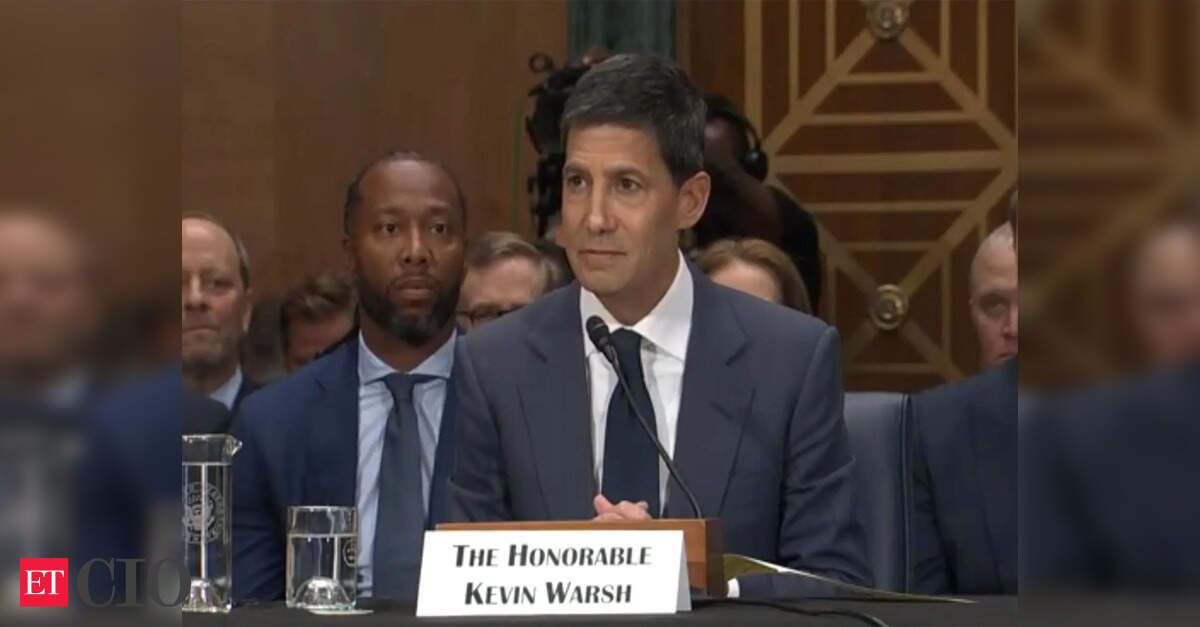
Kevin Warsh, President Trump's nominee for Federal Reserve chair, framed artificial intelligence as potentially "the most productivity enhancing wave of our lifetimes" while urging the Fed to avoid policy bets until it secures better data. Warsh told senators the supply-side impact of AI could be large but uncertain, and warned against using enthusiasm for AI as justification for premature rate cuts. He argued the Fed must update its information set and models, strengthen payment infrastructure to defend the dollar, and coordinate with Treasury and State on economic statecraft. His tech ties and rate-cut advocacy have drawn skepticism from current Fed officials and some senators.
What happened
In his Senate confirmation hearing, Kevin Warsh positioned AI as a major productivity shock that could materially ease price pressures, calling it potentially "the most productivity enhancing wave of our lifetimes." He emphasized uncertainty about timing and magnitude, and argued the Federal Reserve must obtain better, higher-frequency data before making monetary-policy bets based on anticipated AI-driven gains. Warsh also pressed the Fed to play a more active supporting role in maintaining the dollar's global primacy and upgrade payments infrastructure in the face of challenges like the digital yuan and payments outside SWIFT.
Technical details
Warsh warned that monetary policy operates with "long and variable lags," so policymakers must translate imperfect, lagging statistics into forward-looking judgments. He explicitly called for modernizing the Fed's data, models, and intelligence to capture AI-driven supply-side effects, including measurement of productivity gains from digital investment. He recommended deeper microdata, higher-frequency indicators, and analytical work to separate cyclical inflation drivers from structural productivity improvements. Warsh also raised non-monetary operational priorities for the Fed: improving payment rails, hardening systems against cyber and model risks, and coordinating with the Treasury and State on economic statecraft.
Key policy and technical implications
- •The Fed will need to expand data pipelines and revise models to incorporate rapid, uneven technology adoption and digital-capital depreciation patterns.
- •Practitioners should expect increased demand for private-sector collaboration on alternative indicators: real-time payrolls, business-level output per worker, adoption metrics, and private-sector price indices.
- •The Fed may push for stronger operational resilience against AI-specific cyber threats, and for payment-rail upgrades to stay competitive with state-backed digital currencies.
Context and significance
Warsh's testimony ties a high-profile macro policy lever to AI as an economic force, creating three linked shifts. First, it elevates the case for richer, higher-frequency economic measurement that can detect structural productivity swings driven by software and models. Second, it reframes the policy debate: if AI materially lowers unit costs, inflation could be lower for reasons unrelated to demand, which would justify easier policy sooner. Third, it exposes institutional tensions: many Fed colleagues and independent economists remain skeptical that AI will quickly show up in official price and productivity statistics, and geopolitical shocks still pose upside risks to inflation.
What to watch
Confirmation outcomes and internal Fed reaction will matter because a confirmed chair can change the Fed's research priorities and communications strategy. Practitioners should track three signals in the coming months: the Fed's investment in real-time data and alternative indicators, shifts in FOMC forward guidance tied to technology-led productivity, and coordination initiatives to upgrade payment infrastructure and operational resilience.
Bottom line
Warsh is pushing a technology-forward narrative that makes data and measurement first-order monetary-policy inputs. For data scientists and economists, the immediate consequence will be demand for novel indicator construction, microdata access, and secure, interoperable payment-system analytics. For policy watchers, the key question is whether expected AI gains materialize quickly enough to change the Fed's policy path without causing unwarranted risk to working households.
Key Points
- 1Warsh links AI to large but uncertain productivity gains, arguing the Fed must not precommit policy without better high-frequency data.
- 2He calls for modernizing Fed data, models, and payment systems to detect AI-driven supply-side effects and defend dollar dominance.
- 3Fed colleagues and senators are skeptical; confirmation could pivot research priorities toward real-time indicators and resilience work.
Scoring Rationale
The nomination ties AI directly to macro policy, raising practical demand for better economic measurement and data-science work, but it is not a technical AI breakthrough. The story has notable implications for researchers and practitioners who build macro indicators, hence a solid relevance score.
Sources
Public references used for this report.
View 10 more sources
- Fed needs to be proactive on cyber risks from AI models, nominee ...fedscoop.com
- 'Considerable Work Needs to be Done' on Impact of AI, Warsh Sayswsj.com
- Kevin Warsh, Trump’s Fed Chair Pick, Faces Skepticism Over Claim of Independencenytimes.com
- AI, sock puppets, and the richest Fed chair in history: 3 takeaways from Kevin Warsh's confirmation hearingsbusinessinsider.com
- Kevin Warsh: Trump’s ideal choice to push Fed to cut interest ratestheguardian.com
- Watch: Kevin Warsh says "broad contours" of U.S. economy "are improving"cbsnews.com
- Kevin Warsh's opening statement: Inflation is a choice, independence essentialfortune.com
- Kevin Warsh would be the first tech bro Fed chair. How Silicon Valley shaped himcnbc.com
- Kevin Warsh’s Fed confirmation faces tough teststhink.ing.com
- A pivotal time for the Federal Reserve - Raymond Jamesraymondjames.com
Practice interview problems based on real data
1,625 SQL & Python problems across 15 industry datasets — the exact type of data you work with.
Try 250 free problems