Warsh Defends Fed's Limited Role in AI During House Hearing
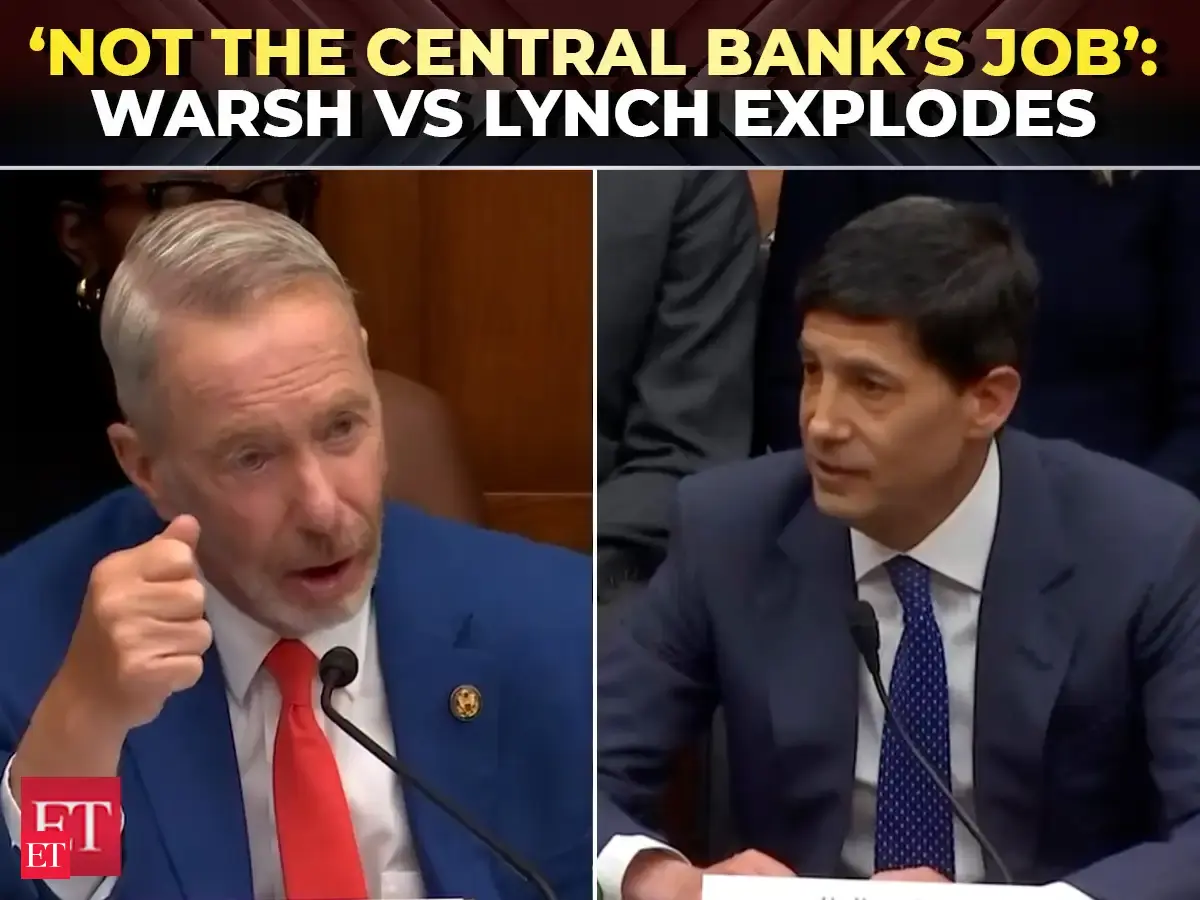
Federal Reserve Chair Kevin Warsh told lawmakers on July 14, 2026 that the Fed is monitoring artificial-intelligence investment for inflation and labor-market effects, while resisting Representative Stephen Lynch's call for a more interventionist role. Economic Times video coverage says Lynch questioned whether the United States is winning the AI race; Warsh responded that directing AI investment or industrial policy is not the central bank's job. The exchange matters because AI assumptions are moving into monetary-policy analysis: data-center construction and equipment spending can lift near-term demand, while later productivity gains could reshape prices and employment. For data and ML practitioners, the key signal is not a new AI regulation but a widening policy debate over how measured productivity, hiring, and investment evidence should influence economic forecasts.
The practical signal from this congressional exchange is that artificial intelligence is becoming an input to monetary-policy analysis without becoming a new Federal Reserve mandate. That distinction matters for data teams and economic forecasters: claims about productivity, hiring, capital spending, and inflation will increasingly shape policy discussions, but the central bank still needs measured outcomes rather than technology narratives.
What happened
Federal Reserve Chair Kevin Warsh appeared before the House Financial Services Committee on July 14, 2026 for the semiannual monetary policy report. Economic Times video coverage says Lynch questioned whether the United States is winning the AI race; Warsh responded that directing AI investment or industrial policy is not the central bank's job. The exchange separated two policy questions that are often blended together: whether the country should promote AI leadership, and whether the Federal Reserve should lead that industrial strategy.
Warsh's prepared testimony treated AI as an economic development the Fed must observe. He described rapid business investment tied to data-center construction and AI-related equipment and software, then said the central bank is monitoring the implications for inflation and the labor market. Associated Press reporting on the same hearing likewise described Warsh's focus on AI investment as a notable feature of the current economy.
Policy context
The Federal Reserve's core responsibilities are price stability, maximum employment, monetary policy, and financial-system resilience. Those responsibilities give the institution a reason to study AI's effects, but not a general power to choose technologies, companies, or industrial priorities. Lynch's challenge therefore exposed a real boundary: AI competitiveness may influence the economic outlook while policy ownership remains distributed across Congress, executive agencies, regulators, education systems, and private investment.
The near-term and longer-term effects can also point in different directions. Building data centers and buying scarce equipment can add demand, financing needs, and price pressure before productivity benefits appear. Later, better tools may raise output per worker or change hiring patterns. The timing, scale, and distribution of those effects are empirical questions, not assumptions that a central bank can safely hard-code into its forecasts.
For practitioners
Data and ML teams should expect policymakers to ask for evidence that connects AI deployment to real economic outcomes. Useful measures include capital spending, electricity and hardware constraints, adoption by industry, task-level productivity, wage changes, hiring, displacement, and the lag between investment and usable output. Aggregate anecdotes about an AI boom are too coarse for monetary-policy decisions.
Practitioners should also separate capability metrics from economic metrics. A model can improve on benchmarks without producing measurable gains in a workplace, while a modest tool can matter economically if it diffuses across many firms. Forecasts should state which channel is being measured, the comparison baseline, and the uncertainty around timing.
What to watch
The next evidence will come from whether AI-linked investment broadens beyond a narrow group of large firms, whether productivity gains become visible across sectors, and whether labor-market data show augmentation or displacement. Warsh's testimony indicates that the Fed is watching these channels, but the Lynch exchange also makes clear that AI leadership policy will remain a contested responsibility outside the central bank.
Key Points
- 1Stephen Lynch challenged whether the United States is winning the AI race, while Kevin Warsh limited the Federal Reserve's role.
- 2Warsh said the central bank is monitoring AI investment for inflation and labor effects, not directing industrial policy.
- 3Data practitioners should watch productivity and employment evidence because monetary-policy assumptions increasingly depend on AI's real economic effects.
Scoring Rationale
The hearing is a solid policy signal because it places AI investment, productivity, inflation, and employment inside the Federal Reserve's current analytical agenda. Its impact is limited by the absence of a new rule or program; the immediate value is clarity about institutional boundaries and evidence needs.
Sources
Primary source and supporting public references used for this report.
Practice interview problems based on real data
1,625 SQL & Python problems across 15 industry datasets — the exact type of data you work with.
Try 250 free problems