Walkinshaw Warns Against 'Fetishization' of Silicon Valley Startups
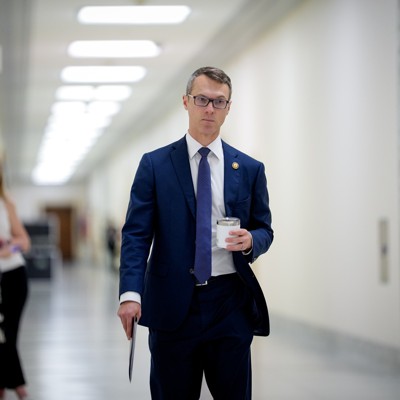
Rep. James Walkinshaw, D-Va., said on June 30, 2026 that if Democrats retake the House majority in this year's midterms, Trump-administration contracts, including at the Defense and Homeland Security departments, will face "heavy scrutiny," and that he wants to revive the dormant FITARA scorecard and reauthorize FedRAMP. In the same Nextgov/FCW interview, Walkinshaw said the government is in a "post-DOGE era" in which "300,000 federal workers lost," and criticized what he called the administration's "fetishization" of Silicon Valley startups over procurement discipline. The FITARA scorecard has not been issued since September 2024 despite GAO crediting it with $31.4 billion in savings, and MeriTalk reported FedRAMP's staff had shrunk to 28 people amid FY2025 budget cuts. Walkinshaw does not expect a national AI regulatory framework to advance before the election.
Walkinshaw's remarks matter less as a single soundbite about Silicon Valley and more as an early blueprint for how a Democratic-controlled House might re-regulate federal AI and cloud procurement if the 2026 midterms flip the chamber. For engineers and vendors building AI systems for government customers, the specifics, reviving FITARA and FedRAMP scoring, tighter event-logging and shadow-IT rules, and heavier contractor scrutiny, are a more useful signal than the "fetishization" line that made headlines.
What happened
In a June 30, 2026 interview with Nextgov/FCW and other GovExec reporters, Rep. James Walkinshaw, D-Va., laid out what he called an "American capacity agenda" built around three pillars: rebuilding federal tech talent, speeding secure AI and technology modernization, and measuring agencies by whether people actually receive services on time. He said the government is in a "post-DOGE era" in which "a lot of damage has been done, 300,000 federal workers lost," and warned that if Democrats retake the House majority this year, Trump-administration contracts, including at the Defense and Homeland Security departments and companies tied to the White House ballroom renovation, would face "heavy scrutiny." He also said he worries the administration has leaned into a "fetishization of a certain kind of company, the Silicon Valley-based startup," at the expense of procurement standards and oversight.
Technical context
Walkinshaw, who spent over a decade as chief of staff to the late Rep. Gerry Connolly, an original FITARA author, wants to revive the FITARA scorecard, which the House Oversight Committee's Republican majority has not issued since September 2024 despite GAO crediting the law with $31.4 billion in federal cost savings; he also wants to modernize its categories for AI and cybersecurity. On FedRAMP, he called reauthorization "100% necessary" and raised concerns about the program's unstable funding through GSA's Federal Citizen Services Fund. MeriTalk reported in December 2025 that FedRAMP's staff had shrunk to 28 people after losing more than 50 positions and that its budget was cut nearly in half, from $22 million to $11 million, in fiscal 2025. Separately, Walkinshaw and Rep. Don Bacon, R-Neb., introduced legislation on June 25, 2026 requiring DHS to report on gaps in its cyber event-logging compliance, and he plans appropriations amendments targeting shadow IT.
For practitioners
Companies selling AI or cloud services to federal agencies should treat a revived FITARA/FedRAMP scoring regime as a leading indicator of longer certification timelines and heavier documentation demands, security controls, continuous-authorization evidence, and measurable delivery metrics rather than checklist compliance. Walkinshaw was explicit that a national AI regulatory framework is unlikely before the 2026 election and more likely "next year," so near-term compliance pressure is more likely to arrive through oversight tools like FITARA and appropriations riders than through new AI-specific statute.
What to watch
The near-term trigger is the 2026 midterms: Walkinshaw ties reviving the FITARA scorecard and stepped-up contractor scrutiny explicitly to Democrats retaking the House. Also watch the DHS event-logging bill Walkinshaw introduced with Rep. Bacon, whether GSA's FedRAMP 20x modernization effort gets the funding and statutory footing he is calling for, and how a possible 2027 AI regulatory push handles state-law preemption, an issue already in play via Reps. Obernolte and Trahan's discussion draft.
Key Points
- 1Walkinshaw says a Democratic House majority after the 2026 midterms would bring "heavy scrutiny" to Trump-era federal contracts and revive the dormant FITARA scorecard, unissued since September 2024 despite GAO crediting it with $31.4 billion in savings.
- 2He wants FedRAMP reauthorized with stabler funding; MeriTalk reported the program's staff had fallen to 28 people and its budget was cut from $22 million to $11 million in FY2025.
- 3He expects no major federal AI regulatory framework before the 2026 election, meaning near-term compliance pressure for AI/cloud vendors is more likely to come via oversight tools like FITARA than new AI statute.
Scoring Rationale
Substantive policy signal for federal AI/cloud vendors, a sitting member outlining specific oversight tools (FITARA, FedRAMP) and contractor-scrutiny plans, corroborated by two independent GovExec-network articles and background reporting on FITARA/FedRAMP's concrete funding and savings figures. Contingent on a midterm election outcome rather than enacted policy, which keeps it just below the mid-7s reserved for confirmed regulatory action.
Sources
Public references used for this report.
Practice interview problems based on real data
1,625 SQL & Python problems across 15 industry datasets — the exact type of data you work with.
Try 250 free problems