Viral ChatGPT palm-reader trend raises biometric privacy concerns
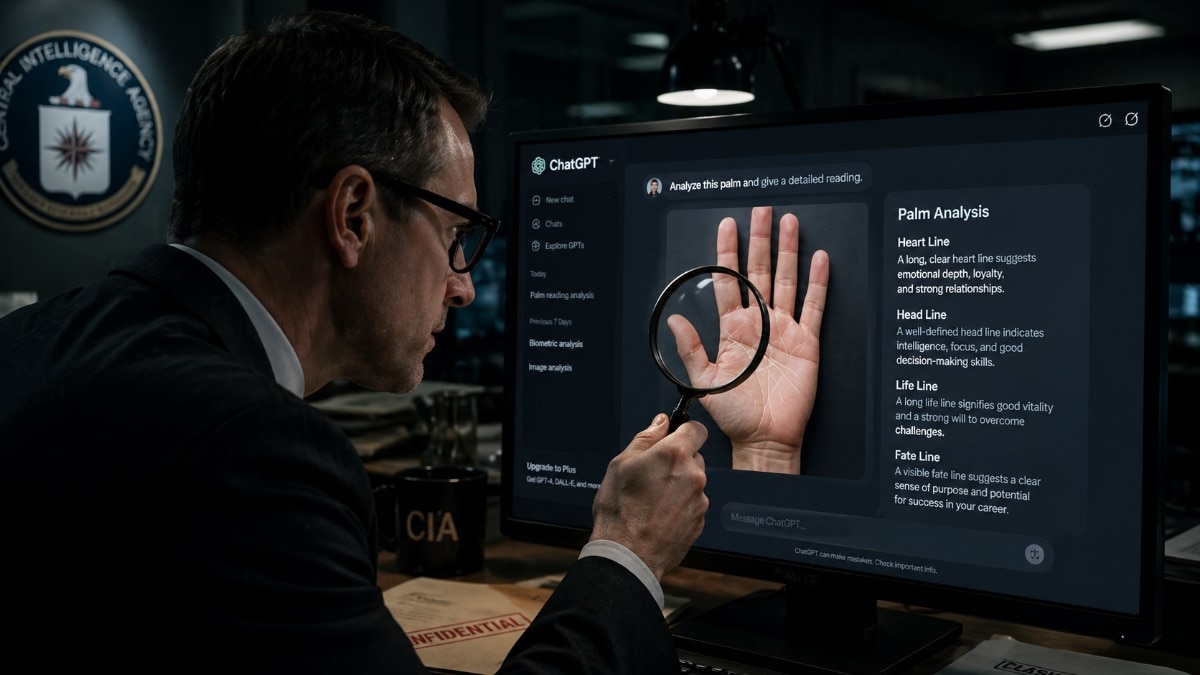
India Today reports a viral social trend in which users upload palm and face photos to ChatGPT Images 2.0 for AI "readings," and a meme claims the CIA now holds those biometrics. India Today characterises the CIA claim as hyperbole while noting genuine privacy anxiety as users share high-resolution images with models, and it identifies ChatGPT Images 2.0 rollout as the catalyst for the trend. India Today also cites parallel mentions of Gemini and Claude in social discussions. Such viral image-as-input trends typically accelerate public concern about data governance, consent, and the lifecycle of user-uploaded images in consumer AI products.
What happened
India Today reports a social-media trend in which users upload palm and face photos to get AI "readings" from image-capable generative models, after OpenAI rolled out `ChatGPT Images 2.0`, per India Today. The same coverage documents a viral meme claiming, "Congratulations. Now the CIA has your face and palm data," and India Today describes that claim as hyperbole while noting the meme reflects broader privacy anxiety. The article also notes users referenced `Gemini` and `Claude` when discussing the meme and the image-upload trend, per India Today.
Editorial analysis - technical context
Viral image-input experiments expose practical questions about how consumer models handle user-supplied photos. Industry-pattern observations: when users upload high-resolution biometric-like images to cloud-hosted vision models, key technical questions arise about data retention, training-use opt-ins, metadata stripping, and downstream access controls. Practitioners building image-capable products routinely weigh trade-offs between model utility, on-device processing, and centralized inference to limit sensitive-data exposure.
Context and significance
Public-facing, playful use cases often surface unanticipated privacy concerns faster than formal policy reviews. For practitioners, the story highlights the reputational and compliance risk that can accompany features enabling mass uploads of potentially sensitive imagery. It also underscores that social amplification (memes, viral trends) can shape user expectations and regulator attention independent of the technical details of data handling.
What to watch
- •Whether vendors publish clear, accessible documentation on image retention and permitted training usage for `ChatGPT Images 2.0` and equivalent offerings.
- •Any changes to default privacy controls, consent flows, or on-device processing options from major providers.
- •Regulatory or platform-level responses prompted by sustained viral trends involving biometric or medical-looking images.
Editorial analysis
The episode is less a novel technical failure than a reminder that product design, transparent documentation, and user education matter as much as model capability when sensitive user data is involved.
Key Points
- 1Viral uploads to image-capable models quickly surface privacy gaps, prompting widespread user concern and social media commentary.
- 2Playful use cases like palm-reading reveal practical data-governance questions around retention, training use, and metadata for user photos.
- 3Clear documentation and opt-in controls for image data are common mitigation patterns observers recommend for consumer AI image features.
Scoring Rationale
The story matters to practitioners because image inputs carrying biometric signals create compliance and product-design trade-offs. It is notable but not industry-shaking; impact centers on privacy practices rather than new model capabilities.
Practice interview problems based on real data
1,625 SQL & Python problems across 15 industry datasets — the exact type of data you work with.
Try 250 free problems