Vatican Establishes Commission, Issues AI Use Guidelines
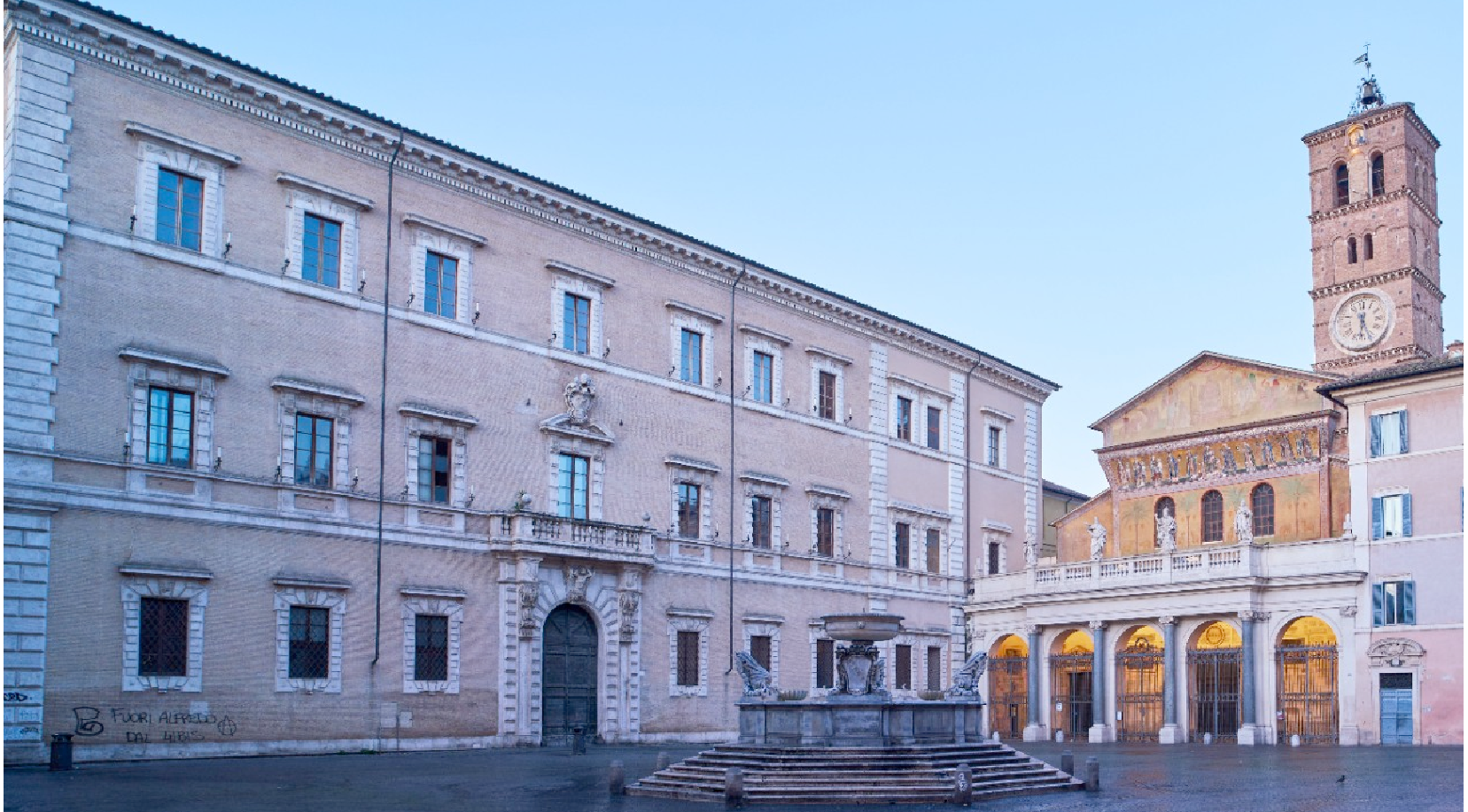
The Vatican held the inaugural meeting of its new Interdicasterial Commission on Artificial Intelligence on June 17, 2026, at Palazzo San Callisto in Rome, bringing together delegates from four Vatican dicasteries and three pontifical academies to begin coordinating the Holy See's internal AI policy. According to ZENIT, the commission, created May 16, 2026 and coordinated for its first year by the Dicastery for Promoting Integral Human Development, will start by inventorying AI projects already underway across Vatican offices, collecting concerns from individual institutions, and drafting usage guidelines, with a follow-up meeting set for mid-July. The effort builds on Vatican City State's separate Guidelines on Artificial Intelligence, in effect since January 1, 2025, which bar discriminatory or human-dignity-violating AI use and assert Vatican rights over AI-generated content created on its territory. For AI governance teams, it is a live example of an institution moving from ethical principle to operational policy.
For teams building AI governance frameworks in mission-driven or tightly regulated institutions, the Vatican's approach is a useful reference case: rather than issuing a single top-down mandate, it is building cross-departmental coordination first, an inventory-then-policy sequence that mirrors how many enterprises are structuring their own internal AI governance.
What happened
According to ZENIT, the Holy See's newly created Interdicasterial Commission on Artificial Intelligence held its inaugural meeting on June 17, 2026, at Palazzo San Callisto in Rome's Trastevere district. The commission was established on May 16, 2026, and its first meeting brought together delegates from the Dicasteries for the Doctrine of the Faith, Culture and Education, Communication, and Promoting Integral Human Development, along with representatives of the Pontifical Academies for Life, Sciences, and Social Sciences. Cardinal Michael Czerny opened the meeting by identifying four defining elements of the moment: the speed of AI development, its implications for human dignity, growing Church-technology sector dialogue, and the influence of the encyclical Magnifica Humanitas on the Church's ethical reflection on AI, per ZENIT's reporting. The Dicastery for Promoting Integral Human Development will coordinate the commission for its first year, and a second meeting is scheduled for mid-July 2026.
Policy context
The commission's stated first priorities are compiling a comprehensive inventory of AI-related initiatives already underway inside the Holy See, gathering concerns raised by individual Vatican institutions, and drafting guidelines for responsible AI use across Vatican offices, rather than issuing declarations immediately. This builds on the Vatican's prior public engagement with AI ethics, including the 2020 Rome Call for AI Ethics and Pope Francis's 2024 World Day of Peace message on AI, justice, and peace. It also follows a separate, earlier track: Vatican City State's own Guidelines on Artificial Intelligence, drafted by the Pontifical Commission for Vatican City State and in effect since January 1, 2025, which set out principles including human dignity, transparency, non-discrimination, data security, and sustainability, per VaticanState.va and USCCB reporting. Those 2025 guidelines are notably specific for a governance document: they require AI-generated content to be labeled, restrict AI in judicial functions to research and organization rather than legal interpretation or sentencing, and assert that the Governorate holds economic and authorship rights over AI-generated content created within Vatican territory.
For practitioners
Vendors, researchers, or contractors working with Vatican-affiliated institutions should expect the new commission's inventory-and-guidelines process to eventually produce documentation requirements, similar to the audit logs, model cards, and data-provenance records already implied by the 2025 Vatican City State rules. The territorial IP claim over AI-generated works is also a concrete, unusual data point for teams evaluating jurisdiction-specific copyright exposure when models are used to produce content tied to a specific sovereign entity.
What to watch
Watch for the commission's planned dedicated website consolidating Vatican AI projects and resources, the outcome of its mid-July 2026 follow-up meeting, and whether its eventual guidelines reference concrete technical requirements or largely restate the ethical principles already set out in the 2020 Rome Call and the 2025 Vatican City State guidelines.
Key Points
- 1The Vatican's new Interdicasterial Commission on Artificial Intelligence held its first meeting on June 17, 2026, coordinating AI policy across four dicasteries.
- 2The commission will inventory existing Vatican AI projects and draft usage guidelines before issuing formal declarations, with a follow-up meeting set for mid-July.
- 3This builds on Vatican City State's 2025 AI guidelines, which restrict AI in judicial decisions and claim rights over AI content made there.
Scoring Rationale
A concrete, well-documented step in institutional AI governance with real dates, named officials, and clear structure, and it connects to a substantive prior policy (Vatican City State's 2025 AI Guidelines with real restrictions and an IP claim). It is a solid, notable governance story but has limited direct technical or market impact outside the Holy See and comparable institutions, so it sits in the solid-not-major band.
Sources
Public references used for this report.
Practice interview problems based on real data
1,625 SQL & Python problems across 15 industry datasets — the exact type of data you work with.
Try 250 free problems