Valeo and Zuken launch AI-assisted EDA InnoLab
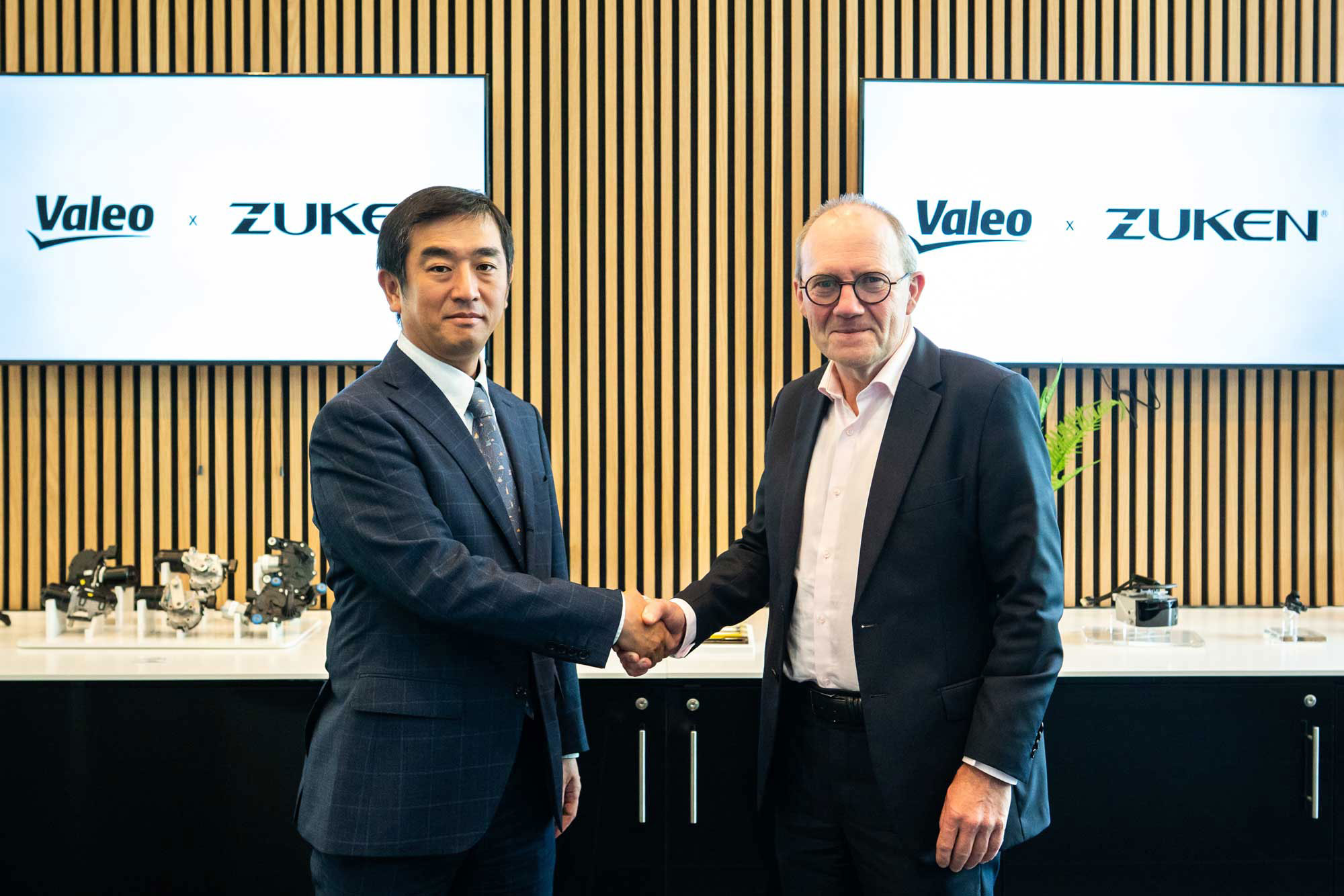
Valeo and Zuken announced the launch of the "Zuken Valeo InnoLab," a joint programme to build an open, AI-assisted electronic design platform, according to company announcements dated May 28-29, 2026. The partners say the platform will integrate Valeo's "AI Agents" with Zuken's EDA software and SDK to shorten automotive electronic design times and improve first-time-right execution (Valeo press release; Zuken press release; Automotive World). The co-innovation covers four areas: generative design using Zuken's System Planner, digital continuity aligned with Automotive SPICE 4.0, AI-assisted schematic entry and rule verification, and automated placement-and-routing via Zuken's Design Force engine (Valeo; Zuken; Automotive World). Valeo and Zuken included direct quotes from Christophe Le Ligné and Ryosuke Takagi describing the partnership as an "open" and collaborative platform integration (company statements).
What happened
According to Valeo's press release and Zuken's announcement dated May 28-29, 2026, Valeo and Zuken launched the "Zuken Valeo InnoLab," a joint programme to develop an open, AI-assisted electronic design automation (EDA) platform for automotive electronics. The partners describe integration of Valeo's "AI Agents" with Zuken's EDA products and SDK to reduce design time and improve first-time-right execution (Valeo; Zuken; Automotive World). Both companies published statements and exchanged direct quotes: Christophe Le Ligné of Valeo said, "For Valeo, Zuken is much more than a software provider; it is a true innovation partner," and Ryosuke Takagi of Zuken said the collaboration advances Zuken's "Autonomous Brain" roadmap (Valeo; Zuken).
Technical details
Per the companies' announcements, the co-innovation focuses on four design-flow areas:
- •Functional generative design using Zuken's System Planner, with Valeo applying its generative AI to produce multi-criteria architectures (Valeo; Zuken).
- •Digital continuity to enable traceability and alignment with Automotive SPICE 4.0 hardware-engineering requirements (Zuken; Zuken Japan release).
- •AI-assisted schematic entry and rule verification, combining Valeo's AI agents and Zuken's native capabilities to accelerate entry and enforce hardware rules (Valeo; Zuken Japan release).
- •Automated placement-and-routing leveraging Zuken's Design Force engine and an open SDK that Zuken will expose to Valeo for training on automotive-specific constraints (Valeo; Zuken; Automotive World).
Industry context
Editorial analysis
Companies in automotive electronics face rapidly rising software and hardware complexity as vehicles add functions. Industry reporting frames this partnership as part of a broader trend where OEMs and Tier 1 suppliers experiment with tighter integration between domain-specific AI toolchains and EDA vendors to compress schedules and improve compliance with standards such as ASPICE 4.0 (Automotive World; Electronics For You; Automobil Industrie).
Editorial analysis - technical context
From a practitioner perspective, integrating vendor SDKs with bespoke AI agents typically raises engineering tasks around data schema compatibility, constraint encoding, and maintaining traceable design artifacts for certification. Observed patterns in similar collaborations show teams prioritise robust APIs, deterministic rule layers for safety-relevant checks, and versioned datasets for reproducible training and verification.
What to watch
For practitioners and buyers
monitor whether Zuken publishes SDK specifications and integration guides and whether early InnoLab results surface as measured reductions in cycle time or improvements in first-pass success. Industry observers will also watch how the partnership addresses traceability for ASPICE 4.0 and how reusable any Valeo-developed agents become for other Tier 1s or OEMs. Finally, note whether Zuken opens additional EDA modules beyond System Planner and Design Force to third-party agents, which would affect procurement and integration patterns across the sector.
Quoted material
"For Valeo, Zuken is much more than a software provider; it is a true innovation partner. The power of Zuken's AI roadmap, combined with the exceptional openness of its architecture, allows us to hybridize our own artificial intelligence tools with their engine. This win-win partnership is the best way to tackle the challenge of automotive complexity by slashing our design times while guaranteeing 100% robustness," said Christophe Le Ligné, Vice President Research and Development at Valeo (Valeo press release). "Collaborating with a technological leader like Valeo pushes our 'Autonomous Brain' roadmap to its highest level of performance," said Ryosuke Takagi, Executive Officer, General Manager of R&D Division at Zuken (Zuken press release).
Key Points
- 1Valeo and Zuken created the Zuken Valeo InnoLab to integrate Valeo's AI agents with Zuken's EDA and SDK, aiming to shorten design cycles.
- 2The programme targets four specific design-flow areas, including generative architecture, ASPICE 4.0 traceability, schematic AI assistance, and AI placement-and-routing.
- 3Industry pattern: supplier-led AI integration with EDA tools typically emphasizes open APIs, traceability for certification, and reproducible datasets for training.
Scoring Rationale
This partnership is a notable, industry-relevant collaboration linking domain AI agents with EDA tooling; it matters to automotive hardware and EDA practitioners but is not a platform-level paradigm shift for the broader AI community.
Sources
Public references used for this report.
View 6 more sources
- Valeo, Zuken Join Forces to Redefine Automotive Electronic Designiconnect007.com
- Valeo and Zuken partner on AI-assisted automotive EDAautomotiveworld.com
- Valeo Partners with Zuken to Develop AI-Assisted Electronic Design Platformelectronicsforyou.biz
- Valeo & Zuken: KI-Plattform beschleunigt EDA im Autoautomobil-industrie.vogel.de
- Valeo et Zuken unissent leurs forces pour redéfinir la conception électronique automobileboursier.com
- ヴァレオと図研、自動車用電子機器設計の新たな形を共に創出jiji.com
Practice interview problems based on real data
1,625 SQL & Python problems across 15 industry datasets — the exact type of data you work with.
Try 250 free problems