
US Targets Chinese Firms Exploiting American AI Models
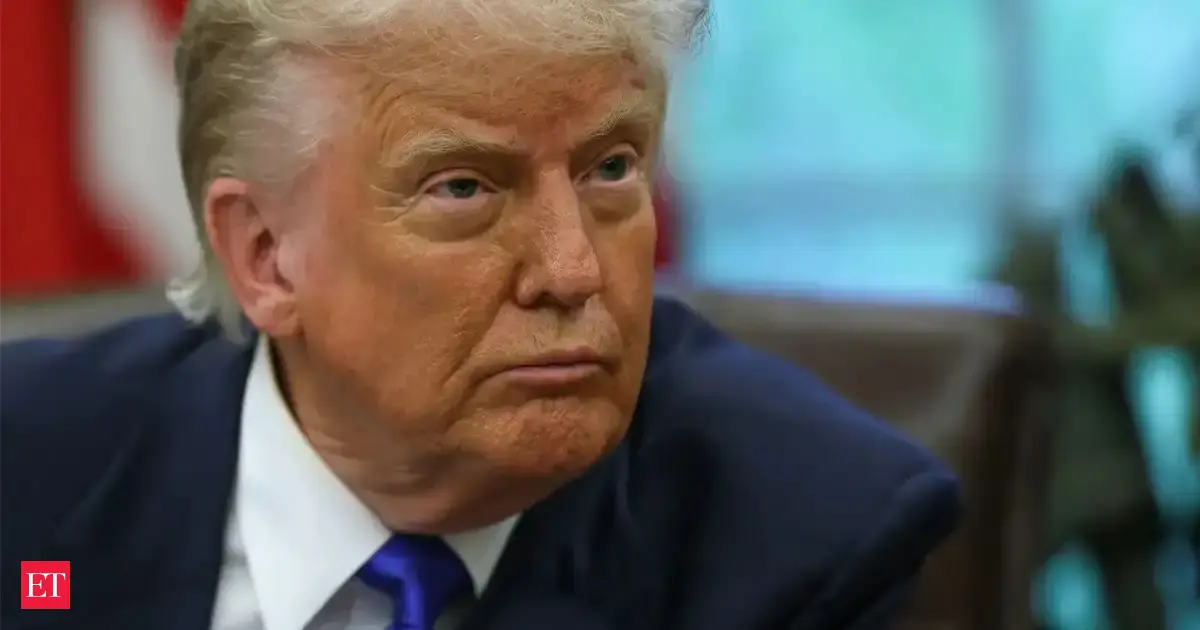
The Trump administration is initiating an aggressive campaign to stop foreign, principally China-based, actors from extracting capabilities from U.S. AI systems. In a memo, White House technology adviser Michael Kratsios characterizes large-scale distill or model extraction operations as theft of American expertise and signals coordinated action with U.S. companies, potential sanctions, and legislative support from a bipartisan House committee. The move cites concerns that the U.S.-China performance gap for top models has "effectively closed," and news coverage has pointed to past incidents such as DeepSeek.
What happened
The Trump administration, led in public messaging by Michael Kratsios, has opened an enforcement push targeting foreign actors, principally based in China, that engage in large-scale distill or model extraction from U.S. AI systems. The administration will collaborate with American AI companies to identify extraction campaigns, harden defenses, and pursue punitive tools including sanctions. The House Foreign Affairs Committee backed a bipartisan bill to create a process for identifying actors that exfiltrate "key technical features" of closed-source U.S. models. The announcement cites a Stanford Institute for Human-Centered AI finding that the U.S.-China performance gap in top models has "effectively closed," and news coverage has pointed to the DeepSeek episode as a precedent.
Technical details
Model extraction, often called distill in policy language, covers attacks that query an API or otherwise interact with a model to recreate its capabilities or weights. Practical detection and mitigation are nontrivial because:
- •Extraction can be performed via high-volume API queries that mimic valid use.
- •Closed-source models exposed via APIs still leak behavioral patterns that can be approximated by specialized training pipelines.
- •Attribution is difficult; similar models can be produced independently or via legitimate open research.
Defensive measures practitioners should consider
- •Implementing rate limits, query anomaly detection, and behavioral fingerprinting.
- •Deploying provable model watermarking and hidden challenge-response checks to detect cloning.
- •Leveraging stronger access controls, contractual IP clauses, and telemetry for suspicious replication patterns.
- •Preparing coordinated disclosure and legal escalation processes with counsel and government partners.
Context and significance
The policy push crystallizes three converging trends: geopoliticization of AI technology, legislative appetite for punitive measures, and technical feasibility of model extraction. That combination raises the practical bar for companies handling frontier models. For U.S. firms, the move promises closer government cooperation but also imposes operational burdens to instrument models for forensic proof and to avoid overblocking legitimate research. For Chinese and other foreign firms, it increases legal and commercial friction, potentially accelerating local capabilities that avoid U.S. inputs. China's embassy response frames the measures as suppression, which signals diplomatic pushback and the risk of reciprocal restrictions.
What to watch
Key near-term signals will be the text of the House bill, technical standards for detecting extraction, whether the administration defines specific countermeasures (sanctions, export controls, or trade restrictions), and how major cloud and model providers change API tooling and contractual terms. Practitioners should expect stronger telemetry expectations, new compliance obligations, and more explicit guidance on acceptable model sharing and red-team testing.
Key Points
- 1US policy now treats large-scale model extraction as national economic and security risk, raising enforcement and sanctions prospects.
- 2Technical detection and attribution remain hard, so expect emphasis on telemetry, watermarking, rate-limits, and contractual protections.
- 3Bipartisan congressional support plus administrative action will force platform and vendor changes that affect API design and disclosure.
Scoring Rationale
This is a notable policy shift combining executive memos and bipartisan legislation to sanction or otherwise punish model extraction, which materially affects companies building and hosting frontier models. The technical difficulty of detection and attribution limits immediate operational impact, so the story rates as significant but not industry-shaking.
Sources
Public references used for this report.
View 4 more sources
- Trump administration vows crackdown on Chinese companies ...washingtontimes.com
- Trump administration targets foreign exploitation of US AI modelswftv.com
- Trump administration targets foreign exploitation of US AI modelsactionnewsjax.com
- Trump administration vows crackdown on Chinese ... - Lowell Sunlowellsun.com
Practice interview problems based on real data
1,625 SQL & Python problems across 15 industry datasets — the exact type of data you work with.
Try 250 free problems


