Unilever scales AI digital twins across factories
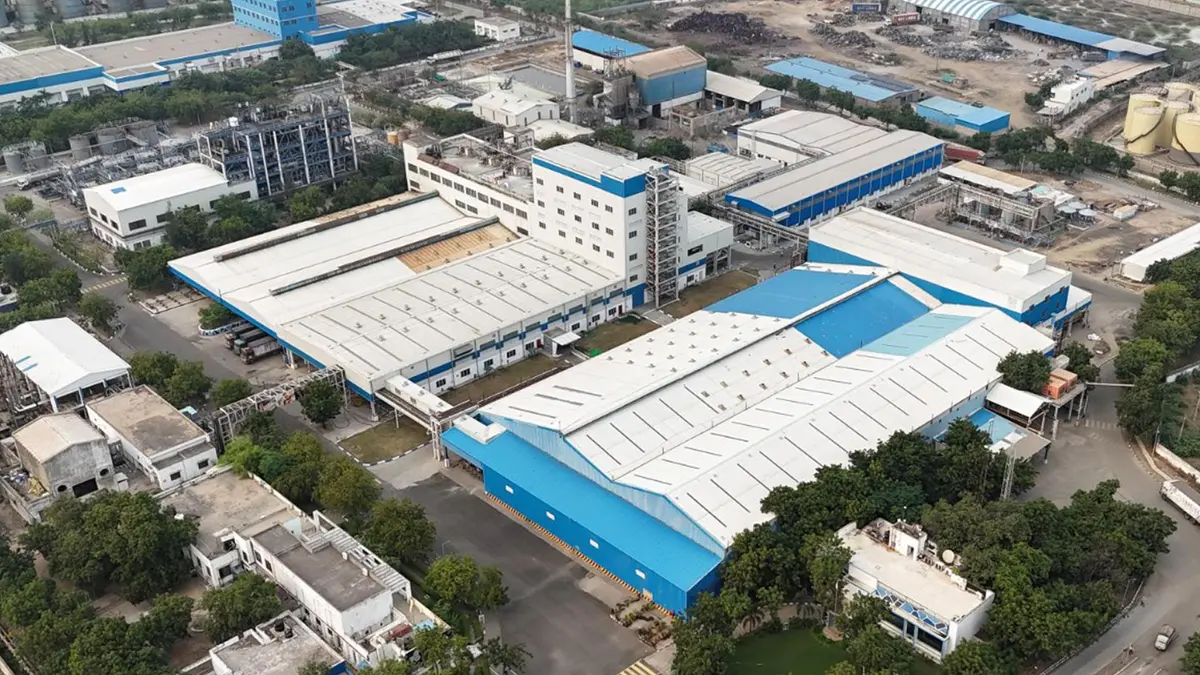
Per joint press releases dated June 16, 2026, Unilever is scaling AI-enabled digital twins across its global manufacturing network through a multi-year partnership with Accenture, with plans to build more than 40 new digital twins over the next 18 months. Pilot results across five sites span four countries: a deodorant line in Raeford, North Carolina predicts 95% of process flow restrictions, reducing waste 20% and lifting capacity 10%; a mayonnaise line in Poznan, Poland cuts minor stoppages up to 20% and waste nearly 30%; a Dove soap site in Gandhidham, India reduced quality defects 30% over four years; an energy twin in Haldia, India lowered thermal energy consumption; and a mixer in Cu Chi, Vietnam delivers 1-2% savings in premium ingredients. Accenture supplies industrial AI capabilities, advanced analytics, and AI agents to support predictive maintenance and human-supervised automated adjustments. All metrics are vendor-reported.
What happened
Per joint press releases published June 16, 2026, Unilever (LON: ULVR) is partnering with Accenture (NYSE: ACN) to scale AI-enabled digital twins across its global manufacturing network. The company plans to build more than 40 new digital twins over the next 18 months as a scalable blueprint for wider rollout. The partnership integrates digital twins with AI-enabled analytics and agentic capabilities -- where agents can, with human oversight, progressively take on certain production adjustments automatically. Adam Raeburn-James, Unilever's Global VP for Digital Business Operations, said: "Scaling AI across our operations isn't just a technological shift, it's a commitment to superior products, sustainability and empowering our teams across our factories."
Pilot results
- •Raeford, North Carolina (deodorant: Dove, Degree, Axe): predicts 95% of process flow restrictions, reduces waste 20%, increases capacity 10%.
- •Haldia, India (powder detergents: Surf, Sunlight): energy twin optimizes fan speeds, temperature setpoints, and moisture controls, achieving a "tangible reduction in thermal energy consumption over two years" per Accenture's press release.
- •Poznan, Poland (mayonnaise: Knorr, Hellmann's): stabilizes viscosity variation, reduces minor stoppages up to 20%, cuts waste nearly 30%.
- •Gandhidham, India (Dove soap): reduced quality defects 30% over four years via real-time control recommendations, measured at distribution centres.
- •Cu Chi, Vietnam (OMO laundry): AI digital twin optimizes raw materials dosing, delivering 1-2% savings in premium ingredients.
Technical approach
Digital twins are defined in the announcements as virtual models of factory equipment and production lines that use live data from shopfloor systems to monitor, predict, and improve performance. Accenture is deploying industrial AI using advanced analytics and AI agents to predict maintenance needs and support faster decision-making. The joint communications describe a human-in-the-loop architecture: the system learns over time and employees gain confidence before certain adjustments are enabled automatically. Nicole van Det, CEO of Accenture Netherlands and Nordics and global account lead for Unilever, said the company is "setting the standard for pairing advanced tools with smart process design and disciplined execution on the shop floor." Unilever holds the highest number of WEF Global Lighthouse Network designations in the consumer goods sector. The programme builds on the AI Horizon3 Lab in Toronto, which identifies and tests new AI solutions.
Context and significance
Large consumer goods manufacturers are effective testbeds for industrial AI: high production volume, multiple product lines, and distributed global sites provide the data density needed for digital twin fidelity. Unilever's multi-site deployment signals that AI digital twins are moving from single-plant pilots to enterprise-wide blueprints with standardised rollout templates. For practitioners, the combination of predictive AI (maintenance, flow restriction forecasting) with agentic control (automated parameter adjustment with human oversight) in active production environments is a notable reference point. The partnership is consultancy-led (Accenture), which is a common pattern for scaling pilots across geographically distributed sites.
What to watch
Monitor whether Unilever or Accenture publish technical detail on integration layers, model types, retraining cadence, and edge/cloud partitioning as the 40-twin rollout progresses. Track whether third-party auditors or WEF Lighthouse assessments validate the reported KPIs at scale, and watch for similar programmes from other major FMCG firms.
Key Points
- 1Unilever and Accenture plan to build 40-plus AI digital twins across global factories in 18 months, extending an already-live multi-site programme.
- 2Five pilot sites across the US, India, Poland, and Vietnam report gains of 20-30% waste reduction and 95% process-restriction prediction accuracy -- all vendor-reported.
- 3The deployment combines predictive analytics with human-supervised AI agents, offering a replicable blueprint for industrial AI rollout in consumer goods manufacturing.
Scoring Rationale
A documented multi-site rollout of AI digital twins by a major global FMCG manufacturer with vendor-reported KPIs across five countries is a solid industrial AI deployment story. Scored at 6.5 rather than higher because all sources are first-party vendor communications with no independent verification of the cited metrics, and the story extends an existing programme rather than announcing a novel capability.
Sources
Public references used for this report.
Practice interview problems based on real data
1,625 SQL & Python problems across 15 industry datasets — the exact type of data you work with.
Try 250 free problems