Uber and Nuro Launch Lucid Gravity Robotaxi Tests
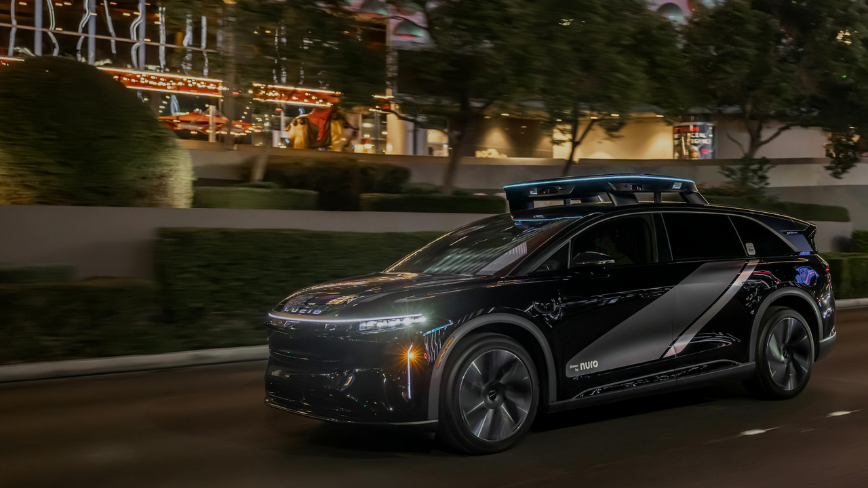
Uber, Nuro, and Lucid have started an employee-only pilot of the Lucid Gravity robotaxi in San Francisco, with vehicles operating in autonomous mode and a human safety operator present. The Gravity SUVs run Nuro's autonomy stack on Nvidia compute and are outfitted with cameras, solid-state lidar, and radar. Nuro has nearly 100 Gravity vehicles in an engineering fleet collecting real-world data. Uber committed to purchasing at least 20,000 Gravity robotaxis over six years, and production of modified vehicles is expected in late 2026, with a public launch planned later in 2026. The employee testing phase will validate pickup/drop-off workflows and rider experience via the Uber app before broader rollout.
What happened
Uber, Nuro, and Lucid have moved into an employee testing phase for the Lucid Gravity robotaxi in San Francisco. Select Uber employees can request rides through the Uber app while the vehicles operate in autonomous mode with a human safety operator seated as backup. The program is an intermediate step toward a planned public launch later in 2026, and follows a July 2025 partnership that included Uber's $300 million investment in Lucid and an undisclosed multi-hundred-million dollar investment in Nuro.
Technical details
The Gravity robotaxi platform integrates high-resolution cameras, solid-state lidar, and radar arrays that feed Nuro's autonomy stack, which runs on `Drive AGX Thor` compute from Nvidia. Nuro describes the stack as a Level 4 capable system used in its engineering fleet. Key hardware and system elements mentioned across sources include:
- •roof-mounted and surround camera arrays for object classification and tracking
- •solid-state lidar for depth and mapping in urban contexts
- •radar sensors for robust velocity and occlusion handling
The engineering fleet now numbers roughly 100 Lucid Gravity SUVs used for data collection and closed- and open-road testing across multiple U.S. cities. Uber has committed to purchasing at least 20,000 modified Gravity vehicles over the next six years, and production of the commercialized, modified Gravity robotaxi is expected to begin in late 2026.
Context and significance
This program is an example of a platform strategy where a rideshare operator outsources core autonomy to a specialist and sources EV platforms from an OEM. Uber avoids building its own autonomy stack while preserving control over customer experience and fleet economics. The commercial decision to lean on Nuro's autonomy and Lucid's vehicle architecture, with Nvidia compute, mirrors an industry pattern of vertical specialization and partnerships. Testing pickup and drop-off operations is strategically important because these maneuvers combine perception, motion planning, and human-interaction design; they are among the highest-failure-rate tasks in urban robotaxi deployments. The size of Uber's commitment, 20,000 vehicles, signals an intent to scale robotaxi service beyond pilot zones if regulatory and reliability milestones are met.
What to watch
Watch for regulatory disclosures around safety driver disengagement rates and disengagement thresholds, fleet production timelines tied to Lucid assembly capacity, and software validation metrics Nuro publishes. Practical signs of progress will include expansion from employee-only rides to invited-public pilots, published performance KPIs for pickup/drop-off success, and any changes to the planned production ramp into late 2026. Also monitor how Uber structures operations, whether it operates the fleet directly or outsources fleet operations to third-party operators.
Bottom line
The employee-testing milestone is expected but meaningful. It moves the collaboration from closed testing toward live-user feedback loops inside the Uber app, tightens integration of autonomy, vehicle, and UX, and sets the stage for broader commercial decisions around fleet scale, operations, and regulatory engagement.
Key Points
- 1Employee-only rides validate the integration of Nuro autonomy, Lucid vehicle platform, and Uber rider UX, accelerating real-world feedback loops.
- 2Nuro runs its stack on Nvidia's Drive AGX Thor, combining cameras, lidar, and radar to tackle urban pickup and drop-off complexity.
- 3Uber's committed purchase of 20,000 vehicles and planned production in late 2026 signal serious commercial intent, conditional on safety and regulatory milestones.
Scoring Rationale
This is a notable commercial deployment milestone that demonstrates tangible integration of autonomy, EV platform, and ride-hailing operations. It advances real-world validation and scales the conversation beyond lab tests, but it is not a paradigm-shifting technical breakthrough.
Sources
Public references used for this report.
Practice with real Ride-Hailing data
90 SQL & Python problems · 15 industry datasets
250 free problems · No credit card
See all Ride-Hailing problems