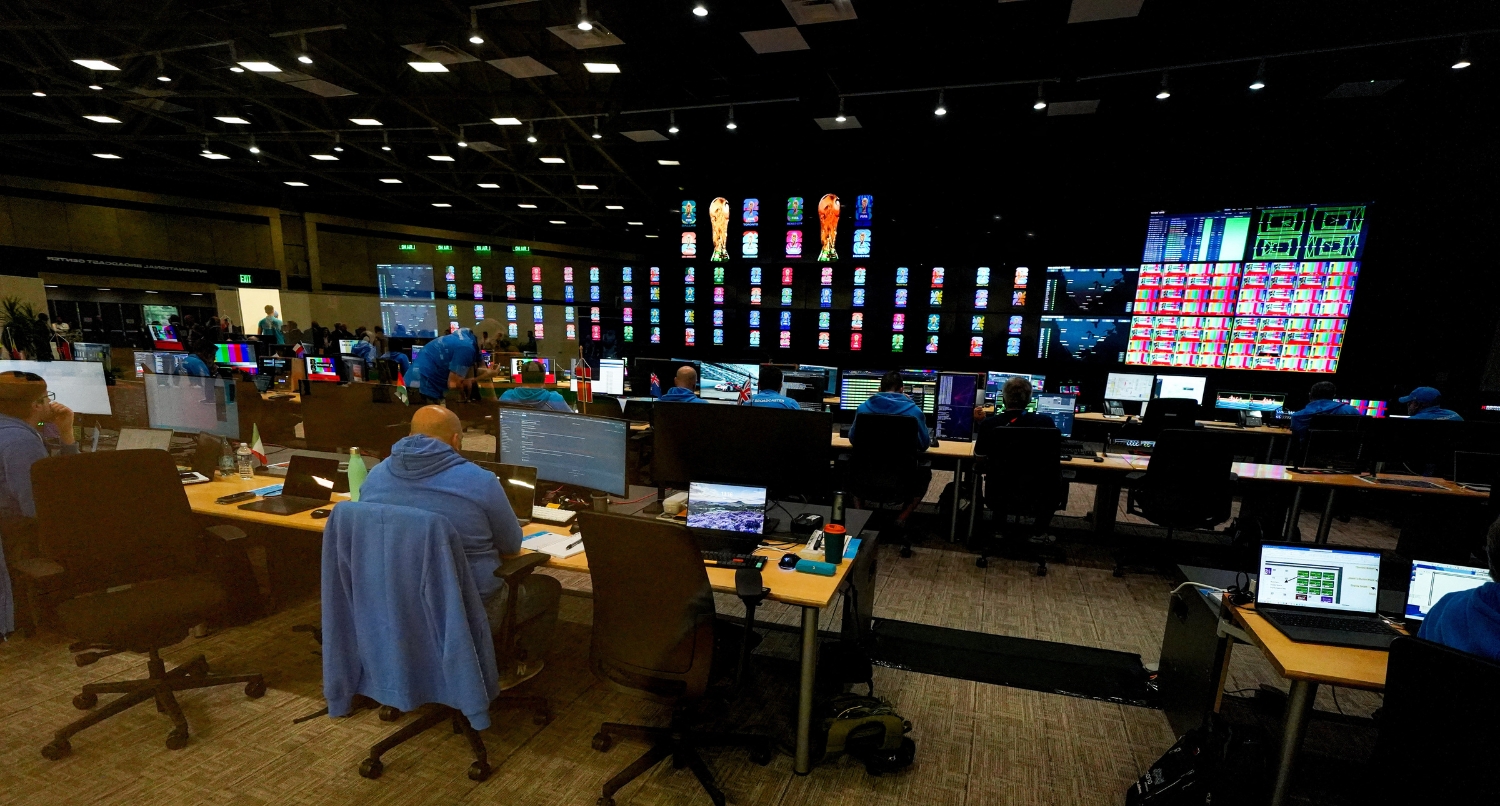
TSG launches DroneWeaver autonomous counter-UAS system

The Jerusalem Post reports TSG unveiled the DroneWeaver System (DWS) at the ILA Berlin Air Show 2026, an autonomous counter-unmanned aircraft systems platform for security and law-enforcement agencies. According to the company, DroneWeaver automates roughly 90% of the threat-management process by integrating multi-sensor data, filtering false alarms, classifying threats, assessing risk, and recommending interception methods in real time. The Jerusalem Post reports TSG said the platform uses an open, sensor-agnostic architecture and supports integration with radars, RF detection, EO/IR cameras, ADS-B receivers, and other systems. The company also told The Jerusalem Post the system has undergone operational pilot programs with customers in the United States and Eastern Europe. TSG president Pini Yungman is quoted as saying, "The DroneWeaver system highlights TSG's capabilities in air defense and real-time command and control."
What happened
The Jerusalem Post reports that TSG unveiled the DroneWeaver System (DWS) at the ILA Berlin Air Show 2026. According to the company, DroneWeaver is an autonomous counter-UAS platform that automates roughly 90% of the threat-management process, integrating data, filtering false alarms, classifying threats, assessing risk, and recommending interception methods in real time. The Jerusalem Post reports TSG said the new counter-UAS layer has already run operational pilot programs with customers in the United States and Eastern Europe. The article quotes Pini Yungman, president of TSG: "The DroneWeaver system highlights TSG's capabilities in air defense and real-time command and control," per The Jerusalem Post.
Technical details
The Jerusalem Post reports DroneWeaver uses an open, sensor-agnostic architecture that allows integration with existing detection and tracking assets. Reported supported inputs include:
- •Radars
- •RF detection systems
- •EO/IR cameras
- •ADS-B receivers
- •Other sensor types, per the company as reported by The Jerusalem Post
The article also reports the platform supports a range of interception tools, from electronic jamming and spoofing to lasers, kinetic interceptors, and physical interceptors, with the system reportedly matching threats to countermeasures to avoid unnecessary use of costly interceptors.
Editorial analysis - technical context
Companies building counter-UAS stacks increasingly adopt sensor-agnostic, modular architectures to integrate heterogeneous detection feeds and existing ground systems. Industry observers note such architectures reduce integration friction when deploying in complex airspace with mixed legacy and modern sensors. Autonomous decision-support that filters false positives and prioritizes responses is a recurring industry pattern for reducing operator load during high-tempo incidents.
Context and significance
Editorial analysis
The reported automation level and multi-sensor integration make DroneWeaver relevant for practitioners focused on operational command-and-control, sensor fusion, and real-time decision systems. Agencies and vendors working on counter-UAS face similar trade-offs between automation, explainability, and rules-of-engagement constraints; platforms that centralize sensor fusion and recommended responses can accelerate deployments but also raise questions about human-in-the-loop safeguards and system validation under contested scenarios.
What to watch
Industry observers should track independent performance assessments and after-action reports from the reported pilot programs in the United States and Eastern Europe, vendor interoperability tests with third-party sensors, and any public documentation on engagement decision logic and human override mechanisms. The Jerusalem Post article does not provide technical performance metrics beyond the company's automation claim, nor does it publish third-party validation of effectiveness.
Key Points
- 1Sensor-agnostic counter-UAS platforms simplify integration across heterogeneous detection fleets, speeding deployments in mixed-sensor environments.
- 2High automation in threat management reduces operator workload but increases the need for transparent decision-logic and human-override controls.
- 3Operational pilot programs in multiple regions accelerate real-world validation, but independent testing remains important for procurement decisions.
Scoring Rationale
A vendor announcement of a counter-UAS command-and-control platform with autonomous threat-classification capabilities is relevant to AI-adjacent security practitioners but is not frontier ML research or a significant capability breakthrough. The '90% automation' figure and pilot programs are company-reported with no independent validation, and the AI angle is classification/recommendation rather than novel model development. Solid for the security-AI vertical; niche for the broader AI/DS/ML audience.
Sources
Public references used for this report.
Practice interview problems based on real data
1,625 SQL & Python problems across 15 industry datasets — the exact type of data you work with.
Try 250 free problems