Trump Signs Voluntary AI Model Review Executive Order
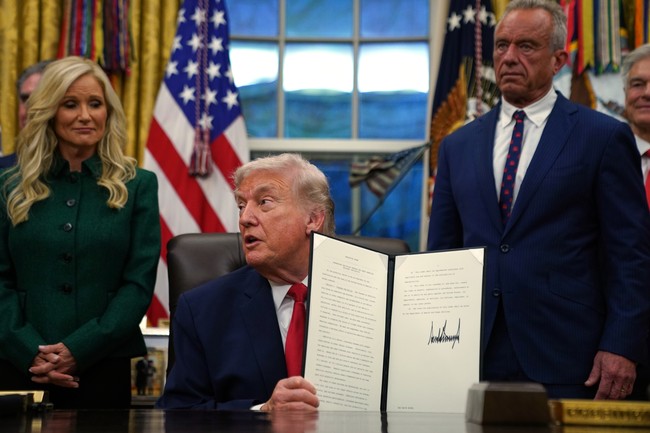
President Donald Trump signed an executive order on June 2, 2026, that sets up a voluntary process for federal review of advanced AI models before release. The order defines a category of "covered frontier models," identified through a government benchmarking process, and asks developers to voluntarily provide up to 30 days of pre-release access for cybersecurity review, per the White House and NPR. It also directs agencies, including the Cybersecurity and Infrastructure Security Agency, the Treasury Department, and the National Security Agency, to hunt vulnerabilities and push defensive AI tools to federal, state, and critical-infrastructure operators such as hospitals, banks, and utilities (White House; Roll Call). The text explicitly bars any mandatory licensing, preclearance, or permitting requirement, and reporting notes earlier drafts had proposed a 90-day window (White House; NPR).
What happened
President Donald Trump signed an executive order on June 2, 2026, establishing a voluntary process for the federal government to review advanced AI models before they are released, per the White House and national reporting. The order creates a category of "covered frontier models," to be identified through a government benchmarking process that assesses a model's advanced cyber capabilities, and asks developers to voluntarily provide the government up to 30 days of access before wider release (White House; NPR; CNBC).
Cybersecurity and critical-infrastructure focus
The order directs federal agencies, including the Cybersecurity and Infrastructure Security Agency, the Treasury Department, and the National Security Agency, to expand vulnerability-hunting and distribute AI-powered defensive tools to federal, state, and local governments and to critical-infrastructure operators such as hospitals, banks, and utilities, per the White House and Roll Call. Reporting describes a Treasury-supported clearinghouse to coordinate vulnerability information among agencies, infrastructure operators, and AI developers (Roll Call; Federal News Network; Cybersecurity Dive).
Limits on regulation
The order's text states that "nothing in this section shall be construed to authorize the creation of a mandatory governmental licensing, preclearance, or permitting requirement for the development, publication, release, or distribution of new AI models, including frontier models," keeping the framework voluntary (White House). NPR and other outlets reported the final order was narrowed from earlier drafts that had proposed up to a 90-day pre-release window (NPR).
Editorial analysis
Industry-pattern observation: voluntary review frameworks create a trade-off between speed-to-release and external scrutiny, and adoption tends to be uneven unless paired with clear benchmark criteria and strong confidentiality protections for shared model access. Centering the order on defensive cybersecurity, pushing tools to hospitals, banks, and utilities, reflects a recurring policy pattern of treating frontier AI as both a capability to secure and a tool for securing critical infrastructure. Because the framework is voluntary and the definition of "covered frontier model" depends on benchmarks agencies have yet to publish, the order's practical reach will hinge on implementation detail rather than the directive itself.
What to watch
Useful signals include the published benchmarking methodology and the threshold for "advanced cyber capabilities," the confidentiality and insider-risk safeguards attached to government access, the level of voluntary participation by leading developers, and whether the Treasury-led clearinghouse and CISA directives produce concrete vulnerability-coordination activity. Uptake by critical-infrastructure operators of the defensive tools the order envisions would indicate whether the cybersecurity provisions move from policy to practice.
Key Points
- 1Trump's order creates voluntary 30-day pre-release reviews of "covered frontier models" and tasks CISA, Treasury, and the NSA with AI-driven cyber defense.
- 2Routing defensive AI tools to hospitals, banks, and utilities centers the order on critical-infrastructure security rather than binding regulation of model releases.
- 3Explicitly rejecting mandatory licensing limits regulatory risk, but voluntary participation and undefined benchmark criteria will determine the order's real-world effect.
Scoring Rationale
This is a notable policy action with operational consequences for AI practitioners because it sets a national-security oriented, voluntary review process and directs defensive tooling to critical infrastructure. It stops short of licensing, so it is less disruptive than a mandatory regime but raises practical questions for model operators.
Sources
Public references used for this report.
Practice interview problems based on real data
1,625 SQL & Python problems across 15 industry datasets — the exact type of data you work with.
Try 250 free problems