Trump Signs Voluntary AI Model Review Executive Order
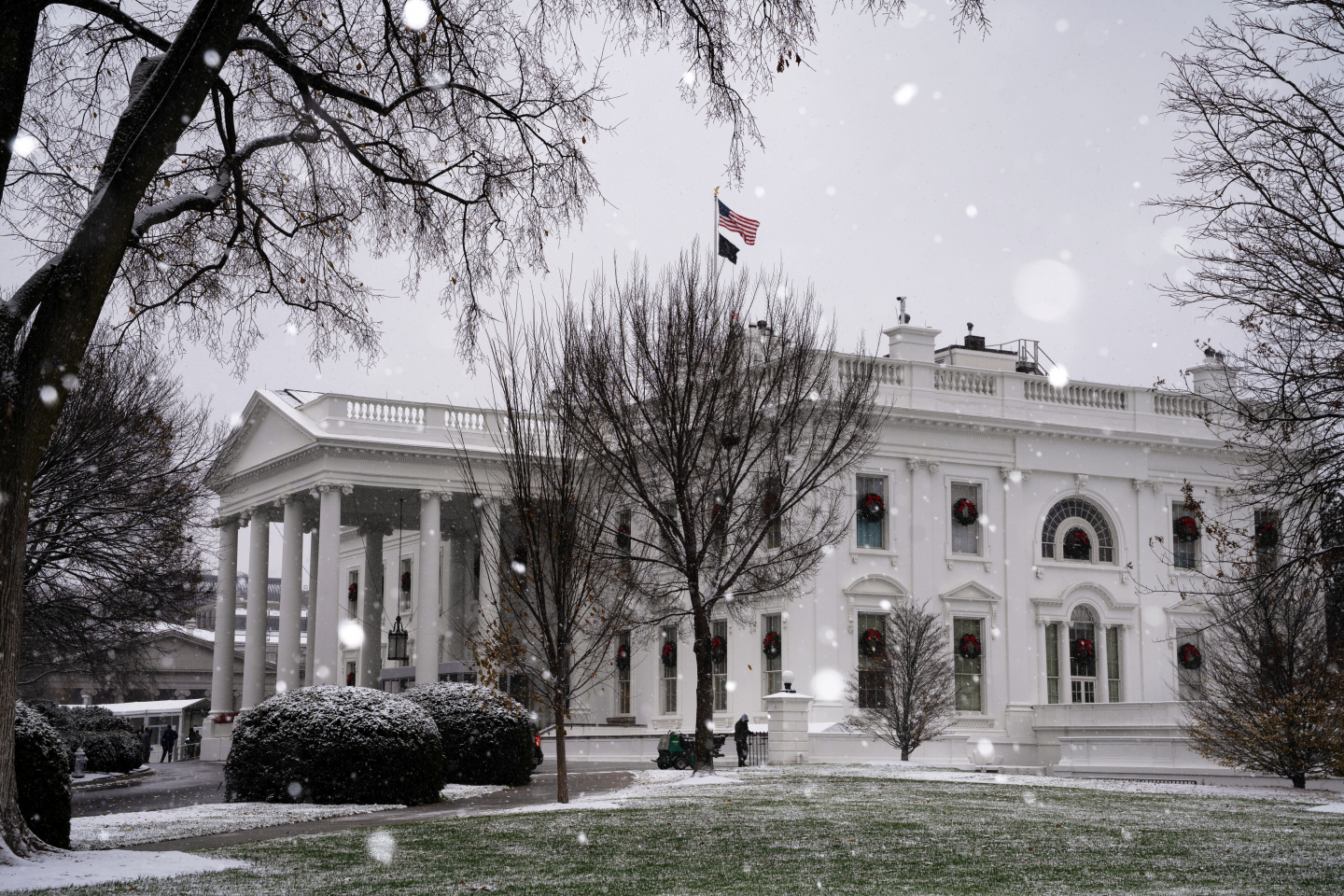
President Donald Trump signed an executive order on June 2 titled "Promoting Advanced Artificial Intelligence Innovation and Security," the White House says. The order directs federal agencies to develop benchmarks for assessing AI cybersecurity, create an "AI cybersecurity clearinghouse," and solicit voluntary submission of the most capable or "covered frontier models" to government cybersecurity testing up to 30 days before public release, according to the White House and reporting by Reuters and NPR. The order explicitly avoids imposing a licensing scheme or mandatory preapproval, Reuters and Federal News Network report, but several commentators told Politico the move expands Washington's willingness to scrutinize AI. Supporters and skeptics quoted in Politico and Reuters differ on whether the voluntary framework will become a pathway to stronger rules.
What happened
The White House published an executive order on June 2 titled "Promoting Advanced Artificial Intelligence Innovation and Security," the White House website shows. The order directs multiple agencies to prioritize cybersecurity protections for government systems and to develop benchmarks for assessing AI models' cyber capabilities, per the text of the order. Reuters and NPR report the order asks AI developers to voluntarily submit their most capable or "covered frontier models" for government cybersecurity testing up to 30 days before public release. The order also calls for creation of an "AI cybersecurity clearinghouse" to share information on vulnerabilities, according to the White House and NPR. Reporting by Reuters and Federal News Network notes the order bars use of the EO language to create an explicit mandatory licensing scheme or preapproval process.
Editorial analysis - technical context
The White House directives focus on operational security measures rather than model-content regulation. Industry and government efforts that center on predeployment cybersecurity testing, vulnerability-sharing, and benchmarks typically emphasize outputs such as exploit vectors, model-steering risks, and data-exfiltration channels. For practitioners, voluntary pre-release review windows like the 30-day timeframe set in the order create operational constraints around release schedules and red-team engagement cadence; similar frameworks in other sectors (for example, coordinated vulnerability disclosure programs) show that clearance windows can shorten or lengthen in practice depending on resource availability and mutual incentives.
Industry context
Public coverage frames the order as a departure from an earlier hands-off posture by this administration. Politico reports supporters of tougher federal scrutiny view the EO as expanding the Overton window for AI rules and say it could pave the way toward mandatory vetting over time. Reuters frames the move as a request for voluntary model submissions and highlights coordination across Treasury, Defense, Commerce, and Homeland Security. Politico quotes Brad Carson saying the order "exploded the Overton window," and cites Steve Bannon calling the structure a partial win. NPR and the New York Times place the EO in the context of recent private-sector caution, noting Anthropic limited release of a new model in April, which contributed to calls for greater review.
What to watch
Indicators observers should follow include whether major US model developers opt into the voluntary review process; whether agencies publish concrete benchmarks and API or artifact-handling protocols; whether the administration implements information-sharing mechanisms for vulnerabilities via CISA or an equivalent clearinghouse; and whether subsequent rulemaking or legislation cites the EO as a rationale for mandatory predeployment requirements. Watch for published timelines from the Committee on National Security Systems and any guidance documents from Commerce or CISA that operationalize the 30-day review window. Also monitor filings, public statements, or policy papers from large model developers such as Anthropic and OpenAI for responses and detailed offers to cooperate or decline.
Observed patterns in similar transitions
Industry-government voluntary programs typically evolve into more formal agreements when national-security or market incentives align, but that evolution depends on political will and litigation risk. Companies offering to participate often negotiate scopes for artifact sharing, non-disclosure safeguards, and limits on how test results can be used. Public reporting indicates those negotiation points will be central to implementation.
Bottom line
The EO establishes a federal structure that prioritizes cybersecurity review and voluntary engagement rather than immediate mandatory licensing. How agencies define covered models, handle sensitive artifacts, and implement benchmarks will determine whether the order functions primarily as a risk-mitigation coordination mechanism or as a stepping stone to firmer regulatory controls.
Key Points
- 1White House issues an EO for voluntary pre-release cybersecurity tests, creating a 30-day review window that alters release timelines for advanced models.
- 2The EO avoids explicit licensing or mandatory preapproval language, yet public reporting frames it as widening support for stronger federal AI scrutiny.
- 3Voluntary review frameworks typically crystallize around artifact-handling, disclosure limits, and benchmark design, which will dictate real-world industry adoption.
Scoring Rationale
The executive order is a notable policy shift that creates a federal process for voluntary pre-release cybersecurity review and benchmark setting. It does not immediately reshape the regulatory landscape, but it meaningfully raises the policy profile of model vetting and could influence industry practices.
Sources
Public references used for this report.
Practice interview problems based on real data
1,625 SQL & Python problems across 15 industry datasets — the exact type of data you work with.
Try 250 free problems