Trump signs scaled-back AI executive order
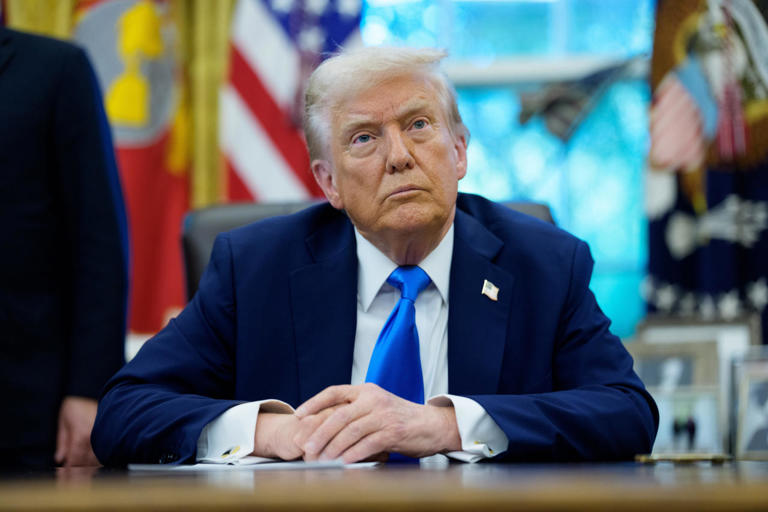
President Donald Trump signed a scaled-back executive order on June 2, 2026, creating a voluntary framework for the federal government to review powerful AI models before release, Reuters, Politico, and The Guardian report. The order asks developers to voluntarily provide up to 30 days of pre-release access for testing, down from a 90-day window in an earlier draft that was postponed, according to Politico and Business Insider. It directs agencies to build a benchmarking process for "covered frontier models" and to expand federal cybersecurity work, Reuters and SiliconANGLE report. SiliconANGLE points to Anthropic's Claude Mythos preview, which Anthropic has said uncovered thousands of software vulnerabilities, as the kind of high-capability system the order targets. Critics quoted by Axios and MarketWatch called the final order narrow and largely voluntary.
What happened
President Donald Trump signed a scaled-back executive order on June 2, 2026, that establishes a voluntary framework for the federal government to review powerful AI models before public release, as reported by Reuters, Politico, The Guardian, and SiliconANGLE. The final text asks developers to voluntarily provide access to qualifying models for up to 30 days prior to release, Reuters and The Guardian report. Politico and Business Insider reported that an earlier draft had proposed as much as 90 days of early access and that the signing was postponed before the order was finalized. SiliconANGLE reports the order directs agencies to develop a benchmarking process and gives officials roughly 60 days to implement the workflow.
What the order covers
The order uses the term "covered frontier model" for systems with advanced cyber capabilities, and Reuters and other outlets describe the policy as focused on models with significant potential to affect national security or critical infrastructure (Reuters; SiliconANGLE). SiliconANGLE highlights Anthropic's preview model, Claude Mythos, as an example of the high-capability systems the order has in mind; Anthropic has said the model uncovered thousands of software vulnerabilities in testing, a claim echoed in wider coverage of Mythos. The directive also tasks agencies with creating voluntary testing agreements, expanding AI-powered cybersecurity tools for federal and local users, and strengthening federal cybersecurity recruitment, SiliconANGLE reports.
Reaction
Reporting framed the order as a compromise. Politico described it as an AI policy Trump could live with after industry objections, while Axios and MarketWatch reported critics who called the final, voluntary order narrow and, in some characterizations, close to meaningless (Politico; Axios; MarketWatch). Tom's Hardware and Engadget summarized the order as seeking early government access to frontier models while stopping short of mandatory rules (Tom's Hardware; Engadget).
Editorial analysis
Industry-pattern observation: voluntary pre-release review windows establish a compromise between security oversight and deployment speed, but they typically produce uneven protection unless paired with standard benchmarks and disclosure formats. The reduction from a 90-day to a 30-day window, and the shift from binding requirements to voluntary participation, illustrate how industry feedback can reshape AI rules during drafting. The order's framing around cyber-capable frontier systems, exemplified by reporting on Anthropic's Mythos, reflects a broader policy pattern of treating the most capable models as simultaneously a security risk to manage and a defensive tool to deploy.
What to watch
Useful signals include the benchmarking criteria and the threshold for "covered frontier model," the confidentiality and intellectual-property protections attached to government access, the share of leading developers that voluntarily participate, and whether agencies meet the roughly 60-day implementation timeline SiliconANGLE described. Sustained divergence between the order's voluntary design and the pace of frontier-model releases would indicate how much practical oversight the framework actually provides.
Key Points
- 1Trump signed a scaled-back AI order setting voluntary 30-day federal reviews of "covered frontier models," narrowed from an earlier 90-day draft.
- 2The compromise reflects industry pushback, trading binding oversight for voluntary testing while still expanding federal and critical-infrastructure cybersecurity work.
- 3Voluntary frameworks yield uneven protection without standard benchmarks and disclosure; watch agency guidance and whether leading developers actually participate.
Scoring Rationale
This is a notable federal action introducing a voluntary federal review process for advanced AI models that affects security practices and vendor-agency interactions. It is significant for practitioners but stops short of mandatory controls, limiting immediate industry-wide operational impact.
Sources
Public references used for this report.
View 9 more sources
- Trump dodges AI rules for now with latest executive orderaxios.com
- Trump signs scaled-back version of AI executive ordersiliconangle.com
- Trump signs AI executive order seeking 30-day government access to frontier models before releasetomshardware.com
- Trump signs scaled-back AI executive orderthehill.com
- Trump quietly signed a scaled-back AI executive order after delaying it over fears of falling behind Chinabusinessinsider.com
- Trump Signs Scaled-Back AI Cybersecurity Orderengadget.com
- Trump signs an executive order on AI after it's scaled back. Critics ...morningstar.com
- How Trump's new AI order protects your local bank and hospitalnewsweek.com
- Trump signs executive order scaling back AI review requirementsfinance.yahoo.com
Practice interview problems based on real data
1,625 SQL & Python problems across 15 industry datasets — the exact type of data you work with.
Try 250 free problems