Tether Launches Self-Custodial Wallet for Humans and AI Agents
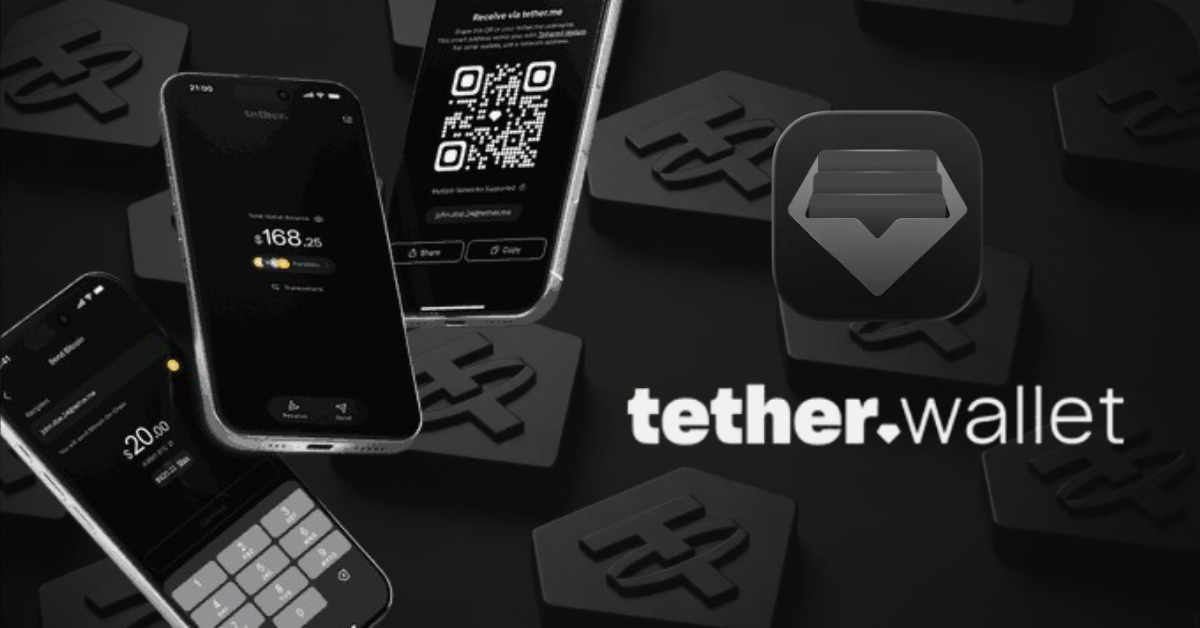
Tether has launched tether.wallet, a self-custodial mobile wallet that lets users and automated agents hold and send USDT, USAT, XAUT, and Bitcoin across multiple blockchains. The app replaces long addresses with human-readable identifiers like "[email protected]" and lets senders pay transaction fees directly in the asset being transferred, reducing UX friction. Built on the open-source Wallet Development Kit (WDK), the wallet is explicitly designed to enable machine-to-machine and AI-agent payments and to let third-party apps embed self-custodial flows. Tether positions the product as a move up the stack from issuer to consumer-facing payments provider and is targeting wide adoption from its existing network of 570 million users. The launch accelerates real-world crypto payments but raises implementation, security, and regulatory questions developers must track.
What happened
Tether has launched tether.wallet, a self-custodial mobile wallet that supports USDT, USAT, XAUT, and Bitcoin across multiple chains and Lightning. The product replaces long hexadecimal addresses with human-readable identifiers such as "[email protected]," and allows senders to pay transaction fees directly in the asset being sent. Tether frames the launch as a shift from backend issuer to consumer-facing infrastructure, building on an existing installed base of 570 million users that already interact with its technology.
Technical details
The wallet is built on Tether's open-source Wallet Development Kit (WDK), which third parties can embed to add self-custodial capabilities. The product and the WDK emphasize low-friction payments for both humans and programmatic actors, with these practical features:
- •Native support for USDT, USAT, XAUT, and Bitcoin (on-chain plus Lightning) so payments can use a minimal set of liquid assets
- •Human-readable identifiers that simplify UX compared with raw addresses, e.g., "[email protected]"
- •Ability to pay gas or fees in the asset being transferred, removing the need to hold native gas tokens
The wallet keeps private keys on users devices, signaling a true self-custodial model rather than a custodial or hosted key solution. The company is positioning the WDK and tether.wallet as primitives for machine-to-machine flows and AI agents to sign and send value autonomously.
Context and significance
This launch is notable because Tether operates the largest stablecoin market with broad exchange and payment rail penetration. Packaging that liquidity into a consumer-grade, self-custodial wallet lowers onboarding friction for crypto payments and enables microtransaction patterns needed for agent-driven economies and IoT or AI-to-AI value exchange. The fee-in-asset model and human-readable IDs tackle two key UX barriers that stopped many real-world payment use cases. Open-sourcing the Wallet Development Kit accelerates developer uptake, and early integrations such as the Rumble wallet demonstrate the modular approach.
At the same time, the move carries tradeoffs practitioners must weigh. Self-custody shifts custody and security responsibilities to device-level key management, increasing the importance of wallet UX around key backup, recovery, and anti-phishing. Tether also carries regulatory and reputational baggage; any expansion into consumer payments will attract closer scrutiny from regulators and financial intermediaries, which could shape product rollout and merchant integration timelines.
What to watch
Track developer adoption of the Wallet Development Kit, security audit results and recovery UX designs, regulatory responses in major markets, and early merchant or AI-agent pilots. Merchant integrations, Lightning routing performance, and concrete agent-to-agent payment use cases will determine whether this is a foundational primitive for machine payments or a niche consumer wallet.
Key Points
- 1Tether converts infrastructure into a consumer product, enabling direct user control of USDT and other assets, reducing payment friction.
- 2Open-source Wallet Development Kit enables third parties and AI agents to embed self-custodial payments, accelerating machine-to-machine use cases.
- 3Self-custody plus fee-in-asset UX solves key adoption problems but transfers security and regulatory risk to device-level implementations.
Scoring Rationale
A notable product move by a major stablecoin issuer that meaningfully lowers UX friction for crypto and machine payments. The open-source WDK and large existing footprint increase practical relevance for developers, but it is not a paradigm-shifting technology and will face security and regulatory scrutiny.
Sources
Public references used for this report.
Practice with real Payments data
90 SQL & Python problems · 15 industry datasets
250 free problems · No credit card
See all Payments problems