Taylor Swift files trademarks for voice and image
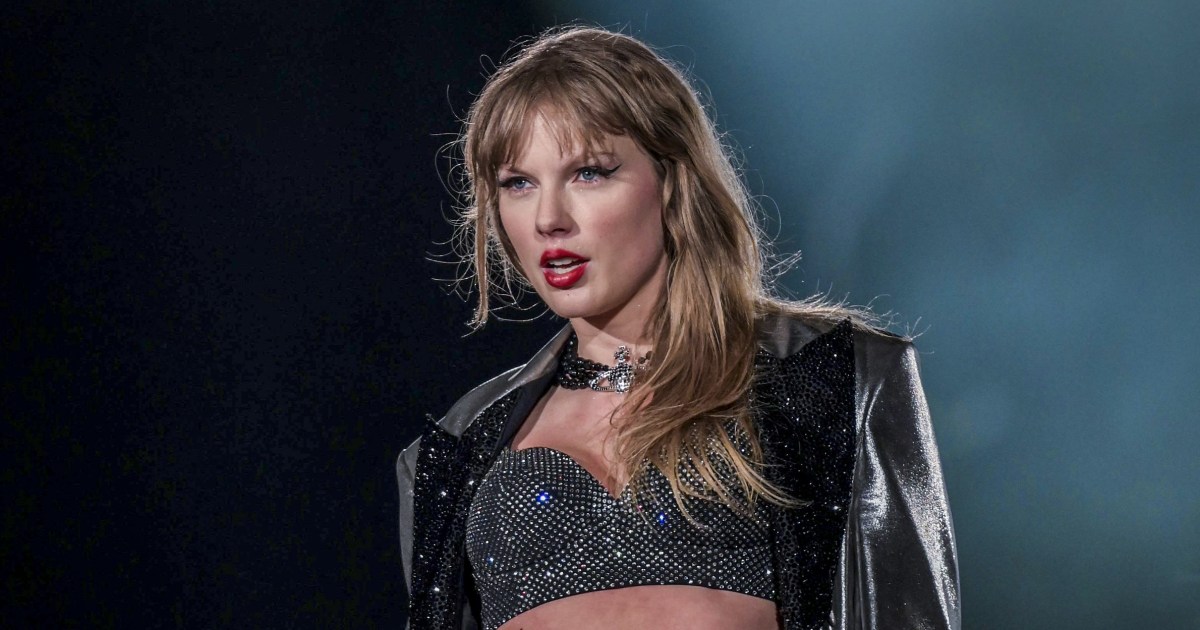
Taylor Swift, through her company TAS Rights Management, filed three trademark applications on April 24, 2026, seeking federal registrations for two short audio clips and a stage image, according to reporting by Billboard and The Guardian. The sound marks cover the phrases "Hey, it's Taylor Swift" and "Hey, it's Taylor," and the filings included audio clips, per Billboard. NBC News reports the filings include specimen audio that references album promotion. The third application describes a stage photograph of Swift in a multi-colored iridescent bodysuit with a pink guitar, per The Guardian and Variety via Times Now. Coverage frames the move alongside a similar January 2026 filing by Matthew McConaughey and notes attorneys describe sound trademarks as an untested legal route to combat AI deepfakes (Josh Gerben, cited in The Guardian).
What happened
Taylor Swift's company, TAS Rights Management, filed three trademark applications with the U.S. Patent and Trademark Office on April 24, 2026, according to reporting by Billboard and The Guardian. Two applications seek sound marks covering the short phrases "Hey, it's Taylor Swift" and "Hey, it's Taylor," and the filings included audio clips for those phrases, per Billboard. NBC News published specimen audio from one filing that reads, in part, "Hey, it's Taylor Swift, and you can listen to my new album, 'The Life of a Showgirl,' on demand on Amazon Music Unlimited." The third application seeks protection for a photograph of Swift onstage, described as her wearing a multi-colored iridescent bodysuit with silver boots and holding a pink guitar, as reported by The Guardian and summarized in Times Now. Multiple outlets place the filings in the same tactical family as actor Matthew McConaughey's January 2026 filings for audio and video snippets.
Technical details
Sound marks, sometimes called audio trademarks, are an established but rare form of federal trademark registration; classic examples include the NBC chimes, as noted by Billboard. Intellectual property attorney Josh Gerben is quoted in The Guardian and other coverage describing attempted registration of spoken celebrity voice as "a new use of trademark registration that has not been tested in court before." Media reporting highlights that trademark law covers use in commerce and can be drafted to cover uses in connection with specific goods or services, in this case broad "entertainment services," per Billboard and The Guardian.
Context and significance
Reporting frames these filings as part of a growing industry response to deepfakes and synthetic media proliferation. Legal experts in the coverage emphasize the novelty and untested nature of spoken-voice trademarks. The practical enforceability and courts' willingness to extend federal trademark protections into areas traditionally governed by state-level publicity rights remain open questions in the press analysis and quoted commentary.
What to watch
- •Whether the USPTO accepts any of the three applications, and on what grounds, as reported filings move through examination.
- •Any enforcement actions or cease-and-desist letters anchored to a granted sound mark; press coverage would provide early examples.
- •Court decisions, if litigation follows, that define how trademark, copyright, and state publicity rights apply to AI-generated voice and image impersonations.
- •Responses from AI platform providers and voice-synthesis services on moderation, licensing, or prompt-filtering tied to celebrity likenesses.
Editorial analysis
Industry context: Celebrities and rights holders are experimenting with private-law tools to respond to synthetic impersonation. This pattern follows other high-profile filings, including McConaughey's January filings, and reflects broader legal uncertainty about how common IP regimes-copyright, publicity rights, and trademarks-interact with new generative capabilities. Observers quoted in the press frame sound-mark filings as an attempt to close a gap where AI voice-cloning can create new, non-copycat audio that nonetheless mimics a performer's timbre.
Implications for practitioners: Companies building voice synthesis, audio detection, or content-moderation systems should monitor how courts and the U.S. Patent and Trademark Office handle sound-mark registrations and enforcement. Outcome scenarios include narrower, specimen-specific protections that are easy to design around, or broader interpretations that could raise compliance questions for APIs and model providers when handling celebrity-like prompts or training data. Firms that rely on voice datasets should track whether rights holders begin to assert trademark-based claims against commercial uses that imitate registered vocal phrases.
Final take: These filings illustrate a tactical, private-law response to an escalating public-safety and rights-management problem created by generative media. For practitioners, the key operational question is not whether celebrities will seek legal protection, but how regulators, courts, and platform policies will translate such filings into enforceable constraints on model behavior and commercial usage.
Key Points
- 1Celebrities increasingly use trademark filings, including sound marks, to build legal options against synthetic impersonation and deepfakes.
- 2Sound-mark registrations are legally uncommon and untested for spoken celebrity voice, so outcomes will hinge on USPTO and court decisions.
- 3AI developers and moderation teams should track trademark acceptance and enforcement as it may affect dataset use, licensing, and content filters.
Scoring Rationale
Notable legal development with operational implications for voice-synthesis and content-moderation systems; the story is not a technical breakthrough but may influence compliance and dataset policies.
Sources
Public references used for this report.
Practice with real Ad Tech data
90 SQL & Python problems · 15 industry datasets
250 free problems · No credit card
See all Ad Tech problems