Synvo AI Raises US$1 Million for Enterprise Memory
ANTARA/PRNewswire reports that Synvo AI, a deep-tech spinout from MMLab at Nanyang Technological University (NTU), announced a US$1 million seed investment from Fuel Ventures Asia on June 18, 2026. The company, co-founded by CEO Saim Yeong Harng, develops an Enterprise Memory Layer that enables AI systems to retain, retrieve, and reason across an organisation's documents, email, video, audio, and business data, with support for on-premises and on-device deployment. A Singapore-based manufacturer using the technology reduced a quotation-generation workflow from 45 minutes to under 5 minutes, reclaiming around 200 hours of sales capacity per month and an estimated SGD 120,000 in annual savings, per the announcement. Synvo AI is a member of the NVIDIA Inception Program and has a strategic partnership with Indonesia's Sobat Bisnis Group (SBG).
What happened
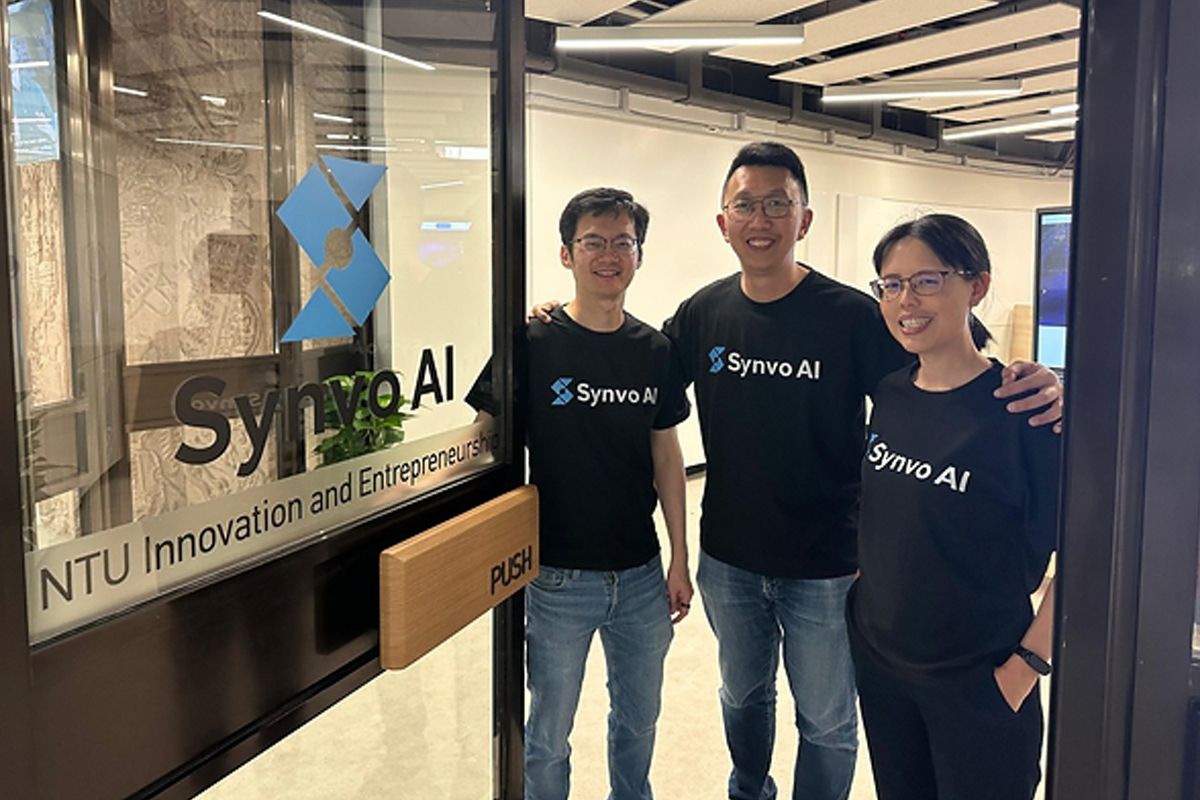
ANTARA/PRNewswire reports that Synvo AI, a deep-tech spinout from MMLab at Nanyang Technological University (NTU), announced a US$1 million seed round from Fuel Ventures Asia on June 22, 2026. Co-founded by CEO Saim Yeong Harng, CTO Prof. Cavan Loy, and COO Dr. Faye Wong, the funding is intended to accelerate commercialisation, expand engineering capabilities, and support enterprise AI deployments across Asia. The announcement describes Synvo AI's product as an Enterprise Memory Layer that enables AI systems to retain and reason over organisational documents, email, video, audio, and business data, and states the technology supports on-premises and on-device deployments for data privacy, security, governance, and sovereignty.
Technical details
ANTARA/PRNewswire reports that Synvo AI's Enterprise Memory Layer is positioned as infrastructure that plugs into AI systems and agents to provide persistent context across sessions. The company commercialises research from MMLab at NTU, including HippoCamp and FileGram, two efforts in contextual agent memory. Synvo AI's proprietary Lightweight Multimodal Memory (LiteMMem) architecture achieved the highest reported score on FileGramBench, a benchmark for evaluating memory-centric personalisation in file-system agents. The company is a member of the NVIDIA Inception Program and HP Garage 2.0. A deployment example: a Singapore-based manufacturer reduced a quotation-generation workflow from 45 minutes to under 5 minutes, reclaiming approximately 200 hours of sales capacity per month and yielding an estimated SGD 120,000 in annual productivity savings, per the announcement.
Industry context
Implications for practitioners
What to watch
Editorial analysis
Companies and research groups building persistent context layers respond to a common enterprise limitation, where session-based LLM interactions lack retained organisational knowledge. Observed patterns in similar initiatives include a focus on hybrid deployment modes (on-premises, private cloud, on-device) to address regulatory and governance requirements, and value propositions framed around workflow acceleration and knowledge consolidation.
For engineering teams evaluating retrieval and memory architectures, Synvo AI's emphasis on multi-modal sources (documents, email, video, audio) highlights integration and indexing complexity, metadata design, and security controls as practical priorities. Observers considering on-premises deployments should plan for data residency, encryption, and access-control engineering upfront.
Watch for technical evidence beyond PR claims: benchmarks on retrieval latency, consistency of memory recall across model versions, integration patterns with vector databases and RAG pipelines, and security certifications for on-premises deployments. Also monitor announced pilot results beyond the single customer example and any technical whitepaper or API documentation release that details data models, indexing strategies, or privacy-preserving mechanisms.
Key Points
- 1Seed funding of US$1 million signals early investor interest in persistent memory layers for enterprise AI, which address session-context gaps.
- 2Enterprise memory models that support on-premises and on-device deployment aim to meet governance and sovereignty requirements in regulated industries.
- 3Practitioners evaluating memory systems should prioritise integration, metadata design, security controls, and repeatable benchmarked outcomes over vendor promises.
Scoring Rationale
A US$1 million seed round for an NTU spinout in Singapore focused on enterprise AI memory infrastructure. The technology (persistent multimodal context layers for enterprise agents) is relevant to practitioners, and the NTU/MMLab research lineage and NVIDIA Inception membership add credibility. However, the round is small, all sourcing is vendor PR, and the customer outcome is a single unaudited example. Scores as minor-to-solid SE Asia enterprise AI news.
Sources
Public references used for this report.
Practice interview problems based on real data
1,625 SQL & Python problems across 15 industry datasets — the exact type of data you work with.
Try 250 free problems