
Stellantis Integrates Wayve AI into Vehicles
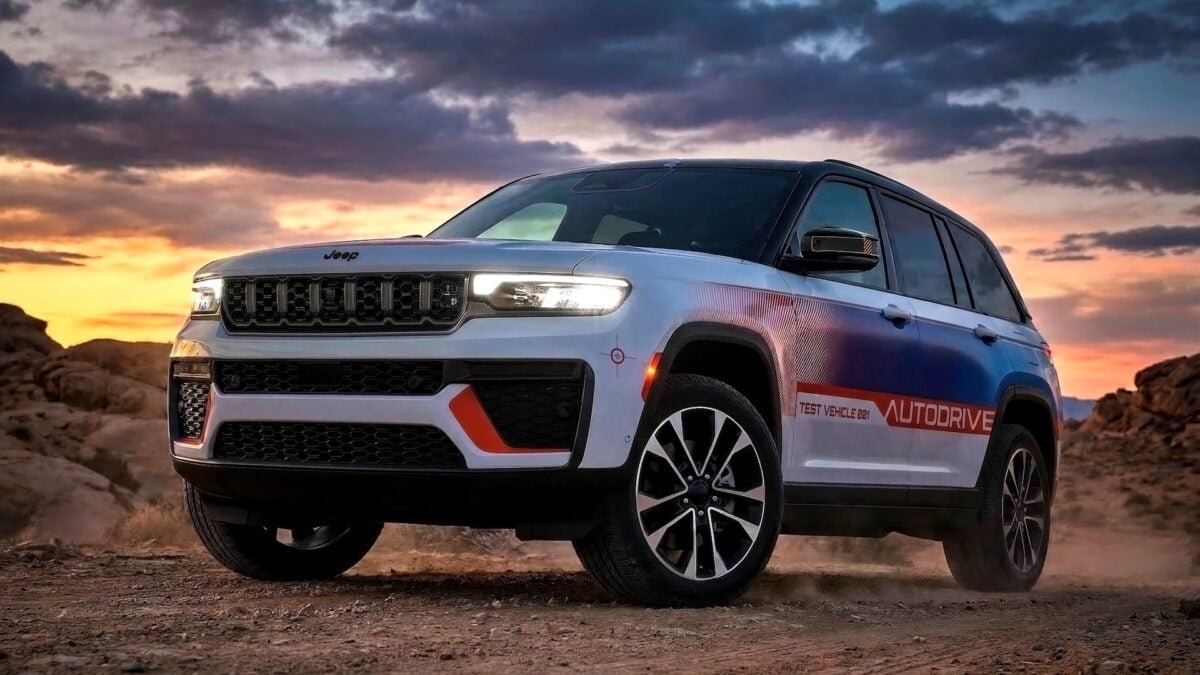
Stellantis announced a strategic technology partnership with UK startup Wayve to integrate the Wayve AI Driver into the STLA AutoDrive platform, targeting hands-free, supervised Level 2++ driving in both urban and highway environments, per a Stellantis press release. The initial vehicle integration is planned for North America in 2028, the press release states. TechCrunch reports Wayve closed a $1.2 billion Series D with strategic backers including Stellantis, Nissan, Microsoft, Nvidia, and Uber, and quotes Wayve CEO Alex Kendall describing Stellantis' global scale as a strong match. InsideEVs places the announcement inside Stellantis' broader $70 billion turnaround and new vehicle slate for North America.
What happened
Stellantis announced a strategic technology partnership with U.K.-based startup Wayve to integrate the Wayve AI Driver into the STLA AutoDrive platform, according to a Stellantis press release. The collaboration is described as enabling hands-free, door-to-door supervised automated driving at Level 2++ across highway and urban driving scenarios, the press release states. The first production integration is planned for North America in 2028, per the same release. TechCrunch reports Wayve recently raised $1.2 billion in a Series D that included strategic investors such as Stellantis, Nissan, Microsoft, Nvidia, and Uber, and quotes Wayve CEO Alex Kendall on the commercial scale opportunity with Stellantis.
Technical details
The Stellantis announcement frames the work as combining Wayve's AI-first driving intelligence with the STLA AutoDrive software-defined vehicle architecture, the press release says. Coverage from MoparInsiders notes Wayve's approach emphasizes end-to-end machine learning and real-world driving data rather than heavy reliance on high-definition maps. Stellantis characterizes the initial product as a supervised, hands-free capability that still requires driver attention and supervision, the press release states.
Editorial analysis - technical context
Companies pursuing AI-first driving stacks often trade explicit map-based rule systems for models that generalize from large-scale driving data. Industry-pattern observations: that approach can simplify city-level deployment and adapt to diverse vehicle geometries, but it typically increases demands for labelled and unlabeled fleet data, compute for training and inference, and robust validation pipelines before production rollout.
Context and significance
Stellantis is announcing this partnership as part of a broader software and electrification push. Reporting by InsideEVs places the Wayve deal inside Stellantis' reported $70 billion turnaround plan and a multiyear vehicle slate that includes dozens of new EVs and software-defined platforms. Observers have compared hands-free Level 2++ systems to existing offerings from other OEMs and EV makers; Gizmodo frames this initial level as supervised, hands-free capability rather than full driverless operation. TechCrunch frames the agreement as a commercial supply deal that follows Wayve's large funding round and strategic investor mix.
What to watch
- •Regulatory and safety validation milestones for hands-free Level 2++ functionality in North American jurisdictions.
- •Which specific Stellantis brands and models (Jeep, Ram, Dodge, or others) will receive the initial integration and the expected production volumes.
- •How the STLA AutoDrive software-defined architecture and partner silicon (reporting notes Qualcomm collaborations elsewhere in Stellantis' plans) handle in-vehicle inference and over-the-air updates.
- •Signals about data pipelines and fleet scale: how much real-world driving data Wayve and Stellantis will gather before the 2028 target.
"At Stellantis, we focus on technology that fundamentally transforms how our customers interact with their vehicles," said Ned Curic, Chief Engineering and Technology Officer, in the Stellantis press release. Alex Kendall, Wayve CEO, told TechCrunch: "One of the amazing things about Stellantis is the global, massive scale they operate at, and the diversity of products they offer."
For practitioners
Observers and engineering teams should view this as another example of the broader industry shift toward ML-driven driver assistance integrated into software-defined vehicles. Industry-pattern observations: integration at scale will require coordinated work across vehicle hardware, in-vehicle compute, data annotation and simulation pipelines, and regulatory-compliance testing well ahead of production targets.
Key Points
- 1Stellantis will integrate Wayve's AI Driver into STLA AutoDrive, accelerating hands-free Level 2++ deployments in North America by 2028.
- 2AI-first driving stacks reduce map dependence but raise needs for large-scale fleet data, validation, and onboard inference hardware.
- 3Placement inside Stellantis' reported $70 billion turnaround ties autonomy efforts to a broader software-defined vehicle and EV roadmap.
Scoring Rationale
The partnership is a notable commercial win for Wayve and advances deployment timelines for hands-free driving at scale, but it is an incremental production roadmap item rather than a frontier-model release. The story matters to practitioners planning validation, data, and compute for vehicle-scale ML systems.
Sources
Public references used for this report.
Practice interview problems based on real data
1,625 SQL & Python problems across 15 industry datasets — the exact type of data you work with.
Try 250 free problems


