SpaceX Unveils Plan for Orbital AI Data Centers
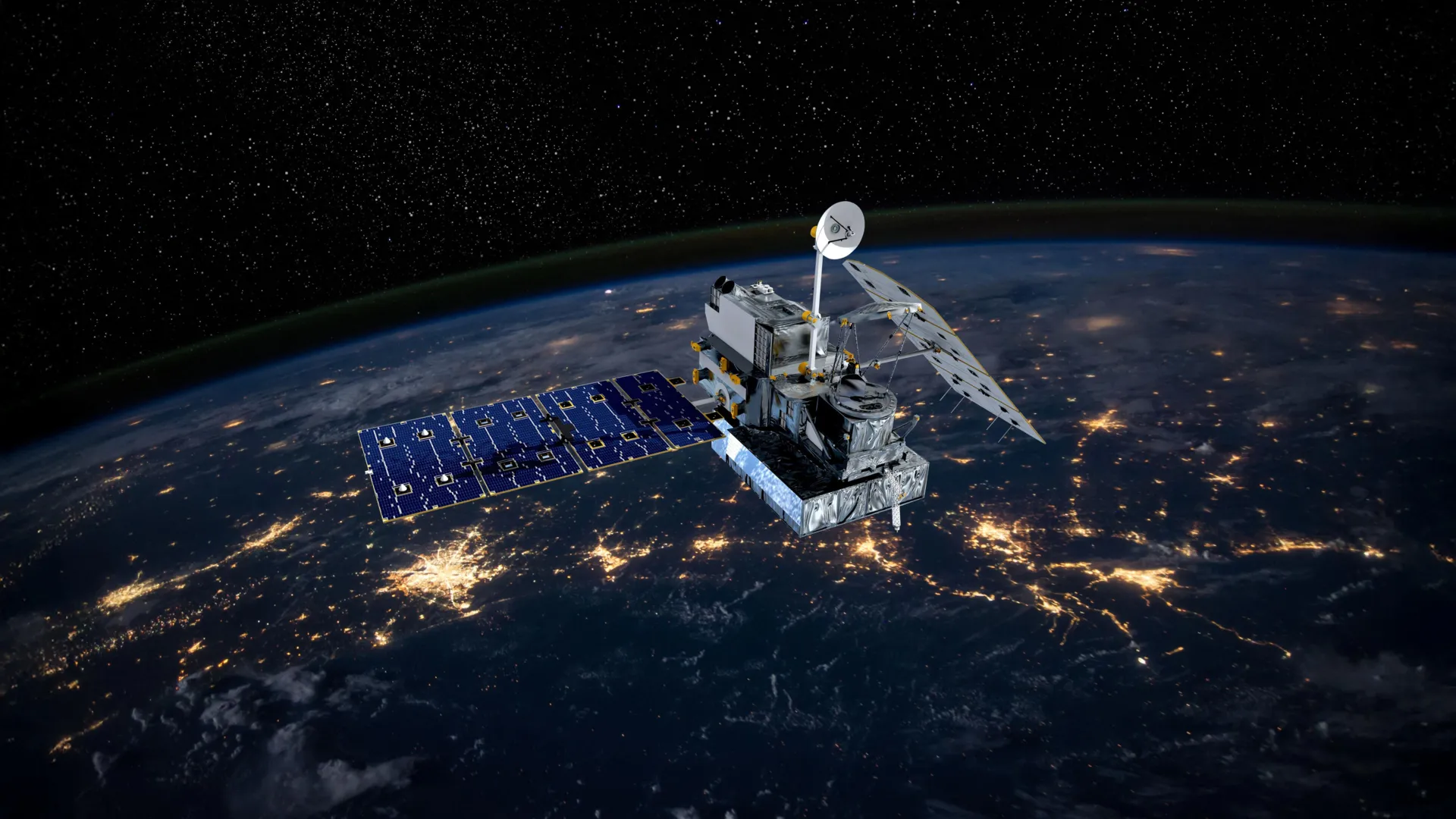
SpaceX revealed the AI1, its first-generation orbital data-center satellite, days before the company's Nasdaq IPO on June 13, 2026. Per Data Center Dynamics and Tom's Hardware, CEO Elon Musk confirmed the craft targets 150 kW peak and 120 kW average compute power, spans 70 meters tip-to-tip, and uses a 110 square-meter deployable liquid radiator for heat rejection. Musk stated the design reuses Starlink V3 technologies, adding: "The AI satellite is much simpler than a Starlink satellite." SpaceX has filed plans for a megaconstellation of up to 1 million such satellites. The Conversation (via ScienceDaily) details fundamental orbital challenges: vacuum cooling, radiation hardening, in-orbit servicing, and high launch costs. SpaceNews separately reports astronomer concerns about interference with sky observations. CNET relays expert warnings that large compute constellations risk worsening orbital debris without enforceable mitigation standards.
What happened
SpaceX revealed its first-generation orbital data-center satellite, designated AI1, in a promotional video on June 9, 2026, days before the company's Nasdaq IPO on June 13, 2026 (ticker: SPCX). Data Center Dynamics and Tom's Hardware report Elon Musk confirmed the design targets 150 kW peak and 120 kW average compute power. Ian Dahl, SpaceX director of satellite engineering, said in the video per Data Center Dynamics: "we thought that the right place is around the 150kW peak power level" and "we get to actually see that we can support 120kW of average compute." Musk added the craft reuses core Starlink V3 technologies, stating: "The AI satellite is much simpler than a Starlink satellite."
Technical details
Per Data Center Dynamics and Tom's Hardware, the AI1 design spans 70 meters tip-to-tip, stands 20 meters deployed, and carries a 110 square-meter deployable liquid radiator with redundant pumping loops for heat rejection in vacuum. Musk cited solar array assumptions of 250 W per square meter and 1,400 W per square meter for the radiators, which radiate from both sides. Tom's Hardware reports a platform efficiency of approximately 70 kilowatts per ton and describes modular compute payload bays intended to accept hardware from multiple chip vendors, framing peak power as roughly equivalent to a single high-end Earth-based compute rack. ScienceDaily, republishing a June 18, 2026 piece from The Conversation, summarizes engineering obstacles specific to orbital operation: the lack of convective cooling in vacuum, persistent radiation exposure for electronics, in-orbit servicing requirements, and the high mass-and-launch-cost premium for every kilogram sent to orbit.
Scale and business context
Data Center Dynamics reports SpaceX has filed plans to launch up to 1 million satellites as a data-center megaconstellation. The company has established a compute-leasing business model with its terrestrial infrastructure - Data Center Dynamics has reported major disclosed deals with Anthropic and Google - and frames AI1 as extending that model to orbital capacity. Solar arrays are to be manufactured at the company's Bastrop, Texas facility.
Industry context
Risks and externalities reported
CNET and other outlets relay expert warnings that deploying large numbers of compute satellites could amplify orbital-debris risks, with coverage framing the potential outcome as a space "junkyard" if mitigation and end-of-life removal standards are not enforced. SpaceNews separately reports astronomers warn that large, reflective AI satellite constellations could interfere with optical observations, citing the 70-meter wingspan as presenting a significant brightness and tracking challenge for facilities such as the Rubin Observatory. Science and technology reporting also flags the difficulty of routine hardware refresh cycles and in-situ repairs compared with Earth-based data centers.
Business and investor angle
Yahoo Finance coverage places the initiative in a broader capital-allocation context, noting the timing of the AI1 reveal ahead of SpaceX's June 13 IPO and framing orbital compute as a strategic growth narrative under investor scrutiny rather than a settled commercial model.
What to watch
For practitioners
Editorial analysis
Companies pursuing orbital compute frequently cite near-constant solar energy and relief from terrestrial land and grid constraints. Observed patterns in similar proposals show those advantages are often counterbalanced by harder-to-solve operational problems - thermal management, radiation hardening, launch economics, and collision risk in crowded orbits. The 1 million satellite filing represents an ambitious scale that far exceeds any deployed compute constellation, and its commercial feasibility remains undemonstrated.
Observers should track three measurable indicators - announced launch manifest and demonstrated in-orbit lifetime for AI1 testcraft; third-party validation of thermal and radiation mitigation technologies in space conditions; and regulatory or industry agreements on debris mitigation, servicing standards, and observatory coordination. Whether modular payload designs enable competitive hardware swaps without prohibitively expensive servicing missions is a key open question.
For ML engineers and infrastructure teams, orbital compute would change cost and latency tradeoffs only if demonstrated power-to-weight, reliability, and maintenance economics outperform Earth-based hyperscalers after accounting for launch and operations overheads. Prior space-based infrastructure efforts indicate long development timelines and iterative hardware validation are typical before technology reaches production-scale economics.
Bottom line
Reporting across Data Center Dynamics, Tom's Hardware, ScienceDaily (The Conversation), SpaceNews, CNET, BGR, Yahoo Finance, and Stratechery frames AI1 as an ambitious, technically detailed proposal with concrete specifications verified by named SpaceX executives, but with substantial open engineering, economics, and policy questions before commercial viability is demonstrated.
Key Points
- 1SpaceX's AI1 satellite targets 120 kW average and 150 kW peak compute, with plans for a megaconstellation of up to 1 million craft.
- 2Orbital compute faces fundamental hurdles: vacuum cooling, radiation hardening, in-orbit servicing, and mass-driven launch economics.
- 3Experts warn large compute satellite constellations risk worsening orbital debris and disrupting astronomical observations without binding mitigation standards.
Scoring Rationale
SpaceX's AI1 reveal includes concrete hardware specifications verified by named company executives, an ambitious megaconstellation filing for up to 1 million satellites, and an established compute-leasing business - making it clearly notable for AI infrastructure practitioners. However, the craft is a pre-production design with prototype launches not planned until early 2027 and commercial viability at scale unproven, keeping the story below the 'major' threshold on the impact ladder.
Sources
Public references used for this report.
View 5 more sources
- Astronomers fear orbital data centers will interfere with observationsspacenews.com
- SpaceX's 1M AI Satellites Will Create Space Junkyard, Experts Warncnet.com
- SpaceX's First-Ever Orbital Data Center Is Coming With A Powerful Payloadbgr.com
- SpaceX and Google Want to Launch Data Centers Into Space -- 2 Things Investors Should Knowfinance.yahoo.com
- The SpaceX IPO and Data Centers in Space - Stratecherystratechery.com
Practice interview problems based on real data
1,625 SQL & Python problems across 15 industry datasets — the exact type of data you work with.
Try 250 free problems