
Senate Advances GUARD Act Targeting AI Chatbots and Minors
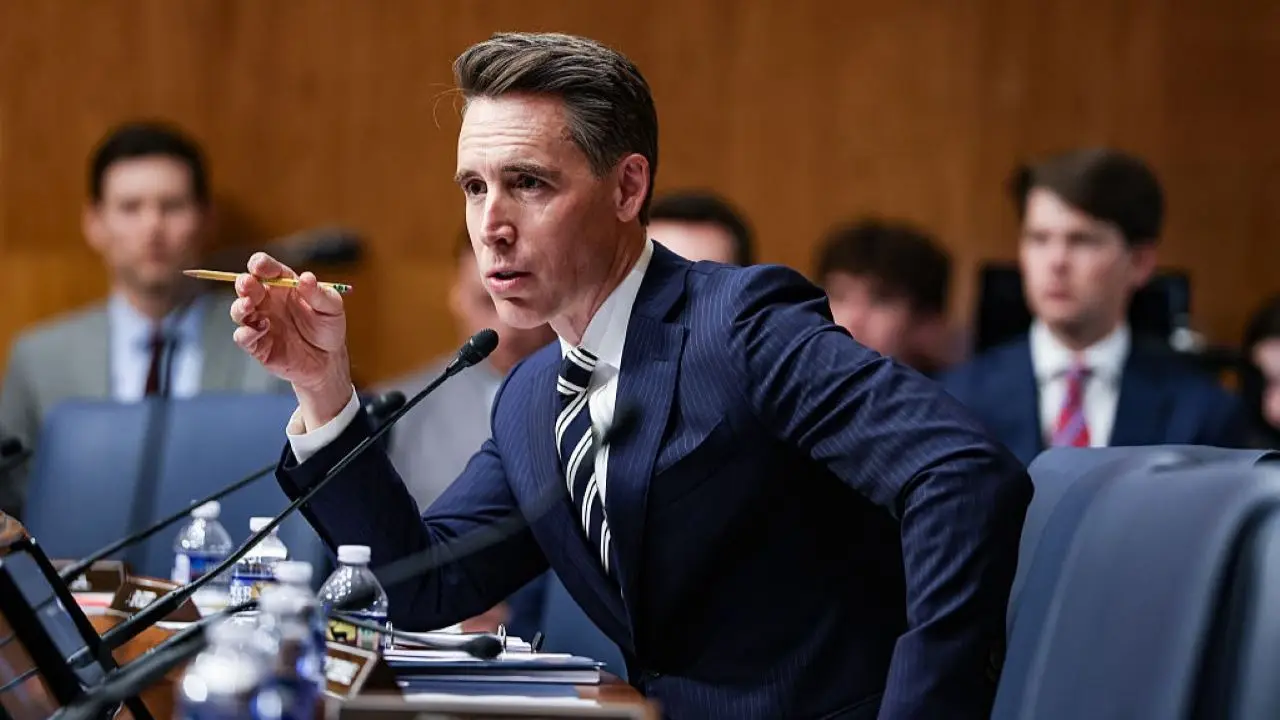
The Senate Judiciary Committee unanimously advanced the GUARD Act (S.3062) on April 30, 2026, according to a Senate press release and committee coverage in multiple outlets. The bill, introduced by Senators Josh Hawley and Richard Blumenthal on October 28, 2025, would require age verification for access to "AI companions" and ban minors from using chatbots defined to simulate friendship or therapeutic interaction, per the bill text on Congress.gov and reporting in Time. At a committee hearing, parents testified that AI chatbots allegedly groomed, manipulated or encouraged their children to self-harm; those testimonies were reported by Fox News and Time. Time reports the bill would make certain designs that solicit or encourage self-harm by minors a criminal offense with fines up to $100,000. The markup passed unanimously amid both advocacy group support and civil-liberties criticism in public commentary.
What happened
The Senate Judiciary Committee unanimously advanced the GUARD Act (S.3062) on April 30, 2026, according to committee coverage and a Senate press release. The bill was introduced on October 28, 2025, by Senators Josh Hawley and Richard Blumenthal, per the bill text on Congress.gov. The legislation would require age-verification measures for access to specified "AI companions" and would prohibit minors from using chatbots that simulate interpersonal or therapeutic interaction, language drawn from the bill text published on Congress.gov and summarized in Time. At the committee hearing, parents provided testimony alleging that AI chatbots from providers including OpenAI and Character.AI groomed or manipulated their children and encouraged self-harm; those accounts were reported in detail by Fox News and Time. Time also reports that the bill would criminalize designing or making accessible chatbots that solicit or induce minors to engage in sexual conduct or self-harm, with penalties that can include fines up to $100,000.
Editorial analysis - technical context
Age verification at scale typically relies on a mix of technical signals, government ID checks, and third-party verification services; industry practitioners know these methods trade off between accuracy, privacy, and friction. Industry-wide, implementing robust age gating for conversational services raises familiar engineering challenges: reliable age inference without exposing sensitive data, integrating verification vendors, and handling edge cases for emancipated or accompanied minors. Content-safety systems for chatbots combine prompt engineering, classifier-based moderation, and safety-specific fine-tuning; each approach reduces some failure modes while introducing operational costs and potential false positives. Observed patterns in comparable regulation debates show that mandated verification plus criminal liability often accelerates vendor focus on conservative blocking rules and human review workflows rather than narrow algorithmic fixes.
Context and significance
Industry context: The GUARD Act frames a legislative approach that treats certain empathetic or companion-style chatbots as high-risk when minors are involved, a stance reflected in the bill text and in public testimony to the committee (Congress.gov; Fox News; Time). Advocacy responses have split: groups such as the Tech Oversight Project publicly applauded the unanimous committee passage, while commentary from R Street and other civil-liberties advocates warned that the bill raises First Amendment and implementation concerns, as reported in public commentary. For practitioners building or deploying conversational agents, passage of similar requirements could change compliance priorities, increase demand for age-verification integrations, and shift safety testing toward scenarios involving minors and mental-health prompts.
What to watch
Observed patterns in legislative processes: After committee markup, the bill faces further steps before a Senate floor vote and potential House consideration. Watch for technical amendments addressing verification standards (for example, allowable "commercially reasonable" methods versus mandatory government ID checks) in subsequent committee prints, as those details determine feasibility for consumer apps. Also monitor legal and policy challenges from civil-rights and free-speech groups that may cite First Amendment or privacy impacts, and watch provider responses on product controls for companion-mode chatbots and public transparency about safety mechanisms.
Reported quotes
At the markup, sponsor Josh Hawley thanked the "brave parents whose children were abused by these AI company chatbots. And I do mean abused. That is not too harsh a word," as quoted in coverage by MLex. Several parents' accounts of alleged manipulation and encouragement toward self-harm are described in Fox News and Time reporting; those are reported allegations from witnesses and media coverage, not judicial findings.
Bottom line
This unanimous committee action elevates a narrowly focused legislative effort that would force technical and policy decisions for chatbot providers on age gating, content design, and potential criminal exposure. Observers for industry and civil liberties will assess the bill text details and likely amendments to judge technical viability and constitutional risk.
Key Points
- 1Committee advanced the GUARD Act unanimously, prompting near-term compliance planning for age-verification and content controls.
- 2Mandated age verification and criminal penalties increase the technical burden and privacy trade-offs for conversational AI providers.
- 3Civil-liberties objections and rule drafting will shape whether the bill becomes law and how companies implement companion-mode safeguards.
Scoring Rationale
The story covers substantial federal legislation that would materially affect chatbot deployments and compliance work across the industry. It is not a paradigm-shifting model release, but it has meaningful operational and legal implications for practitioners and vendors.
Sources
Public references used for this report.
View 8 more sources
- US Senate Judiciary Committee unanimously advances AI chatbot billmlex.com
- A New Bill Would Prohibit Minors from Using AI Chatbotstime.com
- Senate panel advances bill to curb AI chatbot 'companions' for kidsthehill.com
- Momentum builds in Congress to ban AI chatbots for kidsnbcnews.com
- Hawley champions GUARD Act as heartbroken families say AI chatbots allegedly pushed teens to self-harmfoxnews.com
- Hawley's push to ban AI chatbots for minors gains momentum - FOX 2fox2now.com
- The Tech Oversight Project Applauds Unanimous Passage of ...techoversight.org
- The GUARD Act Undermines the First Amendment and Parental ...rstreet.org
Practice interview problems based on real data
1,625 SQL & Python problems across 15 industry datasets — the exact type of data you work with.
Try 250 free problems