San Francisco Hacker Houses Fuel Rapid AI Prototyping
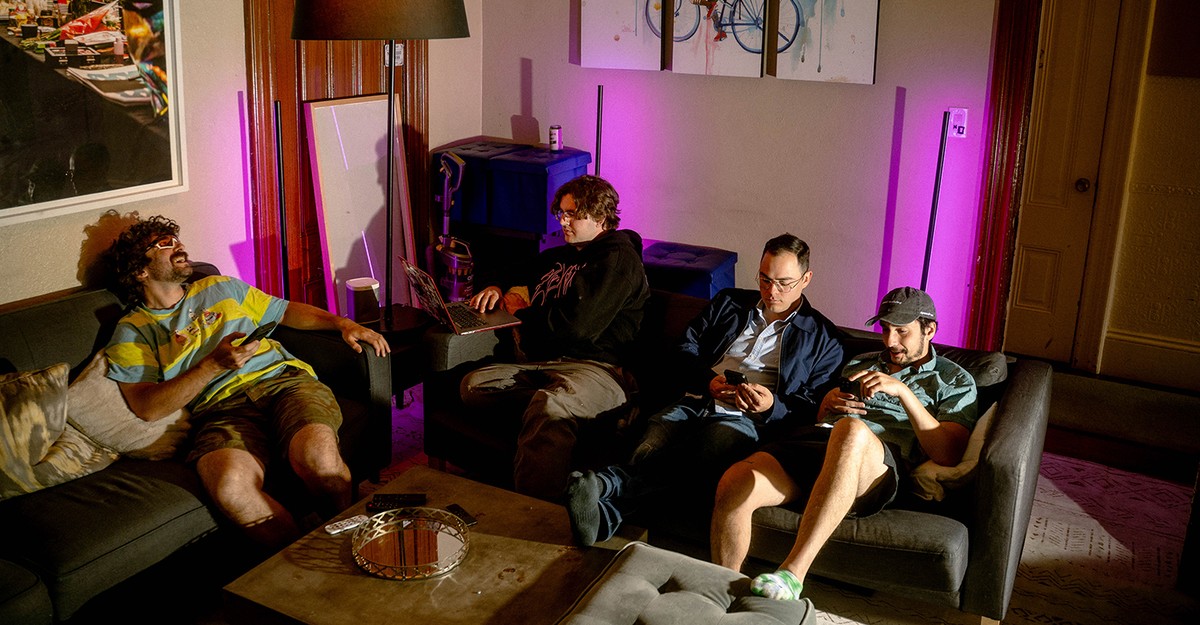
San Francisco's AI boom has fueled a resurgence of "hacker houses" -- shared live-work spaces where founders, engineers, and hobbyist biohackers experiment side by side -- according to a June 2026 feature in The Atlantic and separate trend coverage. At one such house, Accler8, The Atlantic reports residents Elliot Roth and William Joy modified remote-control insect kits in an attempt to direct live lobsters, with Joy calling it a possible "first real instance of a complex AI agent interfacing with a biological organism." The Atlantic also reports Roth has implanted a magnet in his finger, which he says gives him a subjective sense of magnetoperception. These specific anecdotes and quotes are reported exclusively by The Atlantic and have not been independently verified. For AI and hardware practitioners, the broader pattern -- co-located teams rapidly prototyping software-hardware-bio hybrids -- is corroborated by other outlets covering San Francisco's AI-era hacker-house culture.
Concentrated co-living compresses the loop between idea, prototype, and real-world experiment, and that has practical consequences beyond novelty: when software-first builders start integrating physical devices, sensors, and biological interfaces informally, they typically run ahead of institutional safety review, reproducibility standards, and liability coverage -- a gap that matters more as agentic AI systems move from screens into physical and biological contexts.
What happened
The Atlantic reports that San Francisco hacker houses, including one called Accler8, function as shared living-and-working spaces where early-stage founders, coders, and hobbyist biohackers pursue hands-on projects alongside each other. The magazine describes an episode in which residents Elliot Roth and William Joy bought live lobsters and attempted to modify off-the-shelf remote-control insect kits to direct the lobsters' movement; Joy is quoted saying, "I'm pretty sure it's going to be the first real instance of a complex AI agent interfacing with a biological organism." The Atlantic also reports that Roth has implanted a magnet in his left ring finger and described a subjective sense of magnetoperception to the reporter. Separate trend coverage corroborates the broader phenomenon of AI-boom-era hacker houses proliferating across San Francisco, though the specific lobster and magnet-implant anecdotes are reported exclusively by The Atlantic and have not been independently verified.
Technical and safety context
Rapid in-person collaboration lowers coordination costs for combining physical devices, embedded controllers, and agentic software -- The Atlantic references the agent platform OpenClaw by name in connection with the house. When software-first teams build hardware and bio-interfacing prototypes informally, they typically run into reproducibility limits, undocumented modifications, and gaps in institutional biosafety and liability coverage, which can complicate any later attempt to scale, audit, or productize the work.
For practitioners
Track whether these spaces publish reproducible design artifacts (code, schematics, safety checklists), and treat single-source, narrative-feature anecdotes -- like the specific lobster experiment and magnetoperception claim here -- as unverified color rather than validated technical results, however illustrative they are of a broader trend.
What to watch
Whether San Francisco institutions or platforms update terms of service or safety guidance in response to informal biohacking activity, and whether any community-led responsible-disclosure or review norms emerge as agentic AI increasingly gets paired with physical and biological experimentation.
Key Points
- 1The Atlantic reports SF hacker house Accler8 residents modifying insect-control kits to direct live lobsters, calling it early AI-biological interfacing.
- 2One resident says he implanted a magnet in his finger for magnetoperception; these specific anecdotes are exclusive to The Atlantic and unverified.
- 3Broader trend coverage confirms AI-boom-era hacker houses are proliferating in San Francisco, raising reproducibility and biosafety oversight gaps.
Scoring Rationale
Atlantic feature corroborated on the broader hacker-house trend by independent coverage, but the specific lobster and magnet-implant anecdotes remain single-sourced and unverified narrative detail, keeping the score in the solid-but-modest range.
Sources
Public references used for this report.
Practice interview problems based on real data
1,625 SQL & Python problems across 15 industry datasets — the exact type of data you work with.
Try 250 free problems