San Diego Teacher Integrates AI Into English Classroom
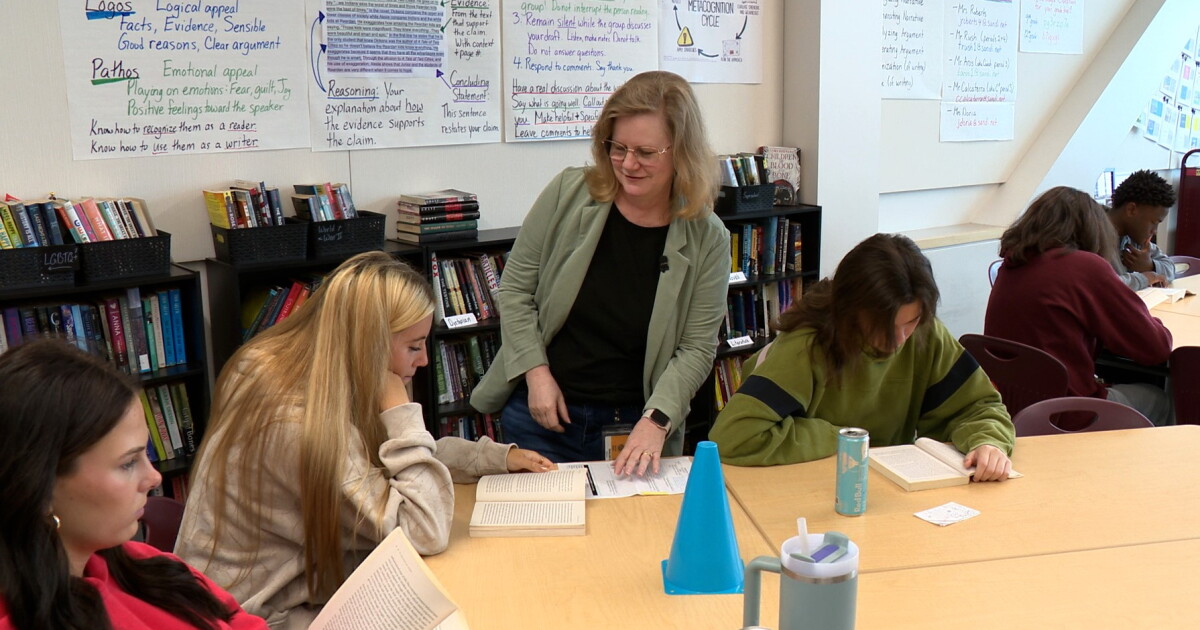
Point Loma High School English teacher Jen Roberts is using classroom AI tools, including a tool called Brisk Boost that pairs assigned text with a rubric-aligned chatbot, to give San Diego students faster, more frequent writing feedback, according to KPBS. Roberts, a roughly 30-year teaching veteran, told Scientific American, "AI doesn't really save me time; it just lets me do more with the time I have," and also uses MagicSchool to apply her rubrics and let students iterate on drafts. KPBS reports nearly 1,200 people have signed a parent-led petition asking the San Diego Unified School District to adopt a board resolution that would, in part, prohibit student use of generative AI in classrooms. Coverage from LAist and CalMatters/GovTech places her practice within a wider pattern: California districts are increasingly contracting AI grading and tutoring tools while the state education department says it cannot centrally track which schools use them.
The gap this story highlights matters for ed-tech buyers and policymakers alike: individual teachers are already integrating AI-graded feedback loops into daily instruction, while the state agency that would normally oversee such tools says it has no way to track which districts are using them, leaving procurement, data-privacy, and efficacy questions to accumulate at the classroom level.
What happened
Point Loma High School English teacher Jen Roberts is using classroom-facing AI tools to support reading and writing in her 12th-grade class, according to KPBS. Students read assigned texts for about ten minutes, then interact with Brisk Boost, a tool that shows the source text on one side of the screen and runs a chatbot on the other, prompting comprehension questions tied to Roberts' learning objectives. Scientific American reports Roberts, who has taught for roughly 30 years, also uses MagicSchool, which applies her rubrics and lets students iterate on drafts with immediate feedback; she says the tools return feedback faster than she could alone: "AI doesn't really save me time; it just lets me do more with the time I have."
Technical context
Reporting describes teachers combining three capabilities: automated rubric-aligned scoring, chatbot-driven formative questioning, and prompt-based idea generation. Scientific American describes a workflow in which a teacher's own grade is compared against an AI "second scorer," with disagreements triggering closer review rather than automatic acceptance. LAist and other coverage flag the standard risk with this approach: generative models can produce fluent but inaccurate output and can reflect biases present in their training data, which complicates their use for grading and assessment.
Industry context
KPBS reports community pushback alongside the classroom adoption: nearly 1,200 people have signed a petition backing a proposed San Diego Unified School District board resolution that would, among other measures, prohibit student use of generative AI in classrooms. LAist reports California districts are increasingly contracting for AI grading and tutoring tools, while the California Department of Education, per spokesperson Katherine Goyette, does not centrally track which districts are using them. Roberts' classroom sits at the intersection of these two trends: bottom-up teacher adoption for formative feedback, and a state-level oversight gap that leaves data-handling and vendor-vetting decisions to individual districts.
For practitioners
For ed-tech and district technology teams, the operative lesson is that teacher-level AI adoption is outpacing institutional governance: absent centralized state tracking, decisions about vendor contracts, student-data handling, and acceptable-use policy are being made district-by-district and sometimes classroom-by-classroom. That creates inconsistent safeguards even where the underlying pedagogical use, faster and more frequent feedback, is well-supported by teacher testimony.
What to watch
- •Whether San Diego Unified's school board takes up the proposed resolution restricting generative-AI use in classrooms.
- •Whether the California Department of Education or state legislature moves to establish centralized tracking or guidance for K-12 AI tool adoption.
- •Independent evidence, beyond individual teacher accounts, on whether AI-assisted feedback loops measurably improve student writing or revision outcomes.
Editorial analysis
Roberts' case is a useful illustration that the practical, defensible uses of classroom AI right now are narrow and teacher-supervised, feedback speed and rubric consistency, not autonomous grading or content generation. The more consequential story is the governance vacuum: when a state education agency cannot say which schools use AI, it also cannot audit data practices or efficacy claims, which is likely to keep fueling parent-led pushback like the San Diego petition regardless of individual teachers' results.
Key Points
- 1Point Loma teacher Jen Roberts uses Brisk Boost and MagicSchool to give students faster, rubric-aligned writing feedback and more frequent revisions.
- 2Nearly 1,200 people signed a petition urging San Diego Unified to adopt a board resolution restricting student use of generative AI in class.
- 3California's education department cannot centrally track which districts use AI tools, leaving procurement and data-privacy oversight to individual schools.
Scoring Rationale
Well-corroborated local classroom story (six sources spanning KPBS, Scientific American, LAist, and GovTech) with a genuine secondary angle: California's education department cannot centrally track K-12 AI adoption. Solid-tier impact given its primarily local and pedagogical scope rather than a frontier technical or state-level policy event.
Sources
Public references used for this report.
Practice with real Ad Tech data
90 SQL & Python problems · 15 industry datasets
250 free problems · No credit card
See all Ad Tech problems