Samsung Workers Reject $340,000 Bonus, Demand Annual Payouts
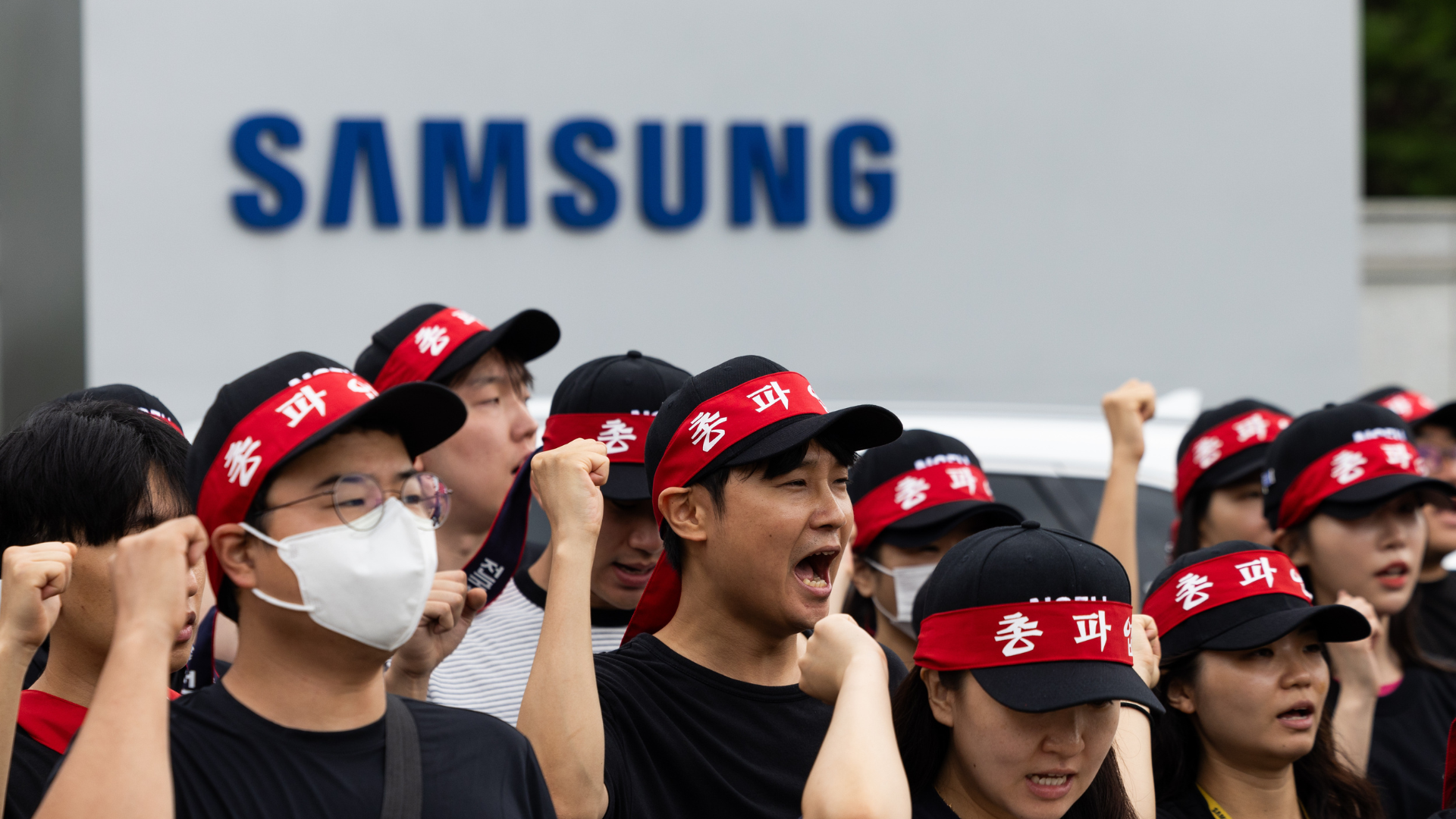
Samsung semiconductor workers represented by the National Samsung Electronics Union rejected a management offer that would allocate 13% of the division's operating profit, roughly $340,000 per employee, unless the payment is guaranteed annually, Tom's Hardware reports. The union initially sought a 15% profit share, removal of a 50% bonus cap, and a 7% wage increase, while management countered with a 10% allocation and a 6.2% pay rise, Tom's Hardware reports. The union has threatened an 18-day general strike from May 21 to June 7, and Korea Herald reports industry estimates of 5-10 trillion won in potential losses from a full-scale strike; Tom's Hardware frames the disruption as potentially costing up to $11.7 billion. Reporting by Bloomberg and Strait Times shows SK hynix payouts could reach about $900,000 under current profit forecasts. The dispute highlights how profit-linked bonuses tied to AI-related memory demand are creating acute labor leverage in the chip sector.
What happened
Samsung semiconductor workers represented by the National Samsung Electronics Union rejected a proposed allocation of 13% of the semiconductor division's operating profit, a figure Tom's Hardware reports equates to roughly $340,000 per employee, because the union wants the allocation guaranteed annually, Tom's Hardware reports. The union's earlier demands included a 15% share of operating profit, removal of a 50% bonus cap, and a 7% wage increase; management countered with a 10% allocation, a 6.2% pay rise and other benefits, Tom's Hardware reports. The union has announced plans for a rally and a possible 18-day general strike from May 21 to June 7, and Korea Herald cites industry estimates that a full-scale strike could inflict 5-10 trillion won in losses; Tom's Hardware frames the potential disruption as costing up to $11.7 billion. Reporting by Bloomberg and Strait Times shows SK hynix's profit-sharing framework and earnings outlook could produce average one-off payouts approaching $900,000 under bullish forecasts, which has become a reference point in negotiations.
Editorial analysis - technical context
The immediate driver behind outsized bonuses in South Korea's memory sector is concentrated demand for high-bandwidth memory such as HBM4, which commands premium pricing in AI data-center and hyperscaler procurement. Industry coverage in The Next Web and Strait Times notes that surging HBM-driven margins and Samsung Electronics' recent quarterly results concentrated profit growth in a narrow product family. Observed patterns in similar transitions: when revenue gains are concentrated in a specialized component, labor bargaining often focuses on profit-linked mechanisms rather than base-salary increases.
Industry context
Industry reporting frames this dispute against a broader domestic debate about inequality and corporate profit-sharing. The Next Web highlights that the Lee family increased its wealth substantially amid the AI-driven stock rally at Samsung, a fact cited in public discourse around fairness. Bloomberg and Strait Times coverage of SK hynix's earlier deals underscores how corporate decisions on one-off or multi-year profit-sharing ripple across peer firms and shape worker expectations. For practitioners: concentrated supplier risk in a few firms and fabs means production downtime or labor disruptions can propagate into procurement schedules for AI infrastructure buyers.
What to watch
- •Whether talks secure an annual, contractually guaranteed profit-allocation clause or a one-time payment, as reported by Tom's Hardware and Korea Herald.
- •Early signals of production slowdowns at HBM4 lines, which industry coverage links to the current profit surge and to the bargaining leverage of specialized engineers and fab workers.
- •Updated strike-impact estimates from Samsung and independent analysts; Korea Herald and Tom's Hardware provide current ranges that will clarify potential financial and supply-chain consequences.
- •Peer responses: changes in SK hynix's payout framework or public policy commentary on concentrated bonuses, as covered by Bloomberg and Strait Times.
Reporting sources: Tom's Hardware, Korea Herald, Bloomberg, The Next Web, Strait Times.
Key Points
- 1Profit-linked bonuses concentrated in memory tech shift bargaining leverage toward specialized fabs, raising disruption risk in AI supply chains.
- 2When a small product family like HBM4 drives corporate profits, compensation models become focal points for broader inequality and public debate.
- 3Large, repeatable bonus frameworks create cross-company benchmark effects, increasing the likelihood of synchronized labor demands across the chip sector.
Scoring Rationale
The dispute poses a material supply and financial risk for AI infrastructure because HBM4-driven profits are concentrated and a prolonged strike could disrupt deliveries. The story is important to practitioners tracking hardware availability and procurement but does not constitute a paradigm shift in AI technology.
Sources
Public references used for this report.
Practice interview problems based on real data
1,625 SQL & Python problems across 15 industry datasets — the exact type of data you work with.
Try 250 free problems