Samsung Begins Mass Production of PM1763 PCIe 6.0 SSD
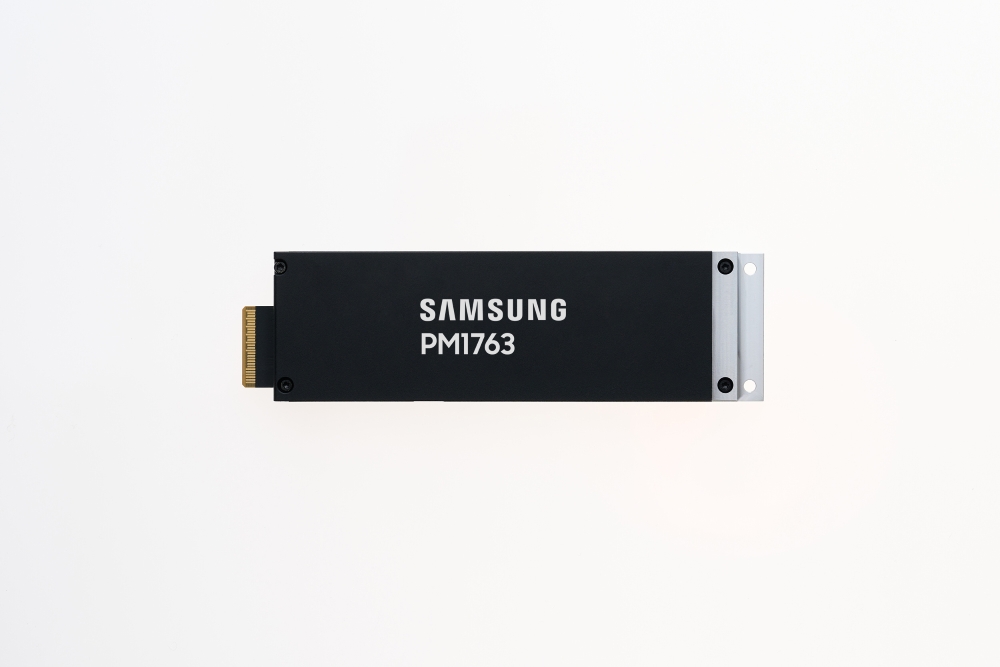
Samsung began mass production of the PM1763 PCIe 6.0 enterprise SSD on July 8, 2026, positioning it for AI and high-performance-computing servers. Samsung says the 16TB configuration reaches up to 28,400 MB/s sequential reads and 21,900 MB/s sequential writes, uses 9th-generation V-NAND and a 4nm controller, and supports direct-to-chip liquid-cooling designs. For practitioners, the claim to watch is not peak bandwidth alone; it is whether sustained throughput, thermals, endurance, and server integration reduce model-load and data-staging bottlenecks in real AI infrastructure.
The PM1763 is useful AI-infrastructure news because it moves storage bandwidth, thermals, and security into the same planning conversation as accelerators. Faster SSDs do not make models smarter, but they can reduce the time and complexity of feeding large models and datasets into GPU-heavy systems.
What happened
Samsung Newsroom said on July 8, 2026 that Samsung Electronics began mass production of the PM1763, a PCIe 6.0 enterprise SSD for AI and HPC servers. The company says the product uses 9th-generation V-NAND and a newly developed 4nm controller, and that the 16TB configuration reaches up to 28,400 MB/s sequential read and 21,900 MB/s sequential write speeds. Samsung also says the drive can move a 40GB large language model in about 1.4 seconds under its example workload.
Technical context
Samsung's semiconductor product page lists PM1763 as a PCIe Gen6 enterprise SSD for modern AI and high-performance computing environments. It emphasizes high-throughput data movement, liquid-cooling server architectures, NVMe 2.1 and OCP 2.6 compliance, and security features including TDISP, SPDM, and post-quantum cryptography support. Those are vendor-stated specifications and should be validated under real server workloads.
For practitioners
Infrastructure teams should evaluate PM1763-class drives as part of the whole data path: storage media, PCIe topology, CPU and DMA behavior, cooling, orchestration, and model-loading patterns. Peak sequential bandwidth is useful, but sustained mixed I/O, power, endurance, fleet manageability, and thermal limits will determine production value.
What to watch
Watch for independent benchmarks in AI dataset staging, checkpoint loading, retrieval-heavy inference, and dense multi-drive server configurations. The biggest adoption signal will be whether hyperscale and enterprise AI systems can convert PCIe 6.0 storage into higher accelerator utilization without creating new cooling or reliability constraints.
Key Points
- 1Samsung began mass production of the PM1763 PCIe 6.0 enterprise SSD for AI and HPC server workloads.
- 2Vendor figures claim up to 28,400 MB/s sequential reads and 21,900 MB/s writes on the 16TB model.
- 3Practitioners should validate sustained throughput, cooling, endurance, and server integration before assuming real model-load gains.
Scoring Rationale
Samsung's PM1763 mass production is notable for AI and HPC infrastructure because PCIe 6.0 storage can reduce model-loading and dataset-staging bottlenecks. The score stays in notable territory because the practical impact still depends on independent sustained-load benchmarks, thermals, endurance, and server integration.
Sources
Public references used for this report.
Practice interview problems based on real data
1,625 SQL & Python problems across 15 industry datasets — the exact type of data you work with.
Try 250 free problems