Sam Altman Compares Child Speech to GPT-5.6 Breakthrough
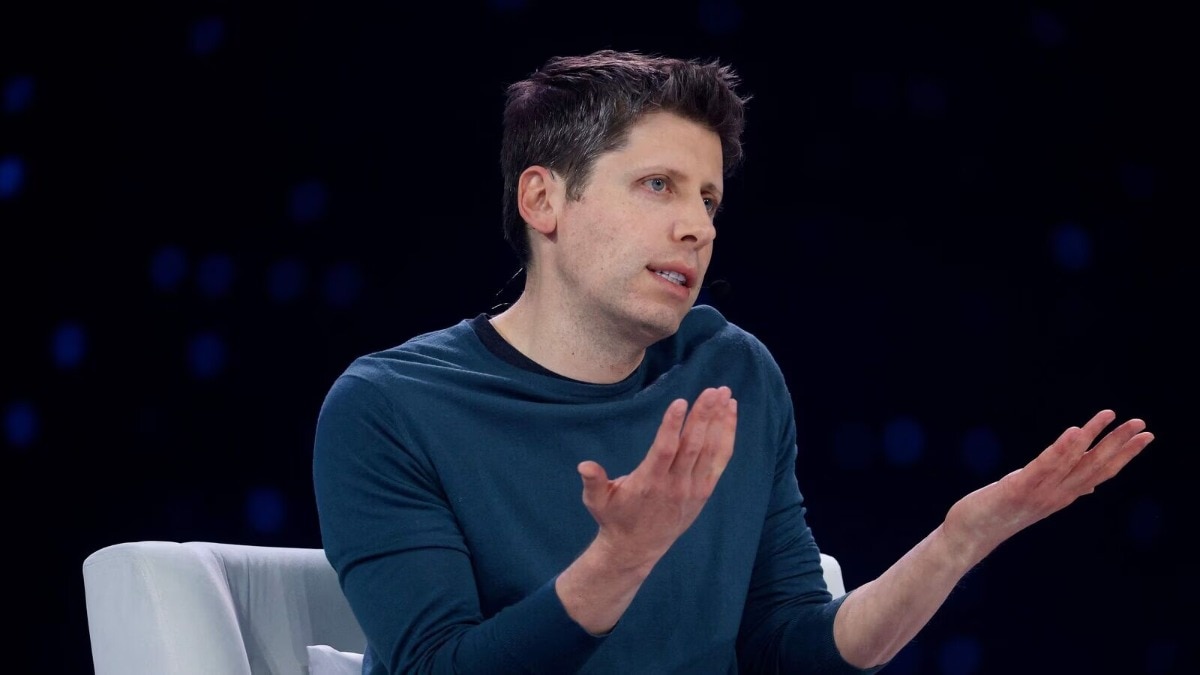
OpenAI CEO Sam Altman compared his child's first two-word phrase with GPT-5.6 discovering new math in a July 5, 2026 X post reported by India Today and captured by Digg. The post is notable because OpenAI's official GPT-5.6 page says the model family entered a limited preview on June 26, but the accessible official material does not document a specific mathematics result. For practitioners, the safe read is that this is a capability tease, not deployable evidence. Reproducible examples, a technical report, and independent evaluations matter more than founder commentary before teams change model-selection, research, or safety assumptions.
The useful read is not that a social post proves a mathematics breakthrough. It is that high-profile capability hints now move faster than reproducible evidence, so practitioners need a habit of separating launch commentary from artifacts they can test.
What happened
India Today reported that OpenAI CEO Sam Altman posted on X that his older child put two words together for the first time and that he was about as amazed by that cognitive feat as by GPT-5.6 discovering new math. A Digg capture of the post carried the same wording and showed the post circulating widely. India Today also reported mixed reactions online and said Altman did not provide technical detail about the claimed mathematics result.
Technical context
OpenAI's official GPT-5.6 page says the GPT-5.6 series entered a limited preview on June 26, 2026 with Sol, Terra, and Luna models, and that broader availability is planned in the coming weeks after a government-requested trusted-partner preview. The official page describes stronger coding, biology, and cybersecurity capabilities, but it does not document the specific new-math claim.
For practitioners
Treat the post as a pointer for future verification, not as evidence of a validated capability. If a model is said to have found new mathematics, the useful artifacts are the problem statement, proof or construction, verification path, benchmark design, and whether independent researchers can reproduce the result.
What to watch
Watch for an OpenAI technical note, system-card update, research paper, or independent mathematical validation tied directly to GPT-5.6. Wider access will matter because external researchers and engineering teams cannot test capability, reliability, or safety boundaries from a social-media claim alone.
Key Points
- 1The Altman post is a capability signal only if OpenAI later publishes reproducible examples or evaluation artifacts.
- 2OpenAI's official GPT-5.6 page confirms a limited preview but does not document a specific mathematics result.
- 3For practitioners, the immediate action is to separate founder commentary from benchmarked, independently testable model capability claims.
Scoring Rationale
The item is on-topic because it links a high-profile OpenAI CEO claim to GPT-5.6 capability expectations, but it is not a verified technical release. The practical impact is limited until OpenAI or independent researchers publish reproducible evidence of the mathematics claim.
Sources
Public references used for this report.
Practice interview problems based on real data
1,625 SQL & Python problems across 15 industry datasets — the exact type of data you work with.
Try 250 free problems