Rubin Observatory Begins Ten-Year Sky Survey
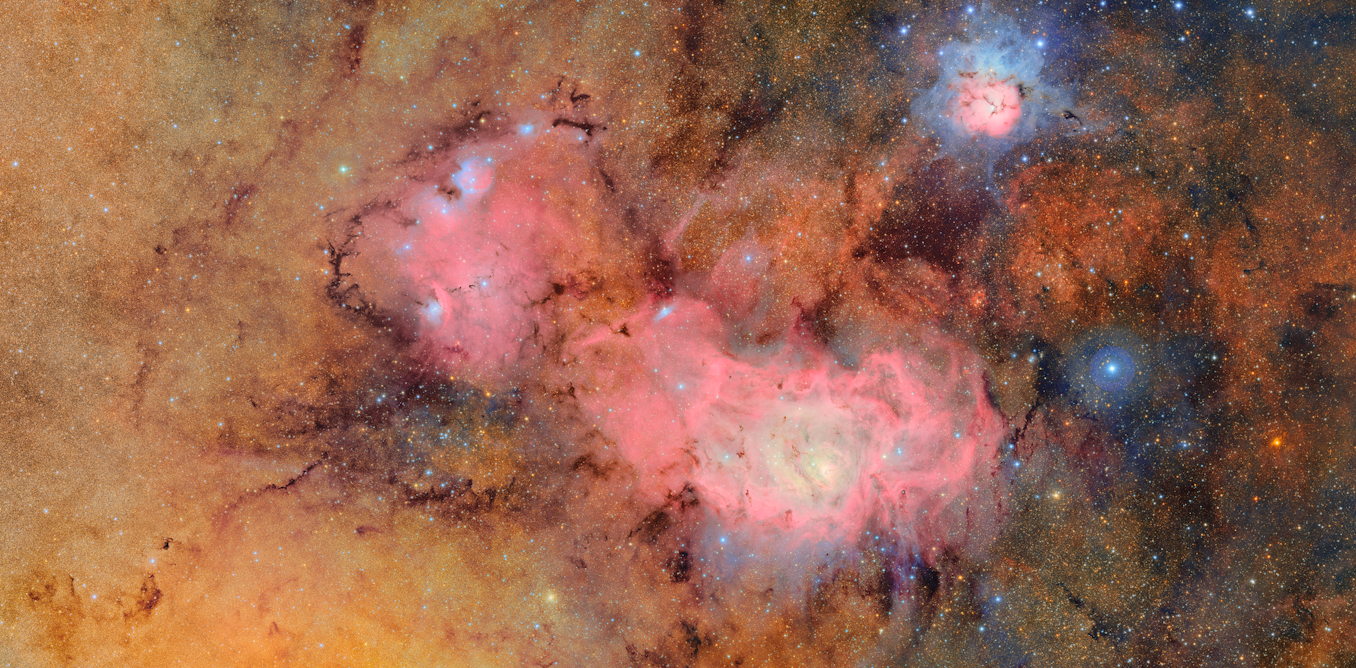
The NSF-DOE Vera C. Rubin Observatory has started its ten-year Legacy Survey of Space and Time, beginning a systematic, high-cadence imaging campaign of the southern sky. With a 3,200-megapixel camera producing roughly 10 terabytes of image data per night and up to 100 revisits per year, Rubin will catalog about 17 billion stars, 20 billion galaxies and millions of asteroids. The survey aims to study dark matter, dark energy and transient astrophysical phenomena.
Key Points
- 1Launches ten-year sky survey with 3,200-megapixel camera, imaging 20 billion galaxies.
- 2Enables big-data astrophysics with roughly 10 terabytes nightly, detecting millions of asteroids and transients.
- 3Requires distributed computing and AI brokers like Fink to process up to 10 million nightly detections.
Scoring Rationale
Major new facility with high novelty and broad impact, but primarily infrastructure-focused rather than an immediate methodological breakthrough.
Practice interview problems based on real data
1,625 SQL & Python problems across 15 industry datasets — the exact type of data you work with.
Try 250 free problems