Rubin Observatory begins decade-long 'cosmic movie' mission
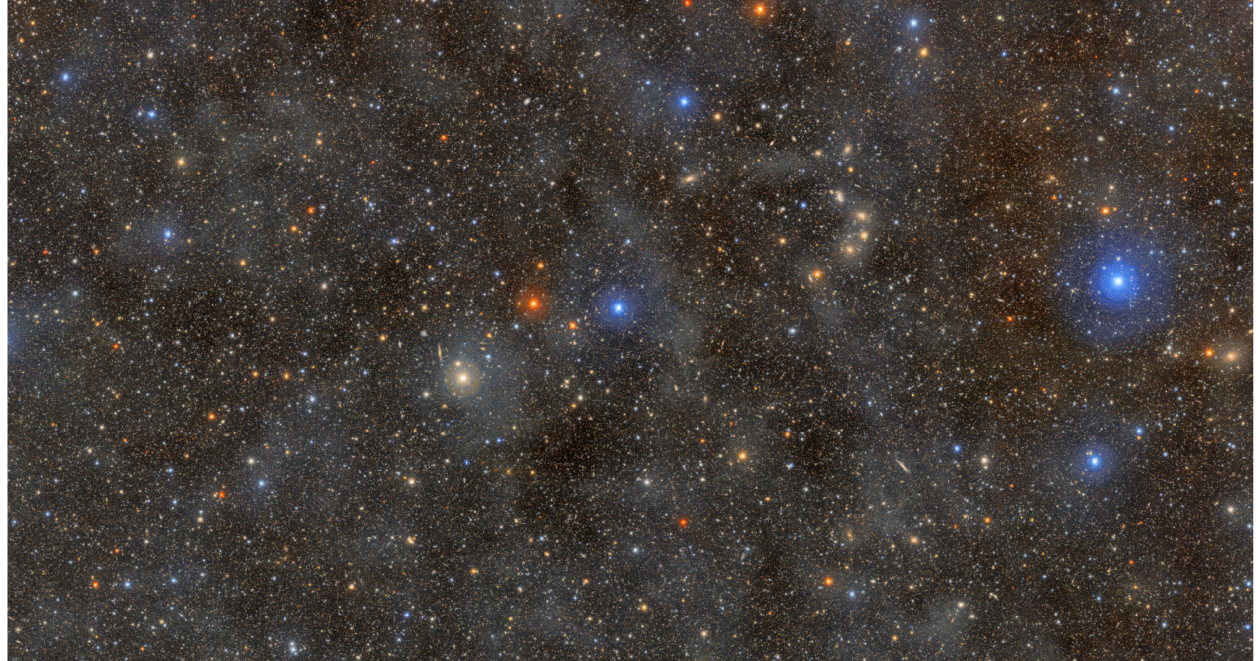
For AI/ML practitioners: the LSST will stream roughly 7 million sky-change alerts per night, all classified by ML broker networks using CNNs and gradient-boosted forests in real-time - one of the largest production ML classification pipelines in any scientific domain. NSF-DOE Vera C. Rubin Observatory began its 10-year Legacy Survey of Space and Time (LSST) on June 30, 2026, from Cerro Pachon, Chile. The 3,200-megapixel camera images the entire southern sky every few nights, generating ~10TB of data nightly. Over the decade, the LSST will catalog billions of objects with trillions of measurements, all available as open data to researchers worldwide.
Why it matters for AI/ML practitioners
The LSST's alert stream is a production ML problem at astronomical scale. Each night, Rubin's pipeline produces up to 7 million change-alerts that flow to a network of alert brokers - including ALeRCE (a CNN for postage-stamp classification, plus a hierarchical random forest across a 15-class taxonomy), AMPEL (gradient-boosted forests in a four-tier system), and Lasair (boosted decision trees paired with host-galaxy feature extraction). These brokers demonstrated sub-second alert latency during pre-operations campaigns. An arXiv collaboration paper (arXiv:2601.14235) from the LSST Dark Energy Science Collaboration maps specific AI/ML opportunities across weak lensing, photo-z estimation, anomaly detection, and strong lens finding. For practitioners building real-time event classification or time-series anomaly pipelines, the Rubin alert stream is now a live, open-access production benchmark.
What happened
On June 30, 2026, the NSF-DOE Vera C. Rubin Observatory officially began the Legacy Survey of Space and Time from Cerro Pachon, Chile, per an official press release from Rubin Observatory and the U.S. Department of Energy. The mission is 20 years in the making, jointly funded by the National Science Foundation and DOE Office of Science, and operated by NSF NOIRLab and SLAC National Accelerator Laboratory. Bob Blum, Rubin Operations Director, described the LSST as allowing "researchers anywhere to participate in cutting-edge science." The launch follows a June 2025 First Look event and subsequent commissioning work.
Scale of data infrastructure
The 3,200-megapixel camera - the largest digital camera ever built - captures a new image approximately every 40 seconds, collecting ~10TB of data per night. By returning to each sky position about 800 times over 10 years, the LSST will build deep, time-rich views of the dynamic sky. During early optimization surveys alone, Rubin discovered over 11,000 previously unknown asteroids, per Rubin Observatory's own reporting.
Open access
When the LSST concludes, the final dataset will contain billions of objects with trillions of measurements, publicly released through regular data releases. Forty-three international teams outside the U.S. and Chile have contributed in-kind to Rubin Observatory in exchange for LSST data rights. Anyone in the world can engage with the data, making this the most accessible large-scale time-domain astronomical dataset ever assembled.
What to watch
The first full annual LSST data release will be a landmark for ML-driven astronomy. Multi-messenger applications - correlating Rubin optical transients with gravitational wave and neutrino detections - represent an emerging high-value use case. Teams working on time-series classification, anomaly detection at scale, and open-universe foundation models should track the alert broker ecosystem closely.
Key Points
- 1What: NSF-DOE Vera C. Rubin Observatory began its 10-year LSST on June 30, 2026, collecting ~10TB/night and generating up to 7 million sky-change alerts nightly.
- 2Why: The LSST is the first systematic all-sky time-series survey at this scale; ML broker networks (CNNs, gradient-boosted forests) are the primary classification layer for its real-time alert stream.
- 3So what: The final LSST dataset - billions of objects, trillions of measurements - will be openly accessible, creating a major benchmark for transient classification, anomaly detection, and time-series ML.
Scoring Rationale
Landmark scientific infrastructure launch with direct ML relevance: 7M nightly alerts classified by production ML brokers (CNNs, gradient-boosted forests), and an eventual open dataset of billions of objects with trillions of measurements. Notable for AI/DS practitioners building real-time classification and time-series systems; scored solid rather than major because the story is primarily astronomy news, with ML as a significant but secondary angle.
Sources
Public references used for this report.
Practice interview problems based on real data
1,625 SQL & Python problems across 15 industry datasets — the exact type of data you work with.
Try 250 free problems