ROG Xbox Ally Adds Docking Improvements and Auto SR Preview
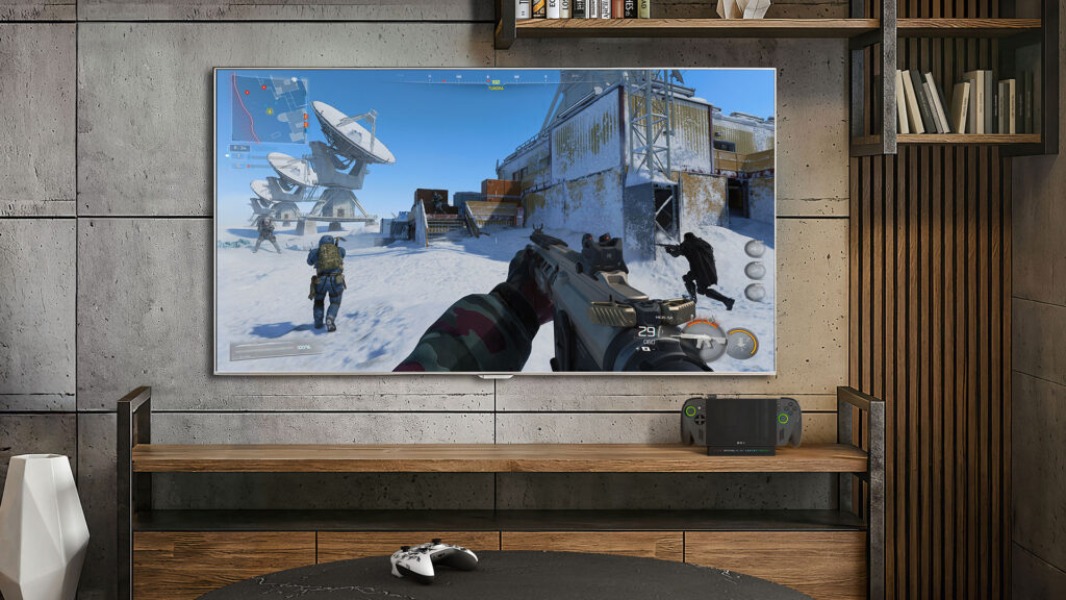
According to an Xbox blog post by Roanne Sones, Microsoft and partners are rolling out a preview update for the ROG Xbox Ally family that targets docked play and adds an Automatic Super Resolution preview for the ROG Xbox Ally X. Reporting from The Verge and Digital Foundry states the Auto SR preview is available to Xbox Insiders beginning April 30, 2026, and appears in the Windows Game Bar as an Auto SR tab. The update also changes docked defaults so TV output becomes primary, enables TV features like ALLM, VRR, and HDR10 on supported docks and smart TVs, adds a Display widget to Game Bar, improves controller pairing and haptics, and disables integrated handheld controls when docked, per Digital Foundry, Engadget, and Games.gg. Games.gg notes the Xbox App version shipping the widget is 7.326.326.0. The rollout is currently limited to Insider channels, with public availability to follow.
What happened
According to the Xbox News blog post by Roanne Sones, CVP Gaming Devices and Ecosystem, Xbox, Microsoft and partners have published a preview update for ROG Xbox Ally handhelds that focuses on docked-play improvements and a preview of Auto Super Resolution (Auto SR) on the ROG Xbox Ally X. Digital Foundry and The Verge report that the Auto SR preview is being delivered to Xbox Insiders beginning April 30, 2026. The update surfaces an Auto SR tab in the Windows Game Bar, and Games.gg identifies the Xbox App package involved as version 7.326.326.0.
Technical details
Editorial analysis - technical context
Public reporting describes Auto SR as a screen-space AI upscaler that renders at a lower internal resolution and then upscales the final image to improve perceived detail and frame-rates, similar in concept to Nvidia DLSS, per The Verge and Digital Foundry. Digital Foundry notes Auto SR operates as an OS-level, driver/screen-space filter and can run on the device NPU rather than the GPU, which changes performance and latency trade-offs compared with game-integrated upscalers. The Xbox blog and Digital Foundry say the preview targets docked mode where the handheld outputs to larger TVs, and Microsoft describes the feature as delivering "1440p-like" visuals from lower internal resolutions in that scenario.
What the update includes
- •Docked play defaults to the TV display and the handheld screen turns off, per the Xbox blog.
- •Automatic engagement of smart TV gaming features such as Auto Low Latency Mode (ALLM), Samsung Auto Game Mode, and Vizio Game/PC Mode on supported TVs, and HDR10 support on the ROG Bulwark Dock and ROG 100W Charger Dock, as listed in the Xbox blog.
- •A new Display widget in Game Bar exposing resolution, refresh rate, and projection mode for docked setups, reported by the Xbox blog and Games.gg.
- •Enhanced vibration/haptics and improved controller pairing, and the handhelds disabling integrated controls when docked, reported by Digital Foundry and Engadget.
Industry context
Context and significance
What to watch
Editorial analysis
The arrival of OS-level upscaling like Auto SR on a handheld docking ecosystem continues a broader trend where operating systems and driver stacks provide post-render AI filters as a cross-title performance/quality lever. Observers such as Digital Foundry emphasize that driver-level approaches do not match game-integrated upscalers in quality but offer broad compatibility since they require no developer integration.
For practitioners and platform engineers, the move highlights two technical signals: first, more workloads are shifting to specialized NPUs and system-level pipelines for perceptual image enhancement; second, integrating control surfaces (Game Bar widgets) matters for discoverability and user adoption. Reporting across The Verge, Digital Foundry, and Games.gg also surfaces real-world rollout friction tied to multiple update vectors (Windows Insider channels, Xbox App, Armoury Crate), which is relevant to teams managing cross-vendor update flows.
Observers should track:
- •public rollout timing beyond Insiders
- •measurable quality and latency trade-offs on common docked configs (720p internal -> 1440p-like claims)
- •how widely TV feature handshakes like ALLM and VRR work across third-party docks and smart TVs. Also watch whether Auto SR support is extended into non-docked handhelds or broader Windows devices based on Insider feedback, as reported rollout notes indicate staged availability
Key Points
- 1Industry context: OS-level AI upscalers like Auto SR provide broad compatibility across titles but usually trail game-integrated upscalers in raw quality.
- 2Industry context: Surfacing AI features in overlays such as the Game Bar materially increases discoverability and user adoption of system-level enhancements.
- 3Industry context: Multi-vendor update pipelines (Windows, Xbox App, Armoury Crate) often cause friction; practitioners should expect staged, Insider-only rollouts first.
Scoring Rationale
This is a product-level update that brings an OS-level AI upscaler to a docked handheld, relevant to practitioners tracking system-level ML features and NPU offload. It is notable but not industry-shaking.
Sources
Public references used for this report.
Practice interview problems based on real data
1,625 SQL & Python problems across 15 industry datasets — the exact type of data you work with.
Try 250 free problems