Researchers Use AI to Extend EV Battery Life
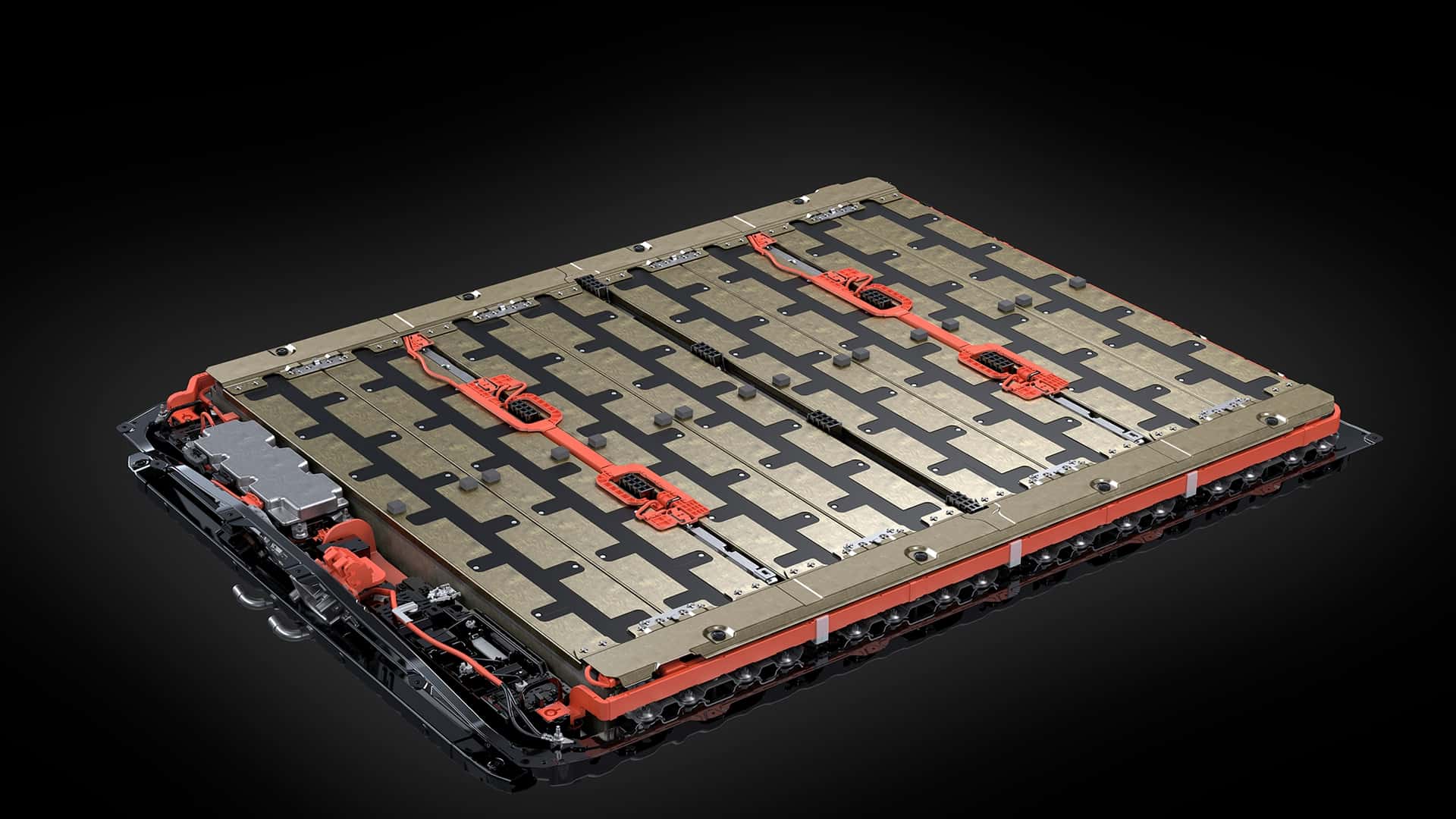
Researchers at Chalmers University of Technology published a study, reported by InsideEVs, describing an AI-based charging method that optimizes current during fast-charging cycles. According to InsideEVs, the paper's authors, Meng Yuan and Changfu Zou, wrote, "This work introduces the first explicit formulation of a lifelong battery fast charging problem." The study reports a battery lifespan extension of about 23%, equivalent to 703 equivalent full cycles and a 22.9% improvement over the baseline, InsideEVs reports. InsideEVs also notes the results come from simulations and highlights that frequent fast charging can accelerate lithium-ion battery aging. The article frames the findings as potentially significant if the approach is commercialized, while the study itself focuses on simulated charging-control performance.
What happened
Researchers at Chalmers University of Technology published a study, reported by InsideEVs, that presents an AI-based charging method designed to optimize current during fast-charging cycles. Per InsideEVs, the paper's authors Meng Yuan and Changfu Zou wrote, "This work introduces the first explicit formulation of a lifelong battery fast charging problem." The study reports extending battery life to 703 equivalent full cycles, a 22.9% improvement versus the standard baseline, which the article summarizes as roughly a 23% increase in lifespan. InsideEVs notes these outcomes are from simulation results and that frequent fast charging accelerates lithium-ion battery aging.
Technical details
Per InsideEVs, the reported method uses AI to adjust charging current during high-power sessions; the article does not provide the algorithm class or training dataset details. Editorial analysis - technical context: research-grade proposals that control charging current typically rely on cell-level degradation models, real-time sensing, and either model-based controllers or data-driven policies such as supervised learning or reinforcement learning. Translating simulation gains to production commonly requires robust state-of-health estimation, cell balancing, and validation across chemistry and temperature ranges.
Industry context
Editorial analysis: battery-management research showing multi‑10% lifecycle gains in simulation is notable, but similar studies often confront gaps when moving from simulated cells to heterogeneous, aged packs in vehicles. Practitioners will judge impact by reproducibility on real cells, integration complexity with existing battery management systems, and regulatory/ warranty testing.
What to watch
Indicators include replication experiments on physical cells, peer review details (journal name and open data), demonstration on full battery packs, and statements from OEMs or BMS vendors about integration trials.
Key Points
- 1Chalmers researchers report an AI charging method that increases simulated battery lifespan by about 23%, per InsideEVs.
- 2Editorial analysis: Simulation gains often shrink in hardware due to cell variability, sensing limits, and thermal effects.
- 3What to watch: replication on real cells, full-pack demonstrations, and BMS vendor or OEM validation will determine practical impact.
Scoring Rationale
The simulated 23% life extension is potentially meaningful for EV lifecycle economics, but results are currently simulation-only and not yet validated on production packs, limiting immediate practitioner impact.
Practice with real Telecom & ISP data
90 SQL & Python problems · 15 industry datasets
250 free problems · No credit card
See all Telecom & ISP problems