Researchers Simulate Fruit Fly Brain Controlling Virtual Body
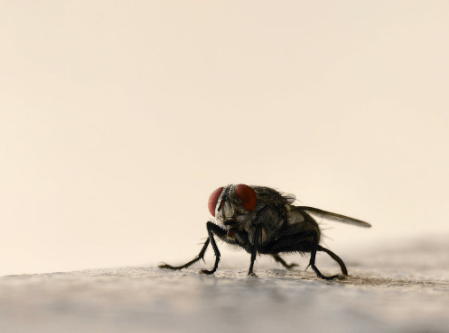
Researchers and startups have combined a published fruit-fly connectome with neural simulators and a physics body to run a full-brain emulation that produces multiple behaviors. A 2024 connectome of the adult fruit fly, reported to contain roughly 125,000 neurons and 50 million synapses, underpins the work; Phil Shiu and colleagues published predictive modelling results in Nature. Reporting by Futurism and The Register describes San Francisco startup Eon Systems putting a connectome-based emulation into an embodied simulation so the virtual fly walks, grooms, and feeds in a simple environment. The Register credits the stack to Brian2 and NeuroMechFly, while Berkeley reports the original model predicted taste-driven neural activation in the Nature paper. Coverage frames the demonstration as scientifically grounded but also a lightning rod for ethical and conceptual debates about whole-brain emulation.
What happened
Researchers have assembled and run a connectome-based simulation of an adult fruit fly brain and linked it to a physics-modeled body in a virtual environment. A 2024 whole-brain wiring diagram of an adult fruit fly, reported to contain roughly 125,000 neurons and 50 million synapses, underpins the work. Phil Shiu and collaborators published a Nature paper showing a connectome-derived computational model that, Berkeley reports, predicted taste-evoked neural responses. Reporting by Futurism and The Register describes San Francisco startup Eon Systems integrating that connectome-based brain emulation with a simulated fly body to produce observable behaviors such as walking, grooming, and feeding in a sandbox video demonstration.
Technical details
Editorial analysis - technical context
The demonstration stitches several existing, peer-reviewed components rather than inventing a single new technique. Sources identify three main building blocks: the published fly connectome dataset, a spiking neural network simulator (reported as Brian2), and a biomechanical body model derived from NeuroMechFly. The Register reports that the pipeline reconnects synapses from the scanned wiring diagram and runs the resulting spiking-network model inside an embodied simulation; Futurism describes the integration as an embodied simulation framework that pairs the connectome emulation with a physics-simulated body. These components are all widely used in computational neuroscience, which helps explain why the experiment runs on modest compute compared with mammalian brain projects.
Context and significance
The work sits at the intersection of connectomics, computational neuroscience, and embodied AI. Berkeley frames the Nature-modeling result as evidence that dense wiring diagrams can be predictive of circuit function, and multiple outlets note this is the first demonstration linking a whole-brain connectome to multi-behavior outputs in a virtual body. Reporting by The Guardian and The Register places the demo alongside other provocative experiments, such as biological-computer work from Cortical Labs that used cultured human neurons to play video games, which has fueled public debate about moral status, emergent behavior, and hype versus reproducible science.
For practitioners
Observed patterns in similar projects: Researchers assembling multi-component pipelines commonly face challenges in validation, modular mismatch, and interpretability. Past academic work on connectomes has shown that mapping structure to function requires careful stimulus design and cross-validation; the Nature result cited by Berkeley and Futurism reports a high match rate for taste-driven activations, which is a stronger empirical anchor than many earlier conceptual claims. At the same time, independent reporting by The Register emphasizes reproducibility signals: the demo reuses open-source toolchains and peer-reviewed datasets, which makes technical follow-up more feasible than closed, proprietary claims.
What to watch
Industry context
Observers should follow replication attempts, methods papers describing the synapse-reconnection process, and any dataset or code releases tied to the Eon Systems demo. Coverage currently mixes primary science reporting (the Nature/UC Berkeley work) with startup claims in press outlets; verifying the embodied-emulation results requires access to the integration code, stimulus protocols, and quantitative behavioral metrics. Additionally, ethical and policy conversations noted in The Guardian are likely to intensify if teams attempt larger connectomes (mouse, primate) or if hybrid biological-digital experiments proliferate.
Key Points
- 1Connectome-based models can yield behaviorally predictive simulations; the fly model's reported high match to taste-evoked activity shows structural data can map to function.
- 2Integrations using Brian2 and NeuroMechFly illustrate a reproducible toolchain pattern, lowering the barrier for follow-on embodied-simulation experiments.
- 3Public and media reactions blend scientific interest with ethical alarm, so replication, transparent metrics, and dataset/code release will shape whether this catalyzes sustained research progress.
Scoring Rationale
The story demonstrates a concrete, reproducible link from a published connectome to multi-behavior simulation, which matters to computational-neuroscience and embodied-AI practitioners. Coverage is influential but not paradigm-shifting; the result depends on a modest organism and established toolchains, which limits near-term impact on large-scale AI systems.
Sources
Public references used for this report.
Practice interview problems based on real data
1,625 SQL & Python problems across 15 industry datasets — the exact type of data you work with.
Try 250 free problems