Researchpromptwarellmagentsmodel security
Researchers Propose Promptware Kill Chain Framework
9.1
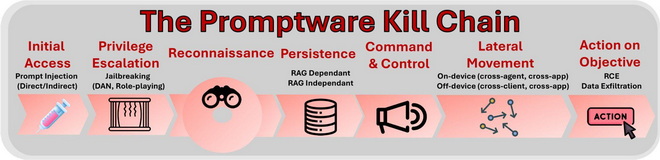
In a new paper, researchers introduce a seven-step "promptware" kill chain (Initial Access through Actions on Objective) to characterize attacks on LLM-based systems. They argue that LLMs lack an execution/data boundary, enabling embedded malicious instructions to persist, escalate privileges, and propagate across agents. The framework reframes prompt injection as a malware-class threat and recommends defensive strategies assuming initial access will occur.
Key Points
- 1Introduce seven-step promptware kill chain outlining stages from initial access to final actions-on-objective.
- 2Show LLMs lack execution/data boundaries, allowing embedded instructions to gain authority and persist.
- 3Advise defenders to assume initial access and focus on breaking persistence, lateral movement, and escalation.
Scoring Rationale
Frames prompt injection as malware-class kill chain, offering broad defensive framework; limited by reliance on a single research paper.
Practice with real Logistics & Shipping data
90 SQL & Python problems · 15 industry datasets
Used by DS/ML engineers at top companies
High-Value Overnight OrdersEasyDelivered International ShipmentsMediumOn-Time Delivery Rate by CarrierHard
250 free problems · No credit card
See all Logistics & Shipping problems