Rajasthan Government Signs MoU With Wadhwani AI for Agriculture
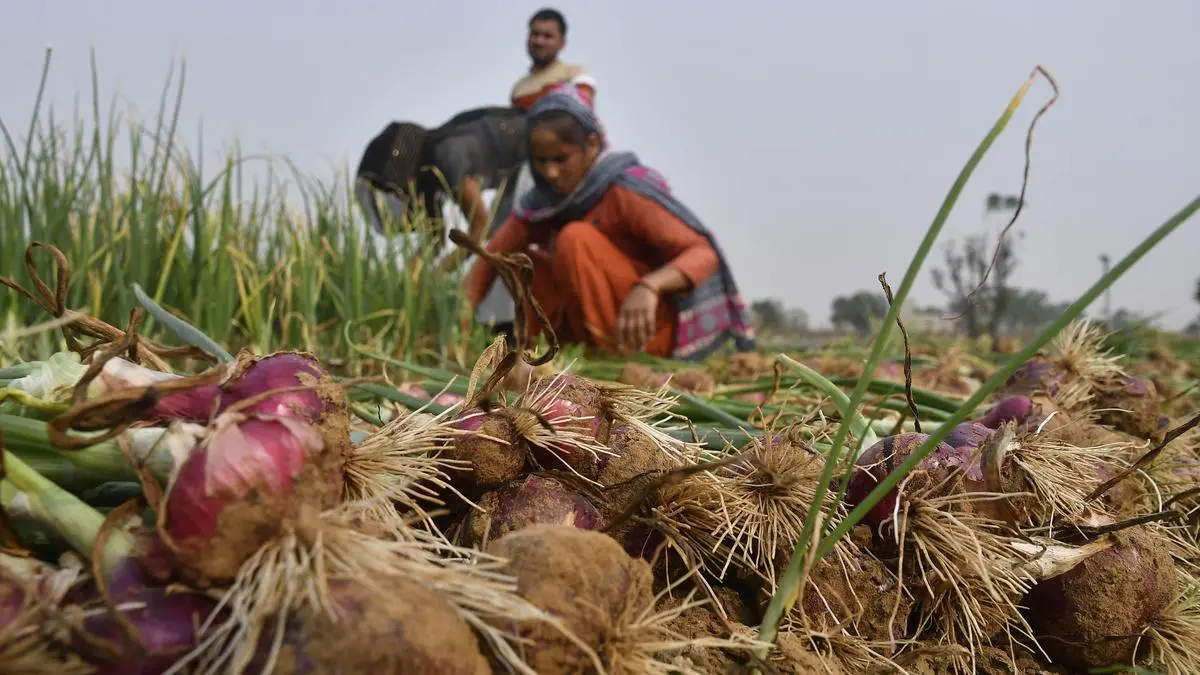
The Rajasthan Agriculture Department signed a non-financial Memorandum of Understanding (MoU) with the Wadhwani AI Foundation through Lords Education and Health Society, according to an Economic Times report. The agreement was signed at Pant Krishi Bhawan in Jaipur and, per the official press release cited by Economic Times, Wadhwani AI will provide technical support to the state government for three years at no cost to the government. The partnership will introduce AI-based tools including Agrivani (a multilingual chatbot), Cropus (computer-vision pest and disease surveillance), a smartphone-based Soybean Grain Analyzer, and Agri AI Collect and News Monitoring. Economic Times reports the state has prepared a Farmer ID for around 95 lakh farmers under its Agri-Stack initiative, covering nearly 95 percent of the target.
What happened
The Agriculture Department of the Government of Rajasthan signed a non-financial Memorandum of Understanding (MoU) with the Wadhwani AI Foundation through Lords Education and Health Society, according to an Economic Times report. The agreement was signed at Pant Krishi Bhawan in Jaipur, and the official press release cited by Economic Times states that Wadhwani AI will provide technical support for three years at no cost to the state government. The partnership covers deployment of several AI-driven services, including Agrivani (multilingual voice/text chatbot), Cropus (computer-vision pest and disease detection), a smartphone-based Soybean Grain Analyzer, and Agri AI Collect and News Monitoring for digital field records and administrative decision support (Economic Times; Analytics India Mag reporting corroborates the MoU).
Technical details
Editorial analysis - technical context
The products named in reporting map to common agri-AI components: a multilingual conversational interface for extension services, computer-vision models for crop health and pest identification, mobile spectrometry or image-based grain-quality estimation, and a digital field-records platform. Deployments that combine these components typically require integrations across mobile front ends, edge inference or lightweight cloud APIs, and labeled training data for local crop varieties and pest species. The Economic Times report notes the state's existing Agri-Stack Farmer ID covering around 95 lakh farmers, which can materially reduce onboarding friction for digital services if privacy, consent, and data governance are addressed during integration.
Context and significance
Public-sector partnerships that bundle advisory chatbots, CV surveillance, and crop-quality tools aim to raise technology access for smallholder farmers while using existing administrative datasets to scale. For practitioners, such projects are a live example of operationalizing models in noisy, low-bandwidth field conditions and of the need to localize language, cultivar, and agronomic treatment recommendations.
What to watch
For practitioners
monitor how the program handles data governance around the Agri-Stack Farmer ID, the latency and accuracy trade-offs chosen for field-deployable CV models, and whether the collaboration publishes evaluation metrics or deployment case studies. Observers should also track whether the partnership releases tools, APIs, or model benchmarks that allow external validation of pest-detection accuracy or grain-quality estimates.
Key Points
- 1State-level MoU provides technical support free for three years, lowering procurement friction but raising integration workload for practitioners.
- 2Bundled tools (chatbot, CV surveillance, grain analyzer) reflect common agri-AI deployment patterns, requiring local data and edge/cloud trade-offs.
- 3Existing Agri-Stack Farmer ID covering ~95 lakh farmers can accelerate onboarding, making data governance and consent critical operational priorities.
Scoring Rationale
The MoU is a notable regional public-sector deployment that bundles practical agri-AI tools and leverages a large farmer database, making it relevant to practitioners working on productionized models and data integrations. It is not a frontier-model release or national-scale mandate, so its importance is notable but not industry-shaking.
Sources
Public references used for this report.
Practice with real Ad Tech data
90 SQL & Python problems · 15 industry datasets
250 free problems · No credit card
See all Ad Tech problems